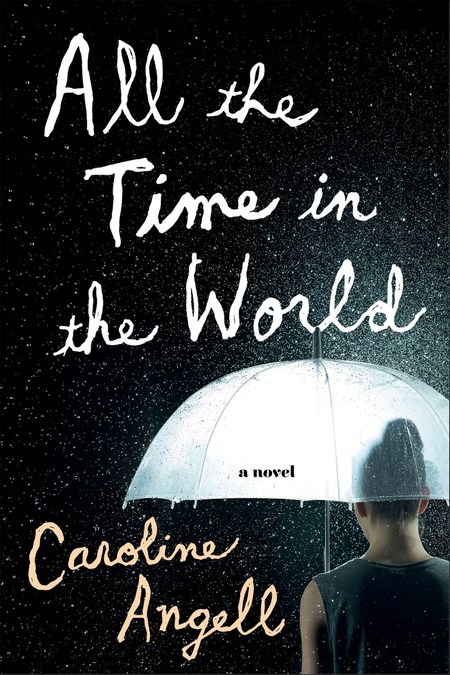
Charlotte is a gifted and superbly trained young musician who has been
blindsided by a shocking betrayal in her promising career when she takes a
babysitting job with the McLeans, a glamorous Upper East Side Manhattan family.
At first, the nanny gig is just a way of tiding herself over until she has
licked her wounds and figured out her next move as a composer in New York. But,
as it turns out, Charlotte is naturally good with children and becomes as deeply
fond of the two little boys as they are of her. When an unthinkable tragedy
leaves the McLeans bereft, Charlotte is not the only one who realizes that she's
the key to holding little George and Matty's world together. Suddenly, in
addition to life's usual puzzles, such as sorting out which suitor is her best
match, she finds herself with an impossible choice between her life-long dreams
and the torn-apart family she's come to love. By turns hilarious, sexy, and
wise, here is a memorable story about how a young woman discovers the things
that matter most. Angell talks to Writing a Woman’s Life columnist Yona Zeldis
McDonough about her auspicious debut.
How did the idea for the story come to you?
There's a quote from
Meet the Austins by Madeleine L'Engle (one of my
favorite writers) that I came across -- "Mother said, 'Sometimes it's very hard
to see the hand of God instead of the blind finger of Chance. That's why I
wanted to come out here where we could see the stars.'" I'd been wrestling with
the concept of vulnerability -- not only as it pertains to mortality -- but
where it shows up in your life and how you put it into perspective as you move
forward.
My narrator's name is Charlotte, and she has a degree in music composition, but
she's been working for the past few years as a babysitter on the Upper East
Side. She starts the story on an indefinite sabbatical from her career as a
composer. I wrote one of my biggest fears for her -- that something she made
(composed) was put out in the world and not dealt with appropriately. She wants
to hide from the possibility that anything like that could happen to her again
-- the fear of being that vulnerable and exposed keeps her at a standstill. She
isn't sure how to move forward. So she gets a day job as a babysitter while she
is recovering from that betrayal. Then all of a sudden, she finds herself in a
situation where the stakes are much higher, and she has to come to terms with
the realization that maybe vulnerability isn't something you can opt out of.
All The Time in the World deals with the
sudden death of a young mother, and yet the story is hardly a bleak one. Can you
talk about how you found hope in the valley of despair?
The structure of the novel is non-linear, because I wanted the reader to have
some relief. I think our minds do this; they protect us, at times, from going
too far down the rabbit hole. And that's not to say that there aren't desperate,
awful times during the grieving process where it feels impossible to get out of
bed. But in the darkest of times, I have seen people go through their normal
daily routines, laugh and make jokes, say things that are distinctly hopeful.
It's incredibly difficult to live only in despair. It goes against our nature as
humans, I think, and I tried to reflect that in Charlotte's narrative. Sometimes
that meant letting the reader fill in the blanks, and that's where the time gaps
come in.
You have a musical background; did you draw much on that to create
Charlotte’s character?
I have a lot of empathy for people who are in the early stages of ANY artistic
career -- not exactly where they want to be yet, but getting there, and having
to make a living at a day job, especially in a city like New York. Probably
because I've been experiencing that for the last decade. I also think it's
natural to get invested in what you're doing from day to day, to seek out
something that fulfills you in some way so that you don't feel like you're just
wasting your life while you wait for something magical to happen that brings you
closer to your career goals. Charlotte and I both happen to like hanging with
kids, and find some daily meaning in it. In that way, we're similar. As far as
music goes, I relied a lot on observation. My mom was a music teacher; one of my
sisters is a singer-songwriter and the other is a music therapist; my father
played guitar; many of my friends are composers and actors and musicians. There
was a lot of experience around me to draw from, as well as my own.
You write with such authority and tenderness about being a nanny—also
drawn from personal experience?
Yes, a lot of field research went into that! Many of the moments of silliness
and frustration and joy that Charlotte experiences with the kids evolved out of
my own experience. But in this case, a portion of the novel deals with kids who
are grieving. I have found most kids I know to be incredibly present, especially
the littlest ones. They exist in a very "of the moment" state of mind, so
sustaining grief is not a thing that they're likely to do - it's more likely
that they would remember something bad that happened, and then have an intense
reaction. Those feelings can carry over and come out in something else they're
doing. Little kids have a hard time naming their feelings - instead, they act
them out.
There's a story in Stephen Covey's book (
The Seven Habits of Highly
Effective People) -- he's talking mainly about a paradigm shift that he
experienced, I think -- but to me the story is relevant to how differently we
experience grief as adults than as children. A man gets onto the subway car that
Stephen is on, and he has a bunch of kids with him. Before this guy gets on, the
subway car is peaceful and kind of quiet. This man sits down and closes his
eyes, and his kids are just all over the place - noisy, rambunctious, throwing
things, climbing - and finally I think Stephen feels like he has to say
something, so he asks the man if he would mind trying to control his children a
little more. And the guy says, "I'm so sorry, you're right. We've just come from
the hospital where their mother died an hour ago. I don't know what to do right
now and I guess they must be having trouble handling it too." The man is trying
to process his grief with his adult brain, but the kids don't have the capacity
for abstract thought. They aren't there yet in their literal brain development.
So their feelings come out in this other way, in this case, aggression.
All that is to say, I knew the characters of Matt and Georgie really well by the
time I wrote about their grief, just from having known many little boys.
Figuring out how they would connect the dots on their tragedy was a matter of
knowing what their daily life was like. I've been so moved, more than once, by
watching a kid work something out and make it ok for themselves. It can feel
vital to come to acceptance quickly when you're at the mercy of your emotions,
and I think that's how little kids handle hardship.
There’s an interesting romantic triangle you set up between Charlotte
and the two brothers in the story; care to say more about this?
I think it was unavoidable that I would have to address the issue of intimacy in
a story like this. First of all, there is the strange intimacy of raising
someone else's children, in someone else's house, with someone else's husband.
That has to be reckoned with, especially since the reader is inside Charlotte's
head. And then, there is the very real feeling that you have to grab onto
something tangible when everything around you seems so up in the air -- and that
the people you feel most connected to are the people who are experiencing the
same thing you are. Emotions can be pretty powerful in high stakes situations,
and it's easy to blur boundaries that would normally be in place.
How do you see Charlotte’s future? And how about the futures of the
motherless boys, and the two men who still mourn and grieve for Gretchen?
What I wanted for this novel, at the risk of sounding sentimental, was to tell a
story about people who deal with each other in a loving way. A bit farther along
in the book, Charlotte says "Love is not a limited resource, like oil. There's
an infinite amount." It's a bit of a revelation for her at that point, or
something that hadn't maybe resonated the same way for her in the past. There
are writers who write some amazing things about the darker side of human nature,
kind of exposés about all the horrible twisted things that we do to each other.
I admire them for going there. I'm not that writer, though. Mine's kind of like
a love exposé. (Is that a thing?) And so, moving forward, all of these people
are changed because they experienced this tragedy, and because they experienced
it together. They move forward the way they do because they still have something
to hang onto, even though they no longer have Gretchen. And I think, although
there are many things that can't be resolved over the short time period the
story takes place in, that at the very least by the end, they recognize who and
what they
do still have, even if they haven't yet come all the way to
terms with it.
What’s next on your horizon?
I'm directing a musical this summer for a conservatory program in Washington,
DC, so I'll be down there for a few weeks. And I'm considering adopting every
homeless dachshund on the planet, so that's obviously going to take some
research and planning. (Haha!)
Caroline Angell grew up in Endwell, N.Y., the daughter of an
electrical engineer and a public school music teacher. She has a B. A. in
musical theater from American University and currently lives and works in
Manhattan. As a playwright and director, she has had her work performed at
regional theaters in New York City and in the Washington, D.C., area. Caroline
is the co-founder of Racket, an initiative dedicated to eliminating menstrual
taboos and advocating for equal access to feminine hygiene products.
An unforgettable debut about a young woman's choice between the future
she's always imagined and the people she's come to love.
Charlotte, a gifted and superbly trained young musician, has been blindsided
by a shocking betrayal in her promising career when she takes a babysitting job
with the McLeans, a glamorous Upper East Side Manhattan family.
At first, the nanny gig is just a way of tiding herself over until she has
licked her wounds and figured out her next move as a composer in New York. But,
as it turns out, Charlotte is naturally good with children and becomes as deeply
fond of the two little boys as they are of her.
When an unthinkable tragedy leaves the McLeans bereft, Charlotte is not the
only one who realizes that she's the key to holding little George and Matty's
world together. Suddenly, in addition to life's usual puzzles, such as sorting
out which suitor is her best match, she finds herself with an impossible choice
between her life-long dreams and the torn-apart family she's come to love.
By turns hilarious, sexy, and wise, Caroline Angell's remarkable and generous
debut is the story of a young woman's discovery of the things that matter most.
Women's Fiction
[Holt, On Sale: July 12, 2016, Trade Size / e-Book,
ISBN: 9781627794015 / eISBN: 9781627794022]
About Yona Zeldis McDonough
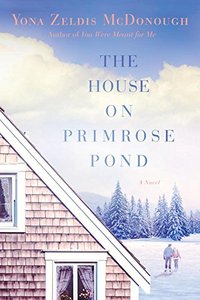
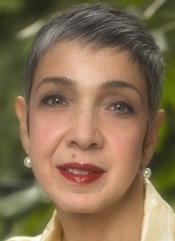 Yona Zeldis McDonough is the author of six novels; her
seventh, THE HOUSE ON
PRIMROSE POND, was out from New American Library in February, 2016. In
addition, she is the editor of the essay collections The Barbie
Chronicles: A Living Doll Turns Forty and All the Available Light: A
Marilyn Monroe Reader. Her short fiction, articles and essays have been
published in anthologies as well as in numerous national magazines and
newspapers. She is also the award-winning author of twenty-six books for
children, including the highly acclaimed chapter books, The Doll Shop
Downstairs and The Cats in the Doll Shop. Yona lives in Brooklyn, New
York with her husband, two children and two noisy Pomeranians.
Yona Zeldis McDonough is the author of six novels; her
seventh, THE HOUSE ON
PRIMROSE POND, was out from New American Library in February, 2016. In
addition, she is the editor of the essay collections The Barbie
Chronicles: A Living Doll Turns Forty and All the Available Light: A
Marilyn Monroe Reader. Her short fiction, articles and essays have been
published in anthologies as well as in numerous national magazines and
newspapers. She is also the award-winning author of twenty-six books for
children, including the highly acclaimed chapter books, The Doll Shop
Downstairs and The Cats in the Doll Shop. Yona lives in Brooklyn, New
York with her husband, two children and two noisy Pomeranians.
1 comment posted.




 © 2003-2026