THE FIRST WAR features Wu Ying and his friends taking part in the war that has been brewing between the states of Wei and Shen since the start of the first book. To write the war itself, I actually had to do research on Chinese warfare, which has some stark differences in comparison to more “Western” medieval wars.
Here’s some facts that I came across that might interest the reader
Size and Scope
Battles in dynastic China generally were much larger than most medieval European wars. Due to the concentrated and highly fertile Yangtze delta and the sophisticated farming practices involved, populations during the dynastic periods were generally much higher. As such, armies that were formed were generally quite large.
For example, the Qin Shi Huang had an estimated million-man army under his command to help conquer and control what was ancient China. The Han dynasty, afterwards, generally had six to seven hundred under command at a time.
As such, armies that were fielded could be in the forty to fifty thousand size, sometimes larger but split across different commanders taking part in the same battle.
No Castles, Just Cities
One of the biggest challenges when one has such a large army is that castles, that popular depiction of western medieval wars were not actually present in China. Because of the size of the armies, a single castle had no chance of stymieing the movement of the army.
As such, wars were either conducted in the field or, when sieges occurred, they did so at walled cities. In fact, present day China continues to have many massive walled cities using – most commonly – rammed earth walls with a baked brick or stone outer layer. The capital of Ao and Zhao city walls were sixty-six feet wide at the base and fifty feet tall.
You can see these walls still in Nanjing, Xi’an and Kaifeng amongst other cities.
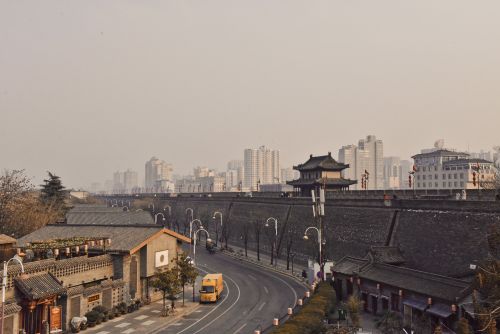
Xi’an city walls in the modern day
Elaborate Siege Warfare
No surprise then, that siege warfare was quite elaborate. The use of handheld crossbows that could be quickly reloaded were a common addition to most defensive structures. In addition, while siege ladders and towers were common, other mobile equipment like hook ladders, siege observation towers and siege towers were also introduced to help attackers get into the city.
Of course, the use of trebuchets, mounted crossbows (and ballista) were also common, with various variations and the introduction of gunpowder (not present in the A Thousand Li universe as a weapon for the most part); were also part of the equation.
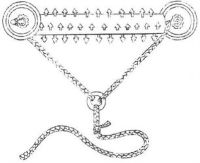
Most amusing for me were the introduction of defensive equipment to stop scaling like the Ye Cha Lei (Yaksha’s pestle – pictured here) that were dropped down from the walls to smash aside climbers.
Logistics
Of course, these large armies needed to be fed and watered and cared for. Massive logistics operations were required, everything from extremely large roads and transportation via water and the elaborate canals and rivers that helped supply such armies, but also, an understanding of the logistics of moving so many individuals.
This was quite well known, even by people as far back as Sun Tzu, who spends an elaborate amount of time providing the calculation of how many wagonloads of feed are required for each li an army must march.
The First War
As much as I have fun researching and understanding the basics of such aspects, the trick is blending such information (or discarding it) for the purpose of telling the story in THE FIRST WAR. Not only is the focus of the story on a band of cultivators, individuals who stand outside of the common hierarchy of the army, but the presence of cultivators also alters the battlefield and the tactics employed by the army themselves.
How I handle all that, of course, can only be seen if you read THE FIRST WAR. But let’s just say that the presence of individuals who can run up walls with minimal effort can make siege warfare very different.
I hope you enjoyed my post about warfare in dynastic China and some small notes of what the world might be like in the A Thousand Li universe.
Thousand Li #3
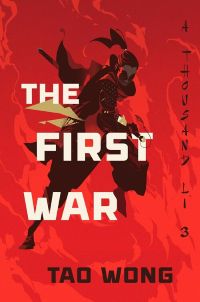
An ambitious young man is torn between his pursuit of immortality and his war‑threatened family in this gripping novel in the A Thousand Li epic progression fantasy series.
Includes a bonus short story exclusive to this print edition.
As the long winter draws to a close, war between the enemy states of Wei and Shen grows ever more inevitable.
Long Wu Ying has been forbidden by the Verdant Green Waters sect to participate in the conflict. But there is more at stake than Wu Ying could have imagined when he began his study of magic and mystical martial arts: Wu Ying’s village—the family and friends who knew and loved him when he was only a farm boy—will be caught between the amassing armies.
Now Wu Ying has a choice to make: Does he leave his people to their fate in favor of pursuing his sect’s ideals and his own ambitions? Or does he help them and give up on the chance for greatness, after all his hard‑won progress?
Or can Wu Ying find a third path‑‑one that balances both his commitment to immortality and the earthly bonds that tie him to his family?
Coming of Age | Fantasy Epic [ Ace, On Sale: November 10, 2026, e-Book (reprint), ISBN: 9798217188468 / ]

Tao Wong is the author of the A Thousand Li progression fantasy series and the System Apocalypse LitRPG series, among others. His work has been released in audio, paperback, hardcover, and ebook formats, and translated into German, Spanish, Portuguese, Russian, and several other languages. He was shortlisted for the UK Kindle Storyteller Award in 2021 for A Thousand Li: The Second Sect. In 2026, the first three books in the A Thousand Li series will be republished in hardcover by Ace Books.
When he’s not writing or working, he enjoys practicing martial arts, reading, and dreaming up new worlds. He lives in Toronto, Canada.
No comments posted.













 © 2003-2026