Excerpt from The Rose Arbor by Rhys Bowen
They came to a place where a tree had fallen across the path and had to work their way around it. On the other side they stepped out into what had been a street. The road surface had been paved but was now cracked with weeds and even saplings sprouting through it. On one side stood a row of what once had been grey stone cottages, although now they were roofless, and all that was left were crumbling walls, open to the sky. Here and there they were covered in ivy and red Virginia creeper, making them look almost part of the natural landscape and the hillside that rose behind them. A tree had grown up through the middle of what had once been rooms. On the other side of the street were the remains of a couple of bigger buildings, one still standing two stories high, although there were gaping holes where windows had been. At the far end of the street, the land rose, forming a V-shaped valley with a glimpse of blue sea beyond. It would have been an inviting location for the people who once lived there, if a little too remote.
Liz stared, taking it all in. The utter silence apart from the soft stirring of dying leaves in the breeze that came up from the sea. Not even the cry of a bird, as if all living things had abandoned this place.
“Oh, how sad,” Liz said. “To think that people lived here once. It’s like the trips we used to take with the school to old castles, but they were from centuries ago. This was within my lifetime.”
“Just the same as the bombing in London,” Marisa said. “We used to see whole streets of rubble. I remember seeing a doll lying half buried in a collapsed wall and wanting to go and take it, but my mum wouldn’t let me.”
“I suppose you’re right,” Corporal Dave said. “I wasn’t born until 1946, but I remember there was still a lot of bomb damage when we went up to London.”
“Well into the fifties in our part of the city,” Marisa said. “Oh look, there’s a church back there. That’s still standing.”
Liz looked off to her left. There was a wall with a gate in it. A line of giant yew trees led to a little grey stone church with a square tower at one end, still looking completely as it always had done.
Dave nodded. “I think they were told to try and preserve the church. I believe the former inhabitants of Tydeham are allowed back for one service each year.”
“We should take a look inside that,” Marisa said. “If it’s still inhabitable, someone might shelter in it.” She pushed open the gate that creaked on rusty hinges.
Amongst the tall grass and dying brown bracken, they could see gravestones. Marisa started to walk forward.
“Stay on the path and let me go first,” Corporal Dave said. “You never know where there might still be unexploded shells.”
“Oh, right.” Marisa looked around her before stepping forward. “But keep a lookout for any sign of recent activity. A sweet wrapper. A footprint. People usually leave some trace of themselves.” She turned back to Liz and Dave. “And we probably shouldn’t talk any more. In case they are still here and they hear us.”
They made their way up the narrow path to the church door. It was a massive thing of old oak and was locked. Dave checked around, then shook his head.
“Well, nobody came in here,” Corporal Dave said.
Off to one side there had been another building, but it had been made of wood, not stone, and was now completely flattened. They made their way back to the street. Liz looked at the gravestones, some overtaken with ivy, others now hidden by tall weeds. People have come here to visit their loved ones in my lifetime, she thought. The folks who were buried here expected to be remembered.
They came out through the gate and now started along the village street. In what had been cottage gardens, weeds now ran rampant, brambles tumbled over walls. There was no sign that people had once lived here, no washing on a clothesline, no toy dropped when a child was called in to a meal. Nothing.
“This is all there was of it?” Marisa looked around. “Hardly much of a village.”
“There was a big manor house, too, off to one side up there,” Dave said. “I think the village was built by the family who owned it. They had workers living on the spot. There was a harbour, so perhaps some of them were fishermen.”
They continued forward, stepping over the great fissures and craters that had formed.
“They certainly gave this place a beating,” Marisa said. She looked back at Liz.
Liz was standing, staring down the street, frowning.
“What’s the matter, Liz?” Marisa asked. “Have you spotted something?”
“I’ve been here before,” she said in a puzzled voice.
“You can’t have,” Dave said, chuckling. “It’s been off-limits since the war. It was taken over by the army in 1943 to prepare for the invasion. You weren’t even born, were you?”
“I was born in 1941,” Liz said.
“You’d only have been two when the people were turned out,” Dave said. “You don’t remember much from when you were two, do you? I know I don’t.”
“They say some people remember their birth,” Marisa said. “That’s why they are claustrophobic, coming down that long, dark tunnel.” And she laughed.
Liz was still frowning, looking around her. “I’m sure I was here once.”
“Maybe another village like it. There’s plenty of them on the coast here,” Dave said. “But probably not during the war. The coast was mostly off-limits for civilians. They had mines and tank traps on the beaches. And this wouldn’t have been the sort of place you’d come on holiday. No hotels or caravan parks nearby in those days.”
Liz shook her head. “I can’t remember anything else. It just came to me that I’d been here. I’ve no idea when.”
“Like I said, it would have to have been before 1943, and you’d only have been a toddler.”
They continued walking. Liz stopped, looking up at the shell of what once had been the two-story building. “There was a pub here called the Big Boat,” she said.
“The Big Boat?” Dave looked amused. He examined the building. “I suppose that could have been the pub. It’s the only larger building on the street other than the church.” He trod gingerly over to where a door had once been and peered inside. “Can’t see much in here,” he said. “Just rubble where the upstairs floor has caved in.”
“But there is a metal hook on the side,” Marisa said. “Where a pub sign might have hung once.”
She, too, tiptoed forward and peered into tall grass. Then she stopped and looked up, her mouth open. “There’s a sign,” she said.
Liz and Dave went to look. The painting on it was faded and discoloured, but they could just make out the shape of a ship in full sail and the words “The Golden Hinde.”
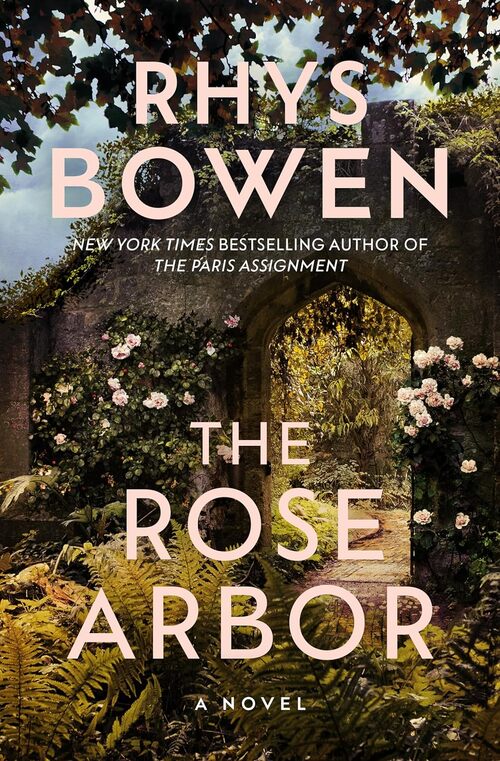
Excerpt from THE ROSE ARBOR, Copyright Rhys Bowen 2024
An investigation into a girl’s disappearance uncovers a mystery dating back to World War II in a haunting novel of suspense by the bestselling author of The Venice Sketchbook and The Paris Assignment.
London: 1968. Liz Houghton is languishing as an obituary writer at a London newspaper when a young girl’s disappearance captivates the city. If Liz can break the story, it’s her way into the newsroom. She already has a scoop: her best friend, Marisa, is a police officer assigned to the case.
Liz follows Marisa to Dorset, where they make another disturbing discovery. Over two decades earlier, three girls disappeared while evacuating from London. One was found murdered in the woods near a train line. The other two were never seen again.
As Liz digs deeper, she finds herself drawn to the village of Tydeham, which was requisitioned by the military during the war and left in ruins. After all these years, what could possibly link the missing girls to this abandoned village? And why does a place Liz has never seen before seem so strangely familiar?
Suspense | Thriller [Lake House Press, On Sale: August 6, 2024, Hardcover / e-Book, ISBN: 9781662504228 / ]
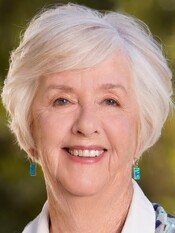
Rhys Bowen is the New York Times bestselling author of more than forty novels, including The Venice Sketchbook, nominated for the Edgar Award for Best Novel; The Victory Garden; The Tuscan Child; and the World War II-based In Farleigh Field, winner of the Left Coast Crime Award for Best Historical Mystery Novel and the Agatha Award for Best Historical Novel.
Bowen’s work has won over twenty honors to date, including multiple Agatha, Anthony, and Macavity awards. Her books have been translated into many languages, and she has fans around the world, including over 60,000 Facebook followers.
Her Evan Evans series, set in Wales, is currently being reissued by Joffe Books in the U.K.
A transplanted Brit, Bowen divides her time between California and Arizona.
No comments posted.





 © 2003-2026