During a recent conversation with one of my beta readers after she read my
latest book,
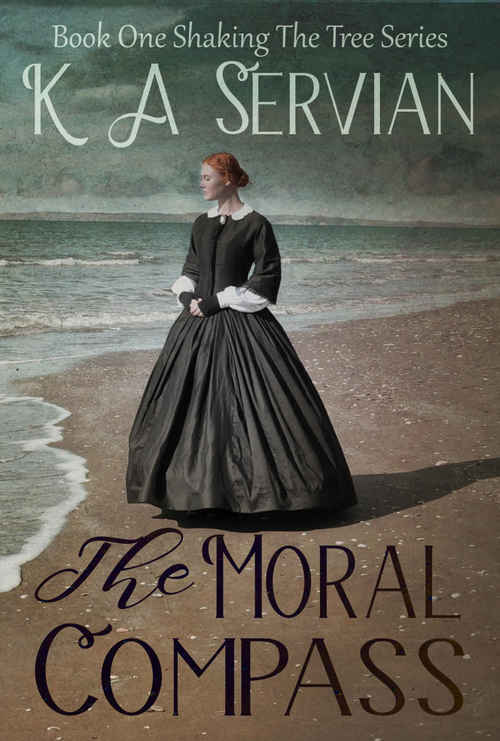
THE MORAL
COMPASS, she asked me a question that gave me one of the biggest boosts I've
had so far as a writer. Without giving away too much of the plot, she told me
that at first she'd desperately wanted one of the characters to succeed, but by
the end, she wanted them to fail. She explained that the transformation of her
feelings, which had been so strongly in favour of this character at the start,
had occurred subtly over the course of the book. By the end, she felt as
strongly negative about the character as she had felt positive about them
three-hundred or so pages earlier. She then asked me, "How did you manipulate my
emotions like that?"
The shift in her feelings was no accident and the fact that she had been on this
journey, meant that I'd succeeded in my job as a writer. I'm kind of like an
evil puppet master, toying with my characters, putting them through all sorts of
terrible trials, and in the process taking my readers on an emotional
roller-coaster ride.
There are a variety of tools writers have at our disposal to influence our
readers' emotions.
First, we have to ensure that our characters are relatable so our readers can
see elements of themselves. Usually this is best achieved by making the
characters flawed. Nobody likes Mr or Mrs perfect. We want them to stumble over
their words, feel unsure of themselves and make mistakes—because that's what
real people do. It will probably take a couple of chapters for your characters
to get under your readers' skin. But it is essential that they do if the reader
is to care what happens to them.
Once your reader is emotionally invested in the characters, we have a variety of
literary devices at our fingertips to maintain this connection. While there are
many more, here are a few examples.
Show don't tell, particularly when dealing with emotions. The reader must be
able to ‘see' the scenes unfolding before them to truly feel their impact. This
cannot be achieved by ‘telling' our reader that a character was ‘very upset'
when her dog was run over, we have to ‘show' the character crouching over the
prostrate body of her life-long companion with tears streaming down her face as
she strokes the familiar fur for the last time. Remember to use all the senses
not just sight- what does she hear, feel and smell? The senses (particularly
smell) can be as, if not more, powerful than sight alone.
Create the ties early on. If we want the reader to truly care about the
character and her deceased pet, we must ensure that before Fido reaches the
point of his demise, we've made him an essential emotional support for our
character. The stakes have to be high; losing her dog has ripped her heart out.
She may be at a low point already due to other elements in the story and this
event tips her over the edge.
Foreshadowing helps to build tension so that when the worst happens your reader
is already on edge, anticipating what is coming up. We can drop subtle hints,
but be careful that all your hints are relevant. Chekov's gun is a perfect
example of foreshadowing. Basically, he is recorded as having said that if there
is a gun in the first chapter, it must go off by the third chapter or it should
not be there. By mentioning the gun, the writer puts a seed in the readers' mind
that arouses their interest and builds tension. They are hooked and want to know
what is going to happen next. By the time the gun goes off, the reader is in a
heightened emotional state so the event affects them more deeply than it would
have done if the gun had just appeared and been shot without warning.
As I mentioned there are many other ways to manipulate readers' emotions such as
pace, cadence, forced decisions and time restraint, but hopefully this has given
you a starting point to using your writing to mess with your readers' minds.
Shaking the Tree
Florence lives like a Princess attending dinner parties and balls away from
the gritty reality, filth and poverty of Victorian London. However, her world
comes crashing around her when her father suffers a spectacular fall from grace.
She must abandon her life of luxury, leave behind the man she loves and sail to
the far side of the world where compromise and suffering beyond anything she can
imagine await her. When she is offered the opportunity to regain some of what
she has lost, she takes it, but soon discovers that not everything is as it
seems. The choice she has made has a high price attached and she must live with
the heart-breaking consequences of her decision.
Romance Historical
[Sweet Pea Publishing, On Sale: September 17, 2017,
e-Book, / ]
An overwhelming urge to create led Kathy to pursue qualifications in both
fashion design and applied design to fabric which were followed by a twenty year
career in the fashion and applied arts industries and a crafting habit Martha
Stewart would be proud of.
Kathy then discovered a love of teaching and
began passing on the skills she'd accumulated over the years—design,
pattern-making, sewing, Art Clay Silver, screen-printing and machine embroidery
to name a few.
Creative writing started as a self-dare to see if she had
the chops to write a manuscript. Kathy’s first novel, Peak Hill, which was
developed from that manuscript, was a finalist in the Romance Writers of New
Zealand Pacific Hearts Full Manuscript contest in 2016.
Her second novel,
Throwing Light was published in February 2017 and her third novel, The Moral
Compass is due out in late 2017.
Kathy now squeezes full time study for an
advanced diploma in creative writing around writing the sequel to The Moral
Compass, teaching sewing and being a wife and mother.
No comments posted.








 © 2003-2026