Amanda Carmack | Mary, Queen of Scots at Fontainebleau
One of the biggest perks of writing historical fiction is the
research! I am a library junkie, and could spend way too much time digging
through dusty old books. Getting to travel and see the places in my books is
even better! Fontainebleau is one of the most beautiful palaces in Europe, with
a fascinating history, and I enjoyed the chance to spend a little more time
there with Kate Haywood (even if only in my imagination!) at one of its most
turbulent times in history.
The 1560s were an incredible period for amazing women, and I had a lot of fun
incorporating two of them, Mary, Queen of Scots, and Catherine de Medici (one of
my favorite historical figures) into Kate’s adventures. Mary Stewart (1542–1587)
has, of course, been a figure of much fascination for centuries, the subject of
endless stories/movies/plays, and it’s easy to see why. She was renowned for her
beauty and charm, she was an adventurer at heart (even though those adventures
ended in mayhem more often than not), and she died most tragically. She is a
counterpoint to her cousin Elizabeth I’s great success.
The only surviving child of King James V of Scotland (who died mere days after
her birth) and the indomitable Marie de Guise, daughter of one of the most
powerful and ruthless families in France, Mary’s early childhood was one of much
turbulence. Henry VIII’s so-called rough wooing, trying via raids and battles to
win Mary’s hand for his son Prince Edward, drove Queen Marie to arrange a
marriage with the three-year-old son of King Henri II of France. In August 1548,
Mary was sent to France to be raised as a true French princess, setting sail
with a large retinue that included her playmates, the Maries, who would stay
with her for many years.
She was a great favorite at the French court, considered to be stylish and
charming. She loved hunting and hawking, embroidery, music, and dancing, and
mastered several languages (though she was no scholar like Elizabeth). She was
very tall (almost six feet) and pretty, with auburn hair, brown-gold eyes, and a
famously pale complexion. She married the Dauphin Francis in a lavish ceremony
at Notre Dame in 1558.
She became Queen of France much sooner than expected, when King Henri died in a
terrible jousting accident on July 10, 1559, leaving his sickly fifteen-year-old
son as king. Mary’s Guise uncles practically ran the country under King Francis
and Queen Mary, but the reign did not last long. Francis died of an ear
infection in December 1560, and Mary’s life changed forever.
With her ten-year-old brother-in-law, Charles IX, now king and firmly under the
control of his mother, Catherine de Medici, there was no place for Mary to go in
France, though she could have chosen to live there in comfortable retirement.
Various proposed marriages did not work out, and her adventurous heart led her
back to Scotland.
The other powerful woman in France at the time, Catherine de Medici (1519–1589),
did not seem at the time of her arrival as a teenage bride to be one who would
seize power. A fascinating, complex woman, she was the daughter of Lorenzo de
Medici and the French noblewoman Madeleine de la Tour d’Auvergne, and was
orphaned as an infant and raised by her uncle the pope, who arranged a stunning
marriage with Henri, the second son of the King of France, when she was
fourteen. She fell deeply in love with her husband, who was already in love with
the beautiful Diane de Poitiers and had no time for his new bride. For ten
years, Catherine had no children, was ignored by her husband, and shunned by the
elegant and snobbish French court. There was often talk of sending her back to
Florence, but she kept quiet and bided her time. After the death of her husband
and of her eldest son, she came into her own power as regent. She sent away the
Guise, presided over the royal council, and decided the policy in France for
many years. She was a great patron of the arts, such as painting, music,
theater, and architecture, as well as food in the Italian style. She was also
deeply interested in the occult, bringing in astrologers and alchemists to help
her decide policy (Ruggieri was a real figure).
One real-life aspect of sixteenth-century Fontainebleau I loved using in the
story was Queen Catherine’s dairy. I’ve visited the Petit Trianon at Versailles,
and loved seeing the still-working gardens (growing pumpkins last time I was
there), and the items like Sèvres china milk buckets, but I didn’t know that
Marie Antoinette was far from the first queen to build her own rustic retreat.
Last year I read Meredith Martin’s fascinating book DAIRY QUEENS: The Politics of
Pastoral Architecture from Catherine de Medici to Marie-Antoinette, and
learned more about this facet of royal life in France. Mi Voie (“midway”),
Catherine’s dairy, has long been demolished and its location is hard to find in
the grounds at Fontainebleau, but the queen put a great deal of work and
interest into it during her life. It was designed and decorated by many of the
same artists who worked on the château. On February 13, 1564, she hosted an
elaborate banquet there before embarking on a long royal tour with young King
Charles, and I stole a few of the aspects of this party for my own story (just a
few years early!).
I also came to feel like Fontainebleau itself was a character in Kate’s story.
It’s an amazingly beautiful place, and the corridors, richly decorated chambers,
and exquisite gardens seem to be full of ghosts! The king’s gallery, where Kate
meets Queen Catherine for the first time, the pond with its stone summerhouse,
the towers and staircases are all still there, just waiting for new stories.
Please visit my web site,
for more behind-the-scenes historical information and Tudor sources!
In the latest Elizabethan mystery by the author of Murder at
Whitehall, amateur sleuth Kate Haywood investigates deadly machinations
unfolding behind the scenes in the magnificent French court.
1561. Queen Elizabeth’s throne is threatened as Mary Queen of Scots—pushed in
every direction by opposing and powerful forces—declares herself the rightful
Queen of England. To discover her rival’s next unpredictable move, Elizabeth
dispatches a party of trustworthy intimates to Mary’s court at Fontainebleau.
Chief among them is Kate Haywood, who finds that the glittering balls and genial
banquets conceal a web of poisonous ambition that soon turns deadly.
When a beautiful and disruptively flirtatious member of the visiting party is
murdered, Kate suspects that the man who stands accused has been set up to
discredit Elizabeth. She vows to find the real killer, but the French court is a
labyrinth unlike any she has ever navigated before—and at every turn there are
more traps set to spring.
Amanda has been in love with the Tudors ever since an accidental viewing of
"Anne of the Thousand Days" on TV as a kid! Now she just wishes she could live
with them all the time--but there has to be time for writing about them too.
She also writes as Amanda McCabe and Laurel McKee, and her books have
been nominated for many awards, including the RITA Award, the Romantic Times
BOOKReviews Reviewers' Choice Award, the Booksellers Best, the National Readers
Choice Award, and the Holt Medallion. She lives in Oklahoma with a menagerie of
two cats, a Pug, and a very bossy miniature Poodle, along with far too many
books.
When not writing or reading, she loves taking dance classes, yoga,
collecting cheesy travel souvenirs, and watching the Food Network--even though
she doesn't cook.










 One real-life aspect of sixteenth-century Fontainebleau I loved using in the
story was Queen Catherine’s dairy. I’ve visited the Petit Trianon at Versailles,
and loved seeing the still-working gardens (growing pumpkins last time I was
there), and the items like Sèvres china milk buckets, but I didn’t know that
Marie Antoinette was far from the first queen to build her own rustic retreat.
Last year I read Meredith Martin’s fascinating book
One real-life aspect of sixteenth-century Fontainebleau I loved using in the
story was Queen Catherine’s dairy. I’ve visited the Petit Trianon at Versailles,
and loved seeing the still-working gardens (growing pumpkins last time I was
there), and the items like Sèvres china milk buckets, but I didn’t know that
Marie Antoinette was far from the first queen to build her own rustic retreat.
Last year I read Meredith Martin’s fascinating book  I also came to feel like Fontainebleau itself was a character in Kate’s story.
It’s an amazingly beautiful place, and the corridors, richly decorated chambers,
and exquisite gardens seem to be full of ghosts! The king’s gallery, where Kate
meets Queen Catherine for the first time, the pond with its stone summerhouse,
the towers and staircases are all still there, just waiting for new stories.
Please visit
I also came to feel like Fontainebleau itself was a character in Kate’s story.
It’s an amazingly beautiful place, and the corridors, richly decorated chambers,
and exquisite gardens seem to be full of ghosts! The king’s gallery, where Kate
meets Queen Catherine for the first time, the pond with its stone summerhouse,
the towers and staircases are all still there, just waiting for new stories.
Please visit 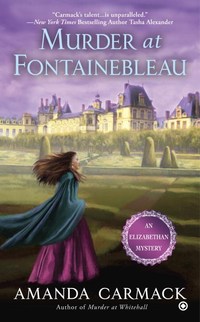
 © 2003-2026