I love the unusual tidbits I stumble across while researching my historicals. In
my most recent Scottish Regency, I have a British hero and a Scots heroine.
The timeline of the series has their tale culminating around Christmastide, so I
thought I’d incorporate the holiday into their story. I mistakenly assumed the
British and the Scots celebrated Christmas in 1818.
I soon learned I was wrong. Why you ask?
Christmas was banned in Scotland for four hundred years.
Let’s back up a bit.
As most people know, the Pagan Celts celebrated the winter solstice with a Druid
festival called Alban Arthuan on December 21
st. The Norse held
another pagan mid-winter festival call,
jól which is where the Scots
word “Yule” originated. I’m sure you’ve heard of the twelve days of Christmas.
The
jól was a twelve-day festival that included Christmas day.
Another source attributed Yule to the Anglo-Saxon word
Yula or Wheel of
the Year. In any event, the celebration marked the rebirth of the sun and a time
of increased fertility.
When the Christian Church commandeered the celebration, they weren’t too keen on
the pagan roots and practices, such as the burning of the Yule Log—a tradition
to honor The Great Mother Goddess and to bring good luck—or stealing a kiss
beneath the mistletoe, thought to increase fertility. Even the traditions of
tree decorating and gift giving have their roots in pagan rituals.
The Kirk (Church) of Scotland, which is Presbyterian, decided around 1560 that
the religious feasting day celebrated by much of Europe was associated with the
Roman Catholic Church and they weren’t having any of that “Popish” business.
Then in 1640, the Scottish Parliament thought it would be a grand idea to
declare “Yule Celebrations” illegal altogether in order to purge all the
superstitious observations of the day.
They basically disapproved of any Papal and pagan influences surrounding
Christmas, so mass was banned and Christ Mass (Christmas) right along with it.
Some ministers required people to work on Christmas Day, going so far as to
punish those for keeping Yule. It continued to be a normal workday until
Christmas became a public holiday in 1958.
Interestingly, though Christmas is still somewhat downplayed in Scotland.
Hogmanay, another Celtic festival, is widely celebrated today.
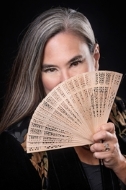
Bestselling, award-winning Historical Romance Author, Collette Cameron, pens
Scottish and Regency Romances featuring rogues, rapscallions, rakes, and the
intrepid damsels who reform them. Mother to three and self-proclaimed Cadbury
chocoholic, she’s crazy about dachshunds, cobalt blue, and makes her home in
Oregon with her husband and five mini-dachshunds. You'll always find animals,
quirky—sometimes naughty—humor, and a dash of inspiration in her novels.
Her award-winning Castle Brides Series, Highland Heather Romancing a Scot
Series, and Conundrums of the Misses Culpeppers Series, as well as her other
books, are all available on Amazon and other major retailers.
FACEBOOK |
TWITTER | GOODREADS | BLOG | Regency Rose Newsletter
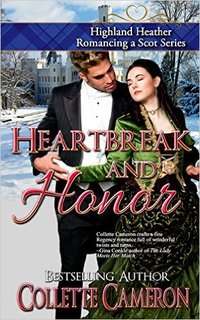
Abducted by a band of renegade Scots, Highland gypsy Tasara Faas blackens her
rescuer’s eye when the charming duke attempts to steal a kiss. Afterward, Tasara
learns she’s the long-lost heiress Alexandra Atterberry and is expected to take
her place among the elite society she’s always disdained.
Lucan, the Duke
of Harcourt, promised his gravely ill mother he’d procure a wife by
Christmastide, but intrigued by the feisty lass he saved in Scotland, he finds
the haut ton ladies lacking. Spying Alexa at a London ball, he impulsively
decides to make the knife-wielding gypsy his bride despite her aversion to him
and her determination to return to the Highlands.
The adversary
responsible for Alexa’s disappearance as a toddler still covets her fortune and
joins forces with Harcourt’s arch nemesis. Amidst a series of suspicious
misfortunes, Lucan endeavors to win Alexa’s love and expose the conspirators but
only succeeds in reaffirming Alexa’s belief that she is inadequate to become his
duchess.
Rafflecopter giveaway
6 comments posted.











 © 2003-2026