What is the title of your latest release?
THE UNRAVELING OF MICHAEL GALLER
What’s the “elevator pitch” for your new book?
After observing multiple harmful effects of varying illnesses of those close to him that he perceives as different forms of cancer, Michael Galler gains a heightened cognizance of the physical threats that can grow unknowingly inside a person. As a result, he dedicates himself to healthily fortifying his body against any comparable assault.
While growing up with his loving, widowed father and a younger brother he feels compelled to protect, Michael balances the pressures of his young life – academic achievement, high school athletic competition, and even training for the Boston Marathon.
But as he moves toward college life, he develops a promising relationship with a girl who too easily fills the gaps of his motherless upbringing – and his long-held fear of what he now thinks of as capital-C Cancer begins to take over. Everything he experiences, he experiences through the filter of trying to outrun a disease he thinks is pursuing him.
How did you decide where your book was going to take place?
The story is set between the contrasts of Boston’s unflinching city streets and the safety of its North Shore suburbs, where I grew up. The city provides such a great backdrop due to its intersection of some of the world’s greatest education, health care, and sports institutions. Michael’s self-defined ultimate test of physical endurance is to successfully complete a marathon, and what better event for him to conquer than the very marathon that has endured more than one-hundred consecutive annual runnings. Additionally, the North Shore sits at the doorstep of the Atlantic Ocean, which acts as a powerful metaphorical presence that can exhibit both the serenity of beauty and the menace of a looming threat.
Would you hang out with your hero in real life?
I don’t think he would hang out with me. Michael Galler’s friends don’t influence his life, his family does. He is singularly focused. All he wants to do is stay tethered to his family, log miles toward his marathon training and stay within the unique emotional orbit of his girlfriend.
What are three words that describe your hero?
Focused, Committed, Vulnerable
What’s something you learned while writing this book?
Language is such a powerful tool, and if used effectively can shape an idea or influence a reaction. As a writer, I may have a scene in my head that I want to play out a certain way or an emotion I want to convey to the reader. By judiciously selecting the right words and in the right arrangement, I have the power to transfer those thoughts from my mind to the reader’s. My writing pace is typically slow because I am constantly sculpting my paragraphs to maximize their impact with an economy of words.
Do you edit as you draft or wait until you are totally done?
I simply cannot start a new chapter until the one I am writing has been completely finished. So, I am constantly re-reading and editing while I am writing that chapter. When I start the next chapter, the one I am leaving is as edited as it is going to get. (At the publishing stage, it will certainly be reviewed and edited again as part of that stage, but relative to the writing process itself, I can’t go to the next scene until the one I am in is completed…just like life itself.)
This helps me in a couple of ways; I’ve unwittingly carefully vetted the ideas within the chapter, so I’ve already discarded ideas that won’t have an opportunity to bloom in future chapters and I have also fleshed out ideas that I can revisit in future chapters and they will feel as if they have matured when I reuse them.
One example is Michael’s mother’s garden. When I introduced it, and grinded out the first scene it appears in, the garden itself felt like it had become a character and I was able to return there for other scenes without having to rebuild its significance.
What’s your favorite foodie indulgence?
Right now I’m into frozen grapes. They are great thirst quenchers in quick easy doses that you can’t eat too quickly because they are too cold.
Describe your writing space/office!
My workspace is nothing special. A desk or dining room table that I can set my computer on is all I need. I generally have to be home where it is quiet; I cannot sit in a coffee shop and write like I see so many people doing, as there are just too many distractions. I would also include my nightstand by the bed as part of my workspace; in those quiet 30 to 60 minutes of when I am trying to get to sleep, I may think of a piece of dialogue or a theme I’d like to embed in a specific chapter and I have to be able to write it down quickly or I risk forgetting it the next day.
Who is an author you admire?
I admire different writers for different reasons. Some are better at dialogue, some are better at scene building, some are better at character development. But if I were to choose just one, John Steinbeck seems to have an innate ability to attach meaning and significance to even the most benign objects. This makes his writing so much more tactile.
Is there a book that changed your life?
After getting to know me, someone had once suggested that I would really enjoy Atlas Shrugged by Ayn Rand. At the time, I had never heard of either the book or the author. It took me more than six months to get through the more than one-thousand pages of tiny print, but it completely changed the way I look at the world. I cannot read a newspaper headline without thinking about the incredibly large themes portrayed in this novel. No other book I have read continues to live with me to this day.
Tell us about when you got “the call.” (when you found out your book was going to be published). Or, for indie authors, when you decided to self-publish.
I had long since “put the book away”. But I eventually attended an event at my town library that with a panel of local authors and I spoke to a couple of them after. One had introduced me to the concept of hybrid publishing and her publisher, SparkPress. I went home, visited their website, followed their submission instructions and within two weeks they had responded very positively to me. After vetting them more carefully, I proceeded to have my manuscript copyedited, then signed a contract after some negotiated adjustments. All I could think about was that it was “now or never”, and that “this is really happening”. It’s been a year since I signed the contract and my publishing date is imminent, and I could not recommend SparkPress highly enough. They exceeded my expectations in almost every way.
What’s your favorite genre to read?
When I got married and my wife and I merged the contents of our lives, she unpacked boxes of classic novels that I had heard of, but had just never read (nor REALLY knew what they were about). I asked why she had so many of them and she simply answered they were from high school and college. I cursed my own education and started reading through them. I love reading the classics. And now, when I see them referenced somewhere, I understand the full thematic context of the reference.
What’s your favorite movie?
It’s impossible to have a single favorite, but I love Good Will Hunting as a well-crafted screenplay where the carefully written and executed dialogue drives the story. My favorite scene is when Matt Damon’s character meets Robin William’s character for the first time. The conversation goes from a casual introduction of two people who have never met before to Robin Williams’ hand on Matt Damon’s throat in less than four minutes; and then it is instantly diffused with a mere two words. That scene was brilliantly written and acted, but without the deft dialogue, and such economy of words, it would never have worked.
What is your favorite season?
I’m from the Boston area and the definition of “season” is a little squishier here. I’ll just say my favorite season is “New England weather”.
How do you like to celebrate your birthday?
At this point, it’s just another trip around the sun. I’m happy doing again whatever I had just done the day before.
What’s a recent tv show/movie/book/podcast you highly recommend?
It’s certainly not recent, but Lost, to me, would be the greatest TV show ever aired. And “the hatch” in Season 2 has to be the greatest plot device ever written. The show’s story, it’s method and style of telling the story from the perspective of every character, and the interconnection of every character, even the minor ones, was expertly told. If you haven’t seen it, find it and watch it. (And per the question above, Lost led me to the book Lost Horizons, which introduced me to Shangri-La. You may have heard of Shangri-la, but do you really know where it is and what was special about it?)
What’s your favorite type of cuisine?
Please invite me to a barbeque.
What do you do when you have free time?
I started playing the drums five years ago when I was late in my fifties. I may not be learning and practicing rudiments, but I do enjoy learning and playing classic rock songs from the 60s, 70s, and 80s.
What can readers expect from you next?
I used to make up silly five-minute bedtime stories when I put my young daughter to bed (e.g., “There once was a turtle who didn’t have a shell…”). One day, I decided to make up a story that would be continued each night, and that went on for well over a month. When I was done, I thought the ideas I created would be worth fleshing out into a true novel. I took a lot of notes and put them away. I’m now working on bringing that story to life. No surprise, it is about a father and daughter relationship, and the challenges of letting go.
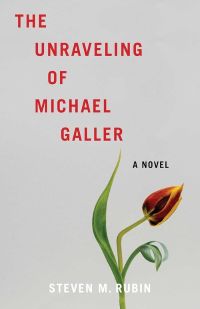
A Novel
For fans of nuanced, slow—build narratives, a psychological family drama about a teenager whose entanglement in an intense, complex new relationship exacerbates his obsession over his greatest fear.
After observing multiple terminal effects of varying illnesses of those close to him that he perceives as cancer, Michael Galler gains a heightened cognizance of the physical threats that can grow unknowingly inside a person. As a result, he dedicates himself to healthily fortifying his body against any comparable assault.
While growing up with his loving, widowed father and the younger brother he feels compelled to protect, Michael is able to balance the pressures of his young life—academic achievement, high school athletic competition, and even training for the Boston Marathon. But as he moves toward college life, he develops a promising relationship with a girl who too easily fills the gaps of his motherless upbringing—and his long—held fear of what he now thinks of as capital—C Cancer begins to take over. Everything he experiences, he experiences through the filter of trying to outrun a disease he thinks is pursuing him.
A dramatic coming—of—age tale with a dark psychological twist, The Unraveling of Michael Galler explores the motives of a teenage boy so overwhelmed by an obsessive fear that he loses his grip on reality.
Thriller Psychological | Coming of Age | Horror [ Spark Press, On Sale: May 12, 2026, Paperback / e-Book, ISBN: 9798896363743 / eISBN: 9798896363750 ]
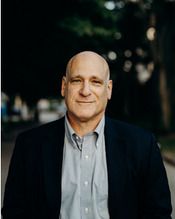
Steven M. Rubin was raised in a suburb of Boston, MA, played football at the University of Pennsylvania, and spent his career developing, negotiating, and implementing employee benefit strategies for large employers. He has completed the New York Marathon, the 100th running of the famed Boston Marathon, and the Marine Corps Marathon. Although a heart attack ended his third marathon at the halfway mark, he returned five years later to successfully finish what he started. After raising three children with his wife, Kerrie, he now lives in Weston, Connecticut.
No comments posted.







 © 2003-2026