The Busty Bodice Club series features sisters who are proud of their curves. My female character, Lady Penelope Harrington, is the youngest sister and considers herself a bastion of fashion and hats. Why hats? Because they made her look taller. Let’s talk about the concept of beauty. All of us are familiar with historical-romance female characters who look luminous, like a faintly tragic marble statue. How did women incorporate fashion accessories to highlight their beauty and social prominence?
Let’s begin at the very top—literally—with hats. No Regency ensemble was complete without a bonnet, and not just any bonnet. These were architectural marvels of fabric and ribbon, designed to frame the face like a flattering portrait. The poke bonnet, one of the most iconic styles, extended forward to shade the face (protecting that precious complexion from the elements) while also creating an air of mystery. You could flirt, observe, and quietly judge your neighbors—all while partially concealed behind a strategically placed brim. Introverts everywhere should be taking notes.
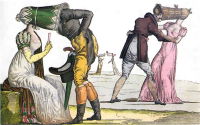
A French satire print on the poke bonnet in the 1810's; "Les Invisibles en Tete-a-Tete". The bonnets were called "invisibles" in France because the face of the wearer was virtually concealed except from the front.
Straw bonnets were especially popular for daytime wear, often trimmed with ribbons, flowers, lace, or feathers. Lady Penelope would have a field day with those decorations. As she always says, “The bigger and more elaborately decorated, the better, though within the bounds of taste.” According to fashion historian Aileen Ribeiro, “bonnets became essential outdoor wear, both for fashion and for the preservation of a fashionable complexion” (Dress and Morality, 1986). Translation: your hat was both a style statement and a portable parasol.
And oh, the accessories didn't stop there. Gloves were practically mandatory for any respectable lady venturing into society. Kid leather gloves, soft and fitted, were the gold standard. They signaled refinement, cleanliness, and the important fact that your hands were not accustomed to manual labor. Elbow-length gloves added an extra dash of elegance for evening events, making even holding a teacup seem like a performance worthy of applause.
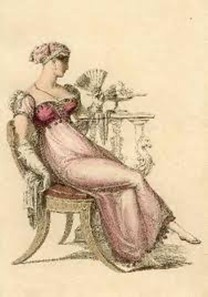
Ackermann's Repository 1812 April Plate 27 Ball Dress
Then we have the reticule—essentially the Regency handbag, though far more charmingly named. These small drawstring purses replaced the bulky pockets that disappeared with the rise of slimmer gowns. Reticules were often embroidered, beaded, or otherwise decorated, because even your storage for handkerchiefs and calling cards had to be fashionable. One imagines a heroine dramatically retrieving a letter from her reticule while gasping at its contents.
Shawls were another must-have, particularly those made of fine cashmere imported from India. These were not only practical (English weather being what it is) but also a sign of wealth and taste. A beautifully patterned shawl draped artfully over the shoulders could elevate even the simplest gown into something worthy of admiration—and perhaps a few envious glances.
Jewelry in the Regency era leaned toward the delicate and symbolic. Think fine chains, cameos, lockets, and rings rather than the heavy, ostentatious pieces of earlier periods. Cameo brooches were especially fashionable, reflecting the era’s obsession with Greco-Roman aesthetics. Lockets often held miniature portraits or locks of hair, because nothing says romance like carrying around a tiny piece of your beloved at all times.
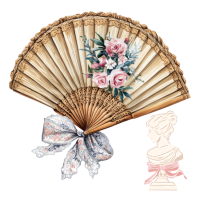
And let’s not forget fans. While technically practical (ballrooms could get quite warm), fans also served as tools of flirtation. A well-timed flick or flutter could convey everything from coy interest to polite dismissal. Entire “languages of the fan” were rumored to exist, though how widely they were actually used is up for debate. Still, for a society that thrived on subtlety and social status, the idea of secret codes hidden in accessories is too tempting. Can you imagine all the Harrington sisters communicating through “fan-speak”?
Now, let’s talk about footwear. Regency shoes were typically flat or low-heeled and made of soft materials such as satin or leather. They were dainty, almost slipper-like, and entirely impractical for anything other than smooth floors and short strolls. Mud? Uneven ground? Absolutely not. These shoes were made for gliding across polished surfaces, preferably while catching the eye of a certain brooding gentleman across the room.
But what about body shape—specifically, how curvy women fit into Regency fashion and society?
Here’s where things get particularly interesting. The high-waisted, flowing gowns of the Regency period actually created a silhouette that de-emphasized the waist and hips, focusing instead on the bust and a long, vertical line. The empire waist could be quite forgiving, skimming over the lower body and allowing for a softer, fuller figure beneath.
A gently rounded figure might be seen as feminine and appealing, but anything too far outside the slender ideal risked being labeled unfashionable. Regency society, like many others, had a knack for celebrating beauty while quietly enforcing strict standards.
That said, social class and confidence played enormous roles. A wealthy, well-dressed woman who carried herself with grace and charm could absolutely be admired, regardless of whether she perfectly matched the era’s ideal silhouette. As with so many aspects of Regency life, presentation was everything. The right gown, the right accessories, and the right demeanor could work wonders. The Harrington sisters would excel at this.
And let’s be honest—romance readers know that true allure in a Regency setting goes far beyond measurements. A heroine with sparkling wit, emotional depth, and a refusal to be overlooked will always outshine a purely decorative beauty. (According to Lady Penelope, it certainly doesn’t hurt if she has an excellent hat.)
In fact, the very accessories that defined Regency fashion could also serve as tools of self-expression. A bold choice of ribbon color, an unusual piece of jewelry, or a slightly daring hat could signal individuality within a society that prized conformity. Even within strict social codes, there was room for personality—and perhaps a touch of rebellion.
So, the next time you picture a Regency heroine stepping out for a promenade or preparing for a grand ball, take a moment to appreciate the full ensemble. The carefully chosen bonnet frames her face. The gloves smooth her gestures. The reticule holds her secrets. The shawl draped just so whispers elegance. Each piece tells a story of fashion, identity, status, and the delicate balance women of the ton had to juggle in their social lives.
And if she happens to have a little extra curve beneath that flowing gown? All the better to scandalize society, especially if she pairs it with confidence, charm, and a hat that says, “Yes, I know exactly what I’m doing.”
Busty Bodice Club
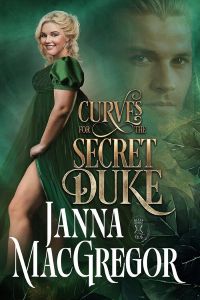
She told the school she was married.
Her best friend doesn’t know he’s the husband.
Lady Penelope Harrington needs a husband and to live humbly for a year to inherit her fortune. She'll teach at her old boarding school to live a meager life, but she's not ready to marry. So she tells everyone she already has one.
The man she names is her lifelong best friend.
Now Edward Thornton must pretend to be her husband while they travel to Scotland together… sharing rooms, risking scandal, and staying far too close for comfort.
He’s spent his entire life protecting Penelope. He’s also loved her for years. She has no idea.
But when a mysterious stranger begins following them across the countryside, it becomes clear the danger they feared for Penelope’s fortune may not be meant for her at all.
Because the greatest secret in their fake marriage…
belongs to Edward.
And it’s one he doesn’t even know he carries.
Romance Historical [ Author Self-Published, On Sale: May 26, 2026, e-Book, / ]

Janna MacGregor was born and raised in the bootheel of Missouri. She credits her darling mom for introducing her to the happily-ever-after world of romance novels. Janna writes stories where compelling and powerful heroines meet and fall in love with their equally matched heroes. She is the mother of triplets and splits her time between Kansas City and Minneapolis with her very own dashing rogue, and one smug, but not surprisingly, perfect pug.
No comments posted.












 © 2003-2026