Book title?
THEY COULD BE SAVIORS
What is your elevator pitch?
A sisterhood of psychedelic-assisted therapists risks everything to forcibly disrupt the lives of the world’s most powerful men. Not to punish them, but to demand humility and responsibility. THEY COULD BE SAVIORS asks what happens when the people who helped break the world are made to confront the consequences of their power.
How did you choose the setting?
There are really two settings layered together. The facility is a high-tech luxury prison hidden in the Canadian prairies. Geographically, it’s a space readers would believe a structure of that size could be built without being noticed. It also needed a climate that allowed the characters to go outside so their transformations weren’t confined to four walls. The concealment technology may not exist yet, but the luxury of it matters. I wanted to be clear the men aren’t being punished, rather they’re being guided. The environment gives them every reason to cooperate with the women while also reflecting the women’s belief the men are human beings, not villains.
Three words to describe your book.
The main word I want readers to come away with is “hopeful”. So many speculative, dystopian novels look at the future as doomed. This story insists change is still possible. The second is “transformative”. The characters, both men and women, go through big arcs, and by the end have been fundamentally changed by what they’re forced to face. And third is “feminist”. It’s about feminine-led leadership rooted in intuition, empathy, depth, and connection to humanity and nature.
Side character who stole the show?
I know a lot of readers would say Mel, but for me it was Cath. I knew more about Mel when I started writing than I did Cath, as Mel had a lot of me in her. I didn’t know Cath at all, but I fell in love with her vulnerability and her loyalty. Her backstory is heartbreaking and although she may appear to be the quietest of the women, her inner strength is unyielding.
What surprised you most while writing?
I thought I knew exactly how I felt about billionaires. I expected to write them as evil. What surprised me was realizing they could be both culpable and human at the same time. They aren’t excused, but they aren’t caricatures either. Once I stepped inside their perspectives, I found myself feeling compassion for them. I still believe billionaires are immoral, but I think that has a different meaning than evil.
Do you edit during drafting?
When I started writing, I knew nothing about craft, so I just wrote. Now, after taking countless classes and joining critique groups, it’s difficult not to edit as I go. But I’m learning to stop myself. Creativity flows better when I don’t try to fix every sentence midstream.
Favorite writing snack?
Steph’s Tofu from PCC Market. I’ve learned to make my own version. It stays fresh in the fridge for a long time and a couple of pieces are incredibly satisfying.
Describe your writing environment.
I “try” to keep my desk clean, but the universe laughs at that intention. I have a small Tiffany Blue plaque my mom gave me that says, “Be the change you wish to see in the world.” It reminds me why I’m doing this. Then there are my cats…don’t tell anyone, but they actually wrote half the book. That’s where my editing skills came in. They had a lot of typos.
Author you admire? Daniel Quinn. Which leads to…
Is there a book that changed your life?
ISHMAEL. It was the first book that made me question the foundations of our civilization. Quinn explains how humanity shifted from hunter gatherer cultures to agrarian societies. We began producing more than enough food for everyone, yet also began believing there was never enough. Resources were locked away, hierarchies formed, and a belief in scarcity took hold despite living on a planet of abundance.
THEY COULD BE SAVIORS builds on this idea. Billionaire-ism creates that same scarcity mindset. We look at poverty and suffering around the world and believe we don’t have enough resources to go around. The truth is we do. The truth is the top 1% owns more wealth than 95% of humanity combined (Oxfam). Scarcity isn’t natural and suffering isn’t inevitable. We’ve created the systems that allow for it; therefore, we can create new systems that don’t.
Theme you hope readers see?
Healing is both personal and collective. When you heal yourself, you behave differently in the world. I think most people have heard the phrase “Hurt people, hurt people”. If we can heal our own hurt, we are less likely to hurt others. Imagine that on a global scale.
Theme readers always notice?
The women don’t seek credit, recognition, or praise. They don’t even use last names. Their only focus is solving the problem. That quiet refusal of ego is something readers consistently respond to.
Character readers love to hate?
Definitely Josh. Until they don’t.
Unexpectedly loveable character?
I’d have to say Matt. His unraveling is painfully honest. Although he’s done real harm to humanity through his social media platform, his intentions were always rooted in wanting people to feel connected to each other.
Emotional core of the story?
That even people who seem beyond redemption can find their way back to themselves. I bugs me when I hear someone say, “people don’t change.” I look at my own life and see how completely different I am than I was ten years ago. How boring would life be if people didn’t change?
Book club question you want discussed?
A central question is whether the end justifies the means? At what point does preventing global harm make extreme intervention morally defensible, even when individual rights are violated?
I’m currently working on a book club guide which also has bonus material cut from the book. It will be available to newsletter subscribers for free, or for $.99 as an e-book on Amazon. I’ll also happily attend book club discussions via Zoom when at least five members purchase the book. Just email me so we can find a time that works for everyone.
Favorite moment?
When Josh starts talking about colonizing Mars as an escape plan and Mel responds by pointing out Mars has no resources, no atmosphere, and no ecosystem to sustain life. She challenges spending billions on space instead of repairing the damage we’re causing here on Earth. It’s what I’ve always wanted to discuss with every real-life billionaire investing in rockets while our beautiful planet burns.
Hardest scene to write?
The psychedelic trips. I’ve journeyed many times, but describing them to someone who’s never experienced one is nearly impossible. Psychedelic experiences resist language. They’re emotional, visual, spiritual, and somatic all at once, and no two journeys are alike. Writing them required translating something profound and nonlinear into words.
Unexpected fact about your writing process?
Every bit of this story came to me through meditation. I wasn’t someone who always dreamed of writing a book, so it was a shock when I realized I couldn’t ignore the call. I never really experienced writer’s block, because when I got stuck, I meditated and the next part of the story revealed itself. I had no idea what the characters would do or how it would end. I believe the Universe asked me to write this book because it’s very necessary right now.
What do you want readers to carry with them?
That as a society we need to change the narrative around billionaire-ism. Instead of viewing it as success, we need to recognize it as a mental illness. It’s hoarding at an extreme that affects all of us and the planet. The stories we tell about wealth shape what we tolerate, excuse, and celebrate. When those stories change, what becomes possible changes with them.
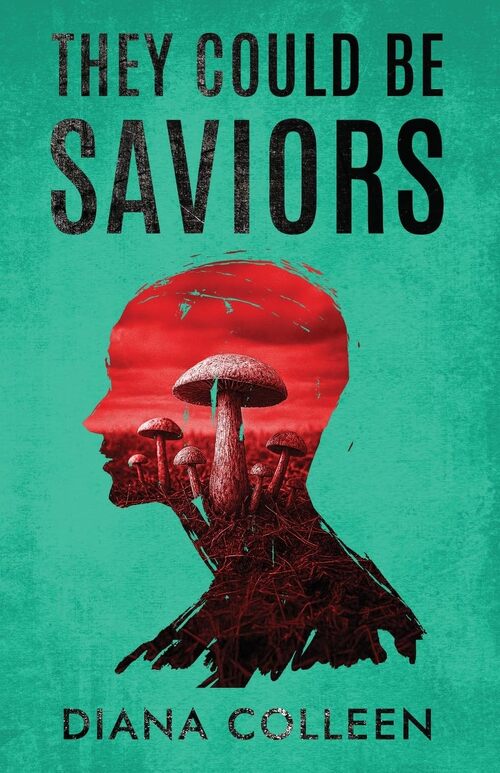
A near-future speculative fiction about billionaire accountability, psychedelics and the fight for our future.
What if the only way to save the planet is to kidnap the billionaires destroying it?
For readers who grew up on The Hunger Games and are ready for a quieter but no less daring confrontation of power, THEY COULD BE SAVIORS turns the rebellion on its head. Instead of youth rising against authority, the world's most powerful men are the ones taken captive. But they're not fighting each other. They're fighting their own consciences.
It imagines what happens when those at the very top are stripped of control and made to face the future they've helped endanger.
Five billionaires awaken in captivity, cut off from their empires and stripped of control. Among them is Josh Latham, CEO of the world's largest corporation, who built his fortune on exploitation while the planet burned. Their captors are not soldiers but healers: a collective of women determined to break through their defenses using psychedelic therapy.
At the center is Mel, a grief-hardened visionary who believes that only by dismantling the egos of these men can they be compelled to face the climate crisis they've ignored, and perhaps begin to repair it. But transformation is messy, especially when it's forced -- and if the men refuse to change, they may never walk free again.
THEY COULD BE SAVIORS is a hopeful, near-future novel that explores billionaires confronting the damage they've done, climate justice, and the unpredictable road to redemption. Blending the transformative tension of Nine Perfect Strangers with the intimacy of character-driven speculative fiction, it asks:
What would it take to make the world's wealthiest men finally fight for everyone, not just the elite? And does the end justify the means?
Thriller Psychological | Dystopian [ Independent, On Sale: January 13, 2026, Paperback / e-Book, ISBN: 9798999808516 / eISBN: 9798999808509 ]
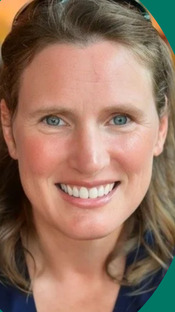
Diana Colleen grew up in Kamloops, Canada, but at the age of 25 she experienced a sexual assault that changed the course of her life. Everything she had been working toward suddenly felt impossible, so she packed her life and her cats into her car and drove across the border to Seattle to begin again. By 2018, writing was far from her mind. She wasn’t thinking about much of anything. Suicidal and searching for meaning, she eventually found an underground psychedelic-assisted therapist who transformed her life. That experience didn’t just save her, it reshaped her entire understanding of healing and consciousness. Today, she is a trained psychedelic facilitator dedicated to exploring how expanded states of consciousness can help heal both personal and collective wounds.
The idea of writing a novel wasn’t something she pursued; it found her. Every piece of They Could Be Saviors came through meditation, a quiet whisper from the universe that refused to be ignored. The story was a surprise, but not an accident. Through speculative fiction, she examines the raw questions of our time: climate change, inequality, and the soul sickness created by unfettered wealth.
She believes billionaires are dragons, hoarding wealth while the world burns, and that no one should be allowed to amass such power at the expense of others. She believes in science, social democracy, and universal human rights. Most of all, she believes that if the right minds open in the right way, humanity could change its course and maybe even save itself.
Her writing is her way of trying.
No comments posted.







 © 2003-2026