Excerpt from WHEN WE WERE EVIL by S. B. Saves:
CHAPTER 1
My appearance now is completely different to my Year 10 school photo and my infamous mugshot, taken just over a year apart. Those are the two images most people connect with the name Ruby Wilcox. If you lived in the UK at the time when the story broke, you couldn’t get away from them; the photos were blown up on the front pages of every newspaper and used as stills on the TV. Both photos show a scrawny, unremarkable-looking girl with bright red hair, thin lips, and a pointy nose. Today, my hair is bottle blond and cropped short, which gives me a more pixyish look that would probably be cute if not for the lines carving across my forehead and scraping from the corners of my eyes. I’m about fifteen years too old for the style I’m trying to pull off, but my ever-changing looks have never been about vanity. I have two piercings in my left eyebrow, a small hoop in my nostril, and a ring in the centre of my bottom lip, as well as a stud in my tongue. A smudged-looking tattoo of a butterfly occupies one side of my neck that, from a distance, resembles the faded bruising of a throttling.
Unless you were actively searching for me, you wouldn’t recognise that haunted teenager in the weathered husk of my forty-year-old body. The High Court rejected my appeal for anonymity under the Mary Bell Order, so hair dye and an alias are the only things protecting my identity. To track me down, all you’d have to do is know your way around the restaurants and pubs in London that pay cash-in-hand, ask a few questions, drop a general description. The butterfly tattoo that I got shortly after my release seemed like such a necessity at the time (I was still only twenty-six), but like most things in my life, it’s something I sorely regret. I wanted a visual metaphor to remind me that I was a new person, but all I did was brand myself with a homing beacon to help any True Crime fanatic or media bloodhound spot me. Usually after a few months at a new place, the paranoia will creep up on me and I’ll start to wear high-collared shirts, or even go so far as to smear my neck with foundation.
Age and gravity have had their way with me, and I am considerably heavier now, which all keep the masquerade moving. But sometimes, through no fault of my own, the mask slips.
The moment I saw the man approaching the bar, I knew he knew. I had spotted him about ten minutes before, lingering by the fruit machines, checking his phone as though awaiting some urgently important message. It was a Thursday morning, and the Ship and Bottle was empty except for the red-faced regulars dotted around the tables at the back, stretching out their pints with calculated sips.
With his flannel shirt and tight jeans, the man was about as out of place in this pub as I would have been on a catwalk. When he had summoned enough courage to cross the empty dancefloor, my stomach rolled over. With each step he took, I could see sparks of nervous excitement dancing in his eyes through his horn-rimmed glasses. He reminded me of a wary gazelle nearing a watering hole. With his slight, almost childish build, and his smooth unblemished face, he could almost pass for a student, but I guessed he was probably closer to thirty.
“Hello,” he said, fidgeting a fiver out of his wallet. “Could I have a glass of Coke please?”
I didn’t move. I waited for him to make eye contact again before saying, “Is that all you want?”
His Adam’s apple bobbed sharply in his slender throat. “Well, perhaps a moment of your time.” A smile twitched on his lips. The butterfly felt like sunburn on my neck.
“A moment of my time?” I sprayed Coke into a pint glass and plonked a slice of lemon into it but held the drink hostage. “What do you want my time for?”
An airy laugh slipped from his mouth. His fingers wriggled back into his wallet, feeling for a business card. “My name is Peter Fidditch,” he began, relieved to have made his introduction. He cleared his throat and said, “I work for um...well, it’s my company actually, Z- uh, Zelda Lane, um...”
My mouth was full of cotton balls. I took a large gulp of his Coke.
His eyes flicked to my name badge. Luanne. “I’m not here to cause trouble.”
“Then listen to me,” I leaned on the bar, my forearms soaking in a puddle of Fosters I’d spilt earlier and neglected to sop up. “I don’t know what Zelda Lane is. I don’t care to know either. Whatever you’re here for, I’m not interested. Do we understand each other?”
He nodded thoughtfully, fanning his business card against the palm of his other hand. The aura of nervousness began to recede, and I could see his body language changing; he pinned back his shoulders, stood taller. Perhaps he realised that the demon he had been psyching himself up for was nothing more than a cranky, middle-aged woman; a thing to be pitied.
“They’re making a film about Vincent Street. A dramatization, I mean. I don’t suppose you knew that. Or maybe you did?” I took another gulp of his Coke. There had been rumours of films and a TV series about Vincent Street since the trial, but to date, the only thing to come close was a BBC documentary that was so factually inaccurate, it received almost six-hundred complaints from the public.
I always knew they would find a way to glamourise Vincent Street and had carried that particular dread like a tumour growing in my stomach, but always hoped that the subject matter was too grisly to redeem for the screen. A naïve part of me believed that nobody would go near the case for fear of public outcry, condemning anyone that tried to profit from our crime.
“Netflix are going to announce on Monday. They’re still in pre-production, haven’t mentioned any cast members or anything yet, but it’s slated for next summer. There’s an embargo on that information, but I’m in the business. I’m a documentary maker.”
I concentrated on my breathing, watching the bubbles fizz and pop in the pint glass. Moisture beading my forehead, tendrils of hair sticking to my face. An image flittered through the confetti of my memory; Mia sitting on the stairs, her face painted red with blood. I felt a weight lodge in the centre of my chest and tried to swallow it down.
“I’m not here to interfere with your work,” Fidditch told me. “My being here is completely confidential.”
“I have nothing to say to you,” my voice cracked. “Please, look, I’m sorry I was rude to you. I don’t...” the grovelling was making me breathless. I wiped my clammy palms on my thighs and shuffled off down the bar. There were empty glasses streaked with suds sitting on a tray. I picked it up, the glasses clinking together, and began toward the dishwasher. Fidditch watched me pass, saying something about him not judging me, about me finally having my say. A glass rattled off the tray and smashed on the floor to a scattered, sarcastic applause from the regulars.
“Look what you made me do,” I hissed at him, bending to pluck the shards from the sticky floor.
His shadow loomed over me as he leaned across the bar. “I’d love to just sit and have a ten-minute chat with you. And I promise, if you don’t like what I have to say then I’ll just leave you alone. You won’t hear another thing from me or anyone at Zelda Lane again.”
“I have nothing to say,” I almost shrieked, my hands curled into claws.
“Alright then, that’s fine,” he soothed like a dad trying to calm a screaming new-born.
“But let me just say this–” A piece of glass bit into the webbing between my thumb and index. I brought the wound to my mouth, tasted blood.
“They’re going to cash in on your life story and use their artistic license to paint you however they want.”
Light glinted off the glass. Black spots bloomed in my vision. Madonna singing Get into the Groove funnelled in and out of earshot over the bleating fruit machines.
“They’re basing the series on Simon Ward’s book Dead Behind the Eyes, and you and I both know that it is riddled with inaccuracies. It’s...it’s a lot of assumptions, conjecture...they’ll sensationalise it.”
I reached under the sink for the dustpan and brush and swept up the remaining chips of glass. Air worked its way up my gullet. I wanted to burp or be sick, but neither happened. A tide broke against the walls of my stomach. Grabbing the counter, I pulled myself to my feet.
“Zelda Lane is my production company,” Peter said. “I’ve won awards for my work, and I can assure you, I would never take liberties with your story.” He pulled in breath, assessed my expression, and continued. “I want to tell your story, in your words. I want people to know the truth about The Vincent Street Incident, and I want to get it out ahead of Netflix.”
My eyes rolled across the room, scouting for Louise. I saw her by the toilets, wiping down a table with a J-cloth. “Louise,” I yelled and waved my bloody hand in the air. She looked up from her idling with a frown. “Louise, can you come and relieve me for a second please?”
Peter’s head snapped toward Louise, then back to me. When he spoke again, it was frenzied, a sprint to the finish line. “I can offer you a substantial fee. Substantial. With residuals, of course. And that’s before we even discuss the redemptive aspects of the documentary, what it will do for your profile.” He ran a hand through his hair, on his way to becoming flustered. “Don’t you want people to know the truth, Ruby?”
“Don’t use that name in here,” I spat in an angry whisper. “I just want to be left alone.”
“I’m sorry, I’m sorry, okay? But do you think they’re going to leave you alone when the film premiers? When it’s trending, when the Netflix press machine gets all the cogs moving and this thing picks up steam? It’s going to blow all that dust off the case and open Vincent Street up to a whole new generation. You’re going to have every internet detective hounding you, and that’s before we get to the social justice warriors that weren’t even alive when Vincent Street happened. And the only way to combat that is to hit them with the truth first, take the wind out of their sails.”
Louise padded across the pub in no hurry at all, tying her blue-and-green hair into a ponytail with a scrunchy. Peter gave her a quick glance to gauge her proximity, and became antsy, rolling his shoulders, shifting his weight from foot to foot.
“Why do you want to keep punishing yourself, Ru – sorry, Luanne? Because let me tell you something, I know that things didn’t go down in Vincent Street the way they were portrayed to the public. They were looking for a scapegoat and they found it. But I believe you, otherwise I wouldn’t even be here speaking with you now. I believe you, and so does my partner at Zelda Lane. I mean, Jesus Christ, there’s far more evidence to suggest that you were telling the truth than anything else. And you’ll have our full support. We even have an investigative journalist at The Guardian ready to do a big piece on your story to help promote the documentary. They’re going to go in-depth and finally give people the truth. It’s going to completely blow everyone away. We’ll stand behind you all the...”
“What’s up?” Louise asked me around a wad of bubble gum, the sickly strawberry smell wafting from her glossy lips.
“Don’t feel well,” I managed. “Might be sick.”
“Ok go then,” her face became alarmed. “Don’t take ages. I mean it, Luanne.”
“Yep,” I brushed past her and made a beeline for the ladies. I became aware of Fidditch following my stride. “You’re harassing me. This is harassment what you’re doing,” I snarled. A kickdrum began beating a dull rhythm in my skull. The room was starting to gently pull away from me.
“Please, just take this,” he extended his business card; black calligraphy splashed on eggshell. “All my details are on there. I’d really love for you to just hear me out on this properly. My mobile number is there too; that’s my personal number and you can call me any–”
I snatched the card, blotting it with blood, and charged for the toilet, feeling more drunk than any of the patrons.
Then he grabbed me, his hand catching my bicep. I whirled, fists clenched so tightly that my forearms throbbed up to the elbows. His grip loosened and he stepped back, jaw slack with anticipation.
“I didn’t mean to touch you,” he blurted, his hands flying up in surrender. “Sorry, it was reflex. I shouldn’t have touched you, I just...” his expression softened. In any other situation, his handsome features might’ve been disarming, but just then, he was a child pulling a tried-and- tested puppy dog routine. “You’ve done your time. Don’t take the blame for Mia anymore. Let us help you.” He brushed a single curl from his forehead and added, “I know you want to stay hidden. But that’s not going to be an option for much longer.”
Excerpt from WHEN WE WERE EVIL by S.B. Caves, Text copyright © 2025 by S.B. Caves
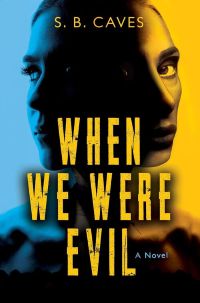
Baby Reindeer meets Death of a Bookseller in this dark thriller set two decades after one of the most infamous murders in British history – the Vincent Street Incident. The woman who was imprisoned for the crime is approached by filmmakers who want to tell her side of the story for the first time...
They locked her up. Now, they want to hear her story.
At fifteen, Ruby Wilcox was involved in the Vincent Street Incident – one of the most horrific murders in British history. Despite protesting her innocence and claiming that someone else was responsible, she was convicted.
Two decades after being released, Ruby has done everything she can to move on and create a new life. But that all threatens to crumble once she learns that a streaming service is creating a series about the murders, and her alleged role in them.
When Ruby is given the opportunity to share her version of events, she knows that it’s now or never. The only question is, has the world made up its mind about her, or will people believe her story?
The consequences of speaking out might cost her more than she thinks, because Ruby wasn’t the only person on Vincent Street that night...
Thriller Crime [ Watkins Publishing, On Sale: January 13, 2026, Paperback / e-Book, ISBN: 9781917415163 / eISBN: 9781917415170 ]
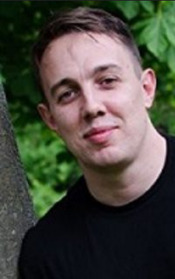
Born and raised in North London, SB Caves is the internationally bestselling author of A Killer Came Knocking and I Know Where She Is, which The Sun described as 'sinister, unsettling and gripping'.
No comments posted.







 © 2003-2026