For this month of festivity, lights and decoration (and because I’m currently re-watching The Tudors) thoughts turn to another era resplendent with fetes, frolic—but also danger, especially for those close to the throne. We’ll explore the lives of some real queens and one view of the Tudor world through the eyes of a fictional court observer.
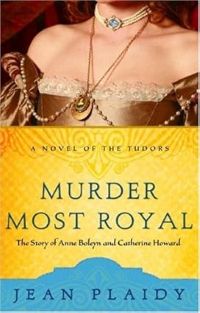
Setting the frame of excess and drama, we begin with MURDER MOST ROYAL by Jean Plaidy, who focuses her story on Henry’s two executed queens, Anne Boleyn and Catherine Howard. The women are cousins, both related to the powerful Howard family headed by the Duke of Norfolk, both used as tools to forward their families’ desire for wealth and power, but their personalities are nearly polar opposites. At first a resistant participant, the clever Anne becomes a determined and ruthless schemer in her pursuit of a crown, while the simple Catherine, guileless and willing, falls victim to her own voluptuous pursuit of pleasure.
When the king’s eye falls on the passionate and intelligent Anne, angry at being prevented from wedding Henry Percy, the man she wants, she rejects her family’s plotting to make her the king’s next mistress. She will not be used and discarded, as her sister was; she will hold out for the ultimate prize—becoming Queen. But all her strategies crumble when she cannot provide what she has promised: a healthy male heir. Pushed before a grieving king after the loss of the wife who did provide that son, Catherine is happy to be petted, feted and gifted wealth and luxury. But foolish in her desire for a young, virile lover, she is abandoned by the family that pushed her forward when her indiscretions are revealed.
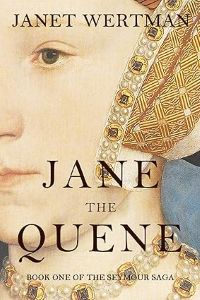
We continue with two novels exploring the world of Henry’s rather little-known third wife, the one who did provide the longed-for son, Jane Seymour. In JANE THE QUENE by Janet Wertman, we see shy, quiet Jane, maid of honor for both of Henry’s first two wives, surprised and conflicted when Henry’s gaze turns to her. Increasingly unhappy with the tempestuous Anne, the King is drawn to Jane’s gentleness and honesty, especially after his wife once again fails to deliver the promised son. Through her family’s maneuvering and Cromwell’s successful plot to destroy Anne, Jane finds herself Henry’s bride. But early miscarriages and (according to this author) lingering guilt over being the inadvertent cause of her predecessor’s death leave Jane troubled and insecure in a marriage that ends with her tragic early death.
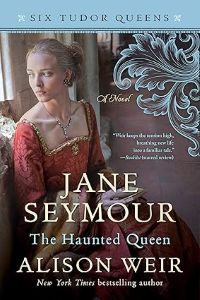
While Wertman postulates that Jane yearned to marry, in JANE SEYMOUR: THE HAUNTED QUEEN, Alison Weir proposes that Jane longed instead to become a nun, but was prevented by her family who wanted to marry her for their social and political advantage, a goal furthered when they secured her a position as a Lady-in-Waiting, first to Queen Katherine, then to Queen Anne. The pious Jane becomes sincerely attached to kind Queen Katherine, dismayed by clever Anne, and conflicted when the king’s attention turns to her. Weir also speculates—which seems unlikely—that Jane became Henry’s mistress before the divorce from Anne was complete, making her worry that if she conceived, she might become another Bessie Blount. But Queen she did become, the only one who succeeded at giving Henry the longed-for son and heir—at the cost of her life.
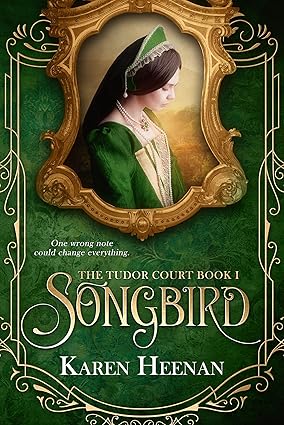
We finish up SONGBIRD by Karen Heenan, a captivating view of Henry’s court through the eyes of a commoner, a poor Welsh girl sold by her indigent father to be a singer with the royal performers. Named “Songbird” by a king delighted with her voice, though Bess thrills at leaving poverty behind to luxuriate in a world of music, she soon finds the court a dangerous place of intrigue, secrets and betrayal, where fellow minstrel Tom is her only true friend. Through Bess’s eyes, we see the downfall of Queen Katherine, the rise of Anne Boleyn, and the difficulties of a ten-year-old coming of age amid temptation from devious courtiers, the hostility of other court members vying for notice by the king and the political turmoil engulfing England.
Ready to escape to another time of luxury, excess and danger? Whether queen or commoner, life at Henry’s court was fascinating, sometimes shocking—but always dangerous. Have a glass of wassail and enjoy!

Real, intense, passionate historical romance
Award-winning romance author Julia Justiss, who has written more than thirty historical novels and novellas set in the English Regency and the American West, just completed her first contemporary series set in the fictional Hill Country town of Whiskey River, Texas.
No comments posted.











 © 2003-2026