I have aphantasia, so I don’t see my stories as I write them. A good playlist helps me hear the beating heart of them, though. For my debut dark academia novel, HIGHER MAGIC, these six songs were on repeat while I drafted and revised. They are, in a very real sense, the pulse of the story.
“I Told You That I Was Afraid,” The Beths
This song perfectly encapsulates the anxiety my protagonist, Dorothe Bartleby, lives with, and how it shapes the way she navigates the world. It’s a track about wanting, and reaching out, and pulling back. It’s about coming of age with that weight pressing down on you, holding you in place while everyone around you is exploring and becoming new versions of themselves. But it’s also about learning how to do the scary things anyway. There’s a vital temerity in the lyrics, a stubborn insistence on trying again (and again and again) that feels so critical to my story.
“Game to Lose,” I’m With Her
I stumbled across this song about two-thirds of the way through my first draft of HIGHER MAGIC, when I was deep in the throes of the story, churning out three or four-thousand words a day. I remember dancing to it around my kitchen one late-drafting night, belting the words that felt so apt for both my protagonist, Dorothe Bartleby, and myself. This song is a dark night of the soul and the motivation to keep going.
“taking the heat,” Joy Oladokun
There are writers who enjoy being mean to their characters. Heck, I’m one of them under the right circumstances. But when Bartleby hit her lowest point, I felt her despair alongside her. Joy Oladokun’s “taking the heat” was on repeat the whole time, commiserating with me about having to put her through that. Sorry, Bartleby. I don’t take it back, though.
“Cure for Me (Acoustic),” Aurora
Aurora’s Gods We Can Touch album dropped right as I was preparing to dig in on the second draft of HIGHER MAGIC. I spent a lot of time deepening Bartleby’s understanding of her own anxiety and neurodivergence in that draft. The acoustic version of “Cure for Me” saw me through that work. It’s a joyful anthem for identity and self-acceptance, and it’s also a response to the horror that is gay conversion “therapy.” It’s no surprise it resonated with me for my very neurodivergent story because ABA (applied behavior analysis for autism) is a branch of the same rotten tree as conversion “therapy.” And you know what? None of us need cures.
“Anti-Curse,” boygenius
This was probably the last song I added to my HIGHER MAGIC playlist. It captures the vibe—and Bartleby’s journey learning how to tell a new story about herself and her world––so well, especially in its last lines. The way the track flips perspective in the end, from “anti-curse” to “blessing,” feels so authentic to me. I think sometimes it feels safer, and is maybe even necessary, to see something as neutral before we can experience the positivity it—especially for those of us who are neurodivergent.
"Closer to Fine", Indigo Girls
When I started putting together my writing playlist for HIGHER MAGIC, “Closer to Fine” by Indigo Girls was the first song I put on it. I love the way it frames a different kind of wisdom—one that resides in the ambiguous messy spaces of life and waits patiently for us to notice it.
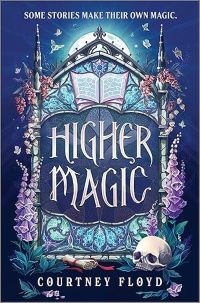
A Novel
In this incisive, irreverent, and whimsical dark academia novel for fans of Heather Fawcett’s Emily Wilde series and R.F. Kuang’s Babel, a struggling mage student with intense anxiety must prove that classic literature contained magic—and learn to wield her own stories to change her institution for the better.
First-generation graduate student Dorothe Bartleby has one last chance to pass the Magic program’s qualifying exam after freezing with anxiety during her first attempt. If she fails to demonstrate that magic in classic literature changed the world, she’ll be kicked out of the university. And now her advisor insists she reframe her entire dissertation using Digimancy. While mages have found a way to combine computers and magic, Bartleby’s fated to never make it work.
This time is no exception. Her revised working goes horribly wrong, creating a talking skull named Anne that narrates Bartleby’s inner thoughts—even the most embarrassing ones—like she's a heroine in a Jane Austen novel. Out of her depth, she recruits James, an unfairly attractive mage candidate, to help her stop Anne’s glitches in time for her exam.
Instead, Anne leads them to a shocking and dangerous discovery: Magic students who seek disability accommodations are disappearing—quite literally. When the administration fails to act, Bartleby must learn to trust her own knowledge and skills. Otherwise, she risks losing both the missing students and her future as a mage, permanently.
Horror | Fantasy Dark | Romance Fantasy [MIRA, On Sale: October 7, 2025, Hardcover / e-Book, ISBN: 9780778387640 / eISBN: 9780369763440]
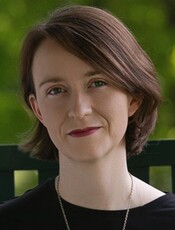
Courtney Floyd grew up in New Mexico, where she learned to write between tarantula turf wars and apocalyptic dust storms. She currently lives at the bottom of a haunted mountain in the woods of Vermont with her partner and pets. Her debut fantasy novel, Higher Magic, comes out with MIRA Books on October 7th, 2025.Courtney has a PhD in British Lit and a penchant for irreverent literary allusions. Her short fiction can be found in publications including Haven Spec, Small Wonders, and Fireside Magazine, and her cozy horror audio drama, The Way We Haunt Now, is available on all major podcast platforms.
No comments posted.






 © 2003-2026