Book Title: PROPHETS OF WAR
Character Name: Alex Morgan
What got you interested in finance as a career?
I grew up around business. My father ran a successful insurance brokerage, and most of my aunts and uncles were entrepreneurs. Industry was in my blood going back generations. At Brookville College, investing in stocks was the cheapest way to get started. I fell in love with the rush, the pure adrenaline from picking the winners. I had a better strategy, I foresaw something others didn’t, I saw the future. I won. I also studied the great titans of business history. That’s where an interest became a passion.
Then I got into real estate investing. Similar concept, but bricks instead of stock tickers. I started applying the same methods across both. By the time I graduated, it was a coin flip between real estate and stocks. Lucky me, I got my good pal Gordon as my first boss and the rest was history.
What makes you good at it?
First, you’ve got to be fluent in numbers. Accounting is the language of business—if you don’t speak it, you’re already out of the game. You can’t let emotions drive your trades. You need the temperament to keep a cool head when everyone else is panicking. You’ve got to see patterns before they fully form, understand how one move in the economy ripples into another. You need to think big-picture and small-picture at the same time. And once you’ve absorbed everything—every chart, every market signal, every scrap of intel—you’ve got to make the call. That’s what I’m good at: making the right call, even when the room’s on fire.
What is your greatest source of joy?
A sunrise over the Caribbean. Learning something new. Achieving a goal you set for yourself. Holding the woman you love. Standing up for what you believe in, no matter the cost. A drive that splits the fairway. A good laugh with people who matter. Life is built in moments like these. Choose them. Chase them. And let them shape the person you were meant to become
What is your greatest disappointment?
Baseball was my life. When I stopped playing, I lost more than a sport—I lost who I thought I was. I had to rebuild from scratch. Finance, history, politics, war… those became my new playing fields, more intellectual than physical. Disappointments hit hard in the moment, but life has a way of turning red lights into green. Sometimes the loss you think will break you just hands you a different kind of game to win.
What keeps you awake at night?
People like Devil Bill. The ones who worship the almighty dollar over the Almighty Father. Who put themselves above their people. Who lack moral courage, empathy, and any sense of consequence. They look powerful on the outside—but strip away the money, and you see what they really are: hollow.
For someone who doesn’t understand offshore finance or war profiteering, how would you describe the system you uncovered?
Most people think war profiteering is just about selling weapons. That’s the simple version. The real system is cleaner, quieter, and harder to see. Imagine you’ve got billions of dollars flowing. On paper, it looks like any other investment. But buried in those funds are shell companies in offshore havens. Those shells own shipping fleets, mining operations, arms manufacturers—anything that can benefit from instability.
When a conflict breaks out, those assets skyrocket in value. The people at the top already know where and when it’s going to happen, so they position their money months in advance. And because it’s all hidden under layers of corporate ownership and offshore secrecy, nobody connects the dots.
What I uncovered was that this wasn’t just opportunism—it was orchestration. Wars were being timed, escalated, and prolonged for maximum profit. The bombs, the propaganda, the market swings—they were all just different levers in the same machine.
Did you ever consider just walking away instead of fighting back?
Yeah, I thought about walking away—more than once. I could’ve taken the easy route: keep my head down, cash my bonus checks, and pretend I didn’t know where the money was really going. People do that every day in my industry.
But once you’ve seen the machinery up close, it’s not so easy to unsee it. I’d be sitting in a meeting, hearing them talk about “market volatility” or “geopolitical opportunities,” knowing full well those words were code for lives lost and cities burned.
There was a moment where I tried to convince myself I could just quietly step away—focus on my own investments, rebuild my life. But then the war in Ukraine broke out exactly the way they’d planned it, and I realized it wasn’t just about my conscience anymore. Walking away would’ve made me complicit. Fighting back… that was the only way I could live with myself.
Do you think you’re a hero, a whistleblower, or just someone trying to survive?
I’m not sure I fit neatly into any of those labels. “Hero” feels too clean for what I’ve done. Heroes save the day without collateral damage, and I can’t say that’s true for me—or for the people who got caught in the crossfire of my choices.
“Whistleblower” is closer, but even that sounds too deliberate, like I set out with a plan to take down the system. The truth is, I stumbled into it, one breadcrumb at a time, until I was too deep to pretend I didn’t know what was going on.
If I’m honest, most days I feel like someone trying to survive—trying to stay one step ahead of the people who’d rather see me silent, permanently. But survival alone isn’t enough. If all I do is make it out alive, then the Business of War keeps running. So maybe I’m a reluctant whistleblower. A flawed one. But one who’s still here, still telling the story.
Do you think the system you’re fighting can actually be beaten?
Beaten? No. Contained, maybe. Exposed, definitely.
The system I’m up against isn’t a single villain you can put in handcuffs—it’s a hydra. Cut off one head and two grow back, each funded by someone who’s already made a fortune off the chaos. It’s not just offshore accounts and shell companies—it’s politicians, CEOs, intelligence operatives, all moving in sync without ever being in the same room.
But here’s the thing: systems like this thrive in the dark. They depend on no one connecting the dots. Once the dots are out there—once people see the machinery for what it is—it changes the cost of doing business. Every lie, every hidden transfer, every manufactured war starts to carry a little more risk.
Will that dismantle it? Probably not. But it can slow it down, make it bleed money, make it think twice. And sometimes, in a rigged game, making the dealer sweat is the closest you get to a win.
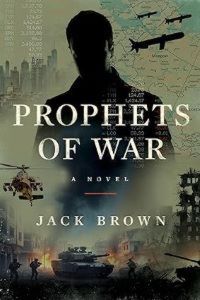
What if war wasn't a tragedy, but a business model? When Alex Morgan, a rising star in wealth management, stumbles onto a series of cryptic financial clues, he doesn't just uncover corruption — he unmasks a global conspiracy. Behind the headlines of the war in Ukraine lies something far more chilling: a private empire of shell companies, black-market trades, and political operatives who are turning global conflict into personal profit. The deeper Alex digs, the more terrifying the truth becomes. His own father may be at the center of the scheme. His mentors may be funding both sides of the battlefield. And the woman he trusts most might be the key to it all — or the final betrayal.From Caribbean tax havens to Wall Street boardrooms to shadowy Zoom calls between oligarchs and ex-presidents, Prophets of War is a pulse-pounding political thriller that tears into the machinery of modern power. Inspired by real systems, real tactics, and real moral failures, it asks a question no one wants answered: What if the next world war is already on the balance sheet?
Thriller [Independently Published, On Sale: September 15, 2025, Paperback / e-Book, / eISBN: 9798999554529]

Jack Brown is a writer, investor, and thinker drawn to the places where power hides in plain sight. A lifelong student of history, finance, and politics, he believes stories can expose the systems that shape our world. Prophets of War is his debut novel, exploring the intersection of ambition, ideology, war, and capital. Brown splits his time between Connecticut and Tortola.
No comments posted.










 © 2003-2026