"A sparklingly mischievous debut. . . . Aldrich's narrative tidily and fondly
bears witness to the inexorable unraveling of a storied genealogy."
—
Publishers Weekly (starred review)
"It's a trick to tell a story this rich and complicated through the eyes of a
child without losing the subtleties of character and nuances of history, but
Aldrich pulls it off with aplomb. Vividly gothic family romance."
— Kirkus (starred review)
"It's the highest of compliments to say that a memoir reads like fiction, and
Alexandra Aldrich accomplishes this in her phenomenal debut. With swift,
haunting prose, Aldrich breathes new life into the Astor clan.
THE ASTOR ORPHAN ensnared
me with its opening chapter . . .leaving me enraptured and horrified long after
putting the book down."
— Susannah Cahalan, author of
New York Times bestseller BRAIN ON FIRE
"A beautifully–rendered family saga . . . a splendid memoir."
— Jennifer Vanderbes, author of EASTER ISLAND and STRANGERS AT THE FEAST
". . . Evocative debut memoir. . ."
— Elliott Holt, author of YOU ARE ONE OF THEM
Alexandra Aldrich, direct descendant of Old New York aristocracies the Astors
and the Livingstons, grew up in the ancestral mansion in the Hudson River
Valley. But any notions of Gilded Age wealth and splendor are quickly dispelled
in her candid memoir,
THE
ASTOR ORPHAN — for Aldrich's Grey Gardens–esque childhood
was marked by a life of genteel poverty at Rokeby, the crumbling 43–room
edifice she and the eccentric family called home. Bohemian pursuits and what she
calls the "undisciplined, orphaned spirit" which governed the house took
precedence over gainful employment, even as the ancestral property deteriorated
around them.
Alexandra's father, uncle, and aunt were the three heirs to Rokeby, built in
1815 on 450 prime acres along the Hudson River. Furnished with antiques,
heirlooms, and art, the mansion continues to evoke its glorious past, but its
upkeep has strapped each succeeding generation. "To keep the house as it was
then," Aldrich writes, "we sacrifice any resources that might have been invested
in current generations. In return, the house gives each of us—the
impoverished descendants—an identity. And we live off the remains of our
ancestral grandeur."
As a shy, intelligent ten–year–old, young Alexandra craved nothing
more than a "normal" life in a three–bedroom ranch house with cable TV and
reliable central heating. Instead, she lived with her father and mother in what
were formerly the servant's quarters on Rokeby's third floor without heat or
regular meals.. Her father, who attended Harvard, had foregone a traditional
career path to become the overseer of the estate. He spent his days tinkering
with farm machinery while her mother, originally from Poland, pursued her
artistic aspirations. In a nearby part of the house, Alexandra's two younger
cousins lived with their more conventional, decidedly better–off parents.
The two family branches wavered between tension and affectionate solidarity.
Alexandra's grandmother lived in a converted garage on the estate, and despite a
troubling battle with alcoholism, provided the only consistent financial and
emotional support for Alexandra, paying for her violin lessons and ferrying her
to church in an aging lemon–yellow Plymouth. Alexandra was privy to her
grandmother's chronic despair over her eldest son's failure to provide for his
family, and the friction between them often escalated into full–blown war.
When Alexandra's father dared to flagrantly entertain his French mistress on the
property, the family's already frayed bonds weakened. As she grew older,
Alexandra yearned to escape the drama and the despair, but Rokeby continued to
exert its hold on her psyche.
While chronicling Aldrich's own strained childhood and need to make order out of
chaos,
THE ASTOR
ORPHAN also reaches back to the glory days of her ancestors. It is a
story populated by wealth and influence. The Astors, the Roosevelts (both
Theodore and Franklin), "Battle Hymn" poet Julia Ward Howe, statesmen Hamilton
Fish and Samuel Ward, architect Stanford White—all play a role in the
celebrated history of Rokeby.
Psychologically astute and expertly observed, Alexandra Aldrich's unflinching
memoir captures the peculiarities of her singularly American family and the
house that has come to define them.
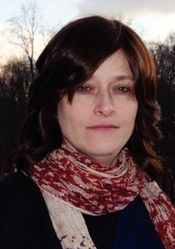
About the Author
Alexandra Aldrich is a member of the eleventh–generation of Astors
to have inhabited Rokeby. She lived there until she left for boarding school at
age fourteen, and has often returned. She studied violin at a prestigious music
conservatory in Poland, and moved back to the United States where she converted
to Orthodox Judaism.
No comments posted.







 © 2003-2026