The Rise and Fall of Florence Lawrence, the World’s First Movie Star
What makes a movie star? Today we’ve got the general
recipe down: mix bankable films with broad popularity. Add a healthy social
media following
and sauté in critical acclaim. Garnish with head-turning red carpet
appearances. And if you’re
very,
very lucky, pair with a performance of your blockbuster movie’s
Oscar-winning theme song
…
But in 1909 no one knew.
The concept of stardom didn't exist because early movie
studios didn’t
want anyone to know. The thinking went like this: the
more popular and
“known” actors became, the more money they would demand. Studios kept their
performers
anonymous—no acting credits were listed—so that if a particular actor became
too demanding
or difficult, he or she was more easily replaced. Disposability served the
bottom line.
Then Florence Lawrence came along, and all hell broke
loose.
She was attractive, but no more so than many other
actresses of her day, such as Mary Pickford and Lillian Gish, both of whom
would go on to be
far more successful and well-remembered. What Florence was, besides
anonymously popular,
was prolific. From 1908 through the middle of 1909, she was featured in over
100 films
produced by Biograph, one of the world’s top studios at the time. Lawrence was
soon dubbed
“The Biograph Girl” by the fans who wrote to the studio about her. They were
desperate to
know her real name because through her films, they felt they knew
her.
Unlike stage actors whose faces were obscured by the
distance between the seats and the stage, movie actors seemed as if they were
only inches
away. For the first time, fans could see every shy smile, every tear trickling
down a cheek.
Through the magic of the close-up, mastered by Flo’s director, the famous D.W.
Griffith, they’d
seen her emotions in intimate detail. She was a regular woman with regular
feelings, just like
them. They felt she could be one of them, a friend.
This delicious sense of familiarity with someone they had
never—and would never—meet, was entirely brand new, and it stoked the flames
of fandom
like nothing before. They wanted to know everything about her … starting with
her name.
She was born Florence Annie Bridgwood in 1886 to a
vaudeville performer mother with the stage name Lotta Lawrence. Florence grew
up backstage
and, inevitably, onstage. At 20, she made her way to New York and found work
in the fledgling
film industry. In a few short years, she’d become one of Griffith’s favorite
actresses, with roles
in most of the 60 films he directed in 1908. 1909 was stacking up to be no
different. Except
for the significant increase in her fan mail.
Caught trying to cut a more lucrative deal with rival Essanay
Studios, Lawrence suddenly found herself unemployed. Within a few months, she
was working
for Carl Laemmle’s Independent Moving Pictures Company (IMP). “Uncle Carl” as
he was
called, had the remarkable foresight to understand that while a “star” might
command better
wages, the public would more than compensate for that loss by paying to see
her far more
often.
The publicity stunt he concocted was bold and
unprecedented. He began innocently enough with an ad in
Moving Picture
World magazine:
her photo with the caption “She’s an IMP!” No name, just her new association
with his film
studio. In February 1910, an obituary mysteriously appeared, no doubt
submitted by Laemmle,
claiming that she had been fatally run down by a streetcar. In March, he took
out a full-page
ad with the headline “WE NAIL A LIE,” insinuating that the false obituary was
a ploy by
competitors to ruin her career.
To amp up the drama even more, the
St. Louis Post-Dispatch then ran a
front-page article on the hoax and notified the public that the very-much-
alive Florence Lawrence would soon be making a personal appearance in St.
Louis. The public
could finally see their darling of the silver screen
in the flesh.
The public, as it turns out, was ecstatic about this. The mob
that awaited her train was whipped into such a frenzy that buttons were torn
from her clothing
and she was barely able to make it to the car. Uncle Carl’s gamble—that naming
Florence
Lawrence and increasing her wage was a small price compared to the money he’d
make—had
paid off exponentially.
It worked out quite well for Flo, too … at first. She was a
household name. She became one of the first women to start her own studio, the
Victor
Company, and her salary soared to $500 per week, a vast sum at the time. By
1912, her small
studio was pumping out a “one-reeler” (about 15 minutes in length) each week.
Before long, however, her luck began to turn and her life
slowly morphed into a cautionary tale on the price of fame. The Victor Company
ran aground
with difficulties getting its films distributed to theatres. With Hollywood-
worthy histrionics, Flo
“retired.” Her marriage failed. She had plastic surgery on her nose and tried
to reclaim her
former glory, but had trouble landing starring roles. She started a Hollywood
cosmetics
company with husband number two. That marriage failed. A third husband beat
her and she
divorced him with five months. By 1936 the former star—the
original
star—was earning $75 a
week as an uncredited extra with MGM.
Just after Christmas 1938, Florence Lawrence, age 52,
decided she was done. “I’m tired,” she wrote in her final note, and then
consumed enough ant
paste to end her life. Her name—once so sought after by countless adoring fans
—is all but
lost to history.
Flo’s legacy, however, is incalculable. She taught us star
worship, and we practice it to this day. The morning after this year’s Oscars,
I went for a walk
with a friend—a sensible and happily married friend.
Her first words to me were, “I’m in love with Bradley
Cooper.”
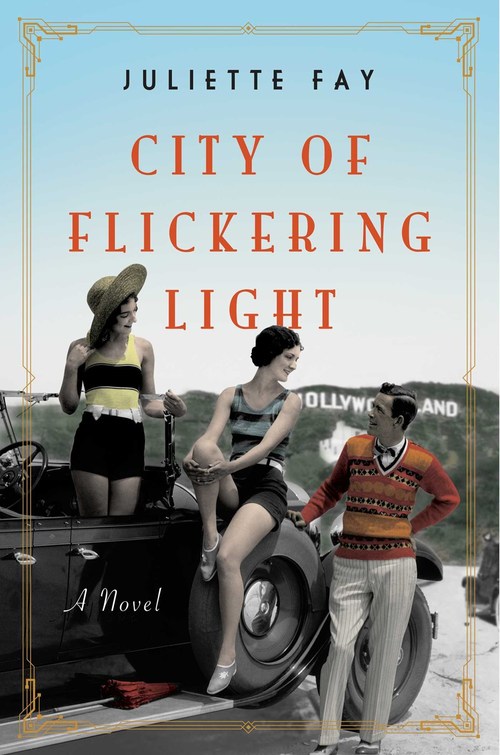
Juliette Fay—“one of the best authors of women’s fiction” (Library
Journal)—
transports us back to the Golden Age of Hollywood and the raucous Roaring
Twenties, as
three friends struggle to earn their places among the stars of the silent
screen—perfect for
fans of La La Land and Rules of Civility.
It’s July 1921, “flickers” are all the rage, and Irene Van Beck has just
declared her own
independence by jumping off a moving train to escape her fate in a traveling
burlesque show.
When her friends, fellow dancer Millie Martin and comedian Henry Weiss, leap
after her, the
trio finds their way to the bright lights of Hollywood with hopes of making it
big in the
burgeoning silent film industry.
At first glance, Hollywood in the 1920s is like no other place on earth—
iridescent, scandalous,
and utterly exhilarating—and the three friends yearn for a life they could
only have dreamed of
before. But despite the glamour and seduction of Tinseltown, success doesn’t
come easy, and
nothing can prepare Irene, Millie, and Henry for the poverty, temptation, and
heartbreak that
lie ahead. With their ambitions challenged by both the men above them and the
prejudice
surrounding them, their friendship is the only constant through desperate
times, as each
struggles to find their true calling in an uncertain world. What begins as a
quest for fame and
fortune soon becomes a collective search for love, acceptance, and fulfillment
as they
navigate the backlots and stage sets where the illusions of the silver screen
are brought to
life.
With her “trademark wit and grace” (Randy Susan Meyers, author of
The
Murderer’s
Daughters), Juliette Fay crafts another radiant and fascinating historical
novel as thrilling
as the bygone era of Hollywood itself.
Women's Fiction Historical [Gallery Books, On
Sale: April 16, 2019, Trade Size / e-Book, ISBN: 9781501192937 / eISBN:
9781501192951]
 Three friends
dream of finding fame in Hollywood
Three friends
dream of finding fame in Hollywood
Juliette Fay received a
bachelor's degree from Boston College and a master's degree from Harvard
University. She lives in Massachusetts with her husband and four children.
No comments posted.









 © 2003-2026