A good story is all about character. Plot is character too.
As a novelist I am always aiming for my characters to stand out from the page,
fully formed, coming so alive the reader understands them, may love them,
sometimes hate them, or sometimes both. I want to present a balanced view, even
of the antagonists, because they think they are doing the right thing, even
when they aren’t. That does not mean the reader has to sympathize with the
characters or be their friend. The more complex the motivation, the more
freedom I have to reveal each character had something that could have been
appealing, could have made them a better person, given the right circumstances.
Most people want to believe that life teaches lessons. Conflicts can be
resolved. There is free will to make positive choices. Stuff happens for a
reason. We want a protagonist who takes charge of his or her life, and ends
the story in a better place. The reader loses patience with passivity. Heroes
who can handle pressure and persevere give readers hope (and maybe make them
feel a bit better about their own world).
A bit too much delving into unlikeable territory and the reader will
disconnect, frustrated by the hero’s obtuseness. Like a joke taken too far,
it’s hard to entice a reader back once this happens. It’s easy to go too far.
The flawed character can be unappealing, yet in the hero, there are also must
be strengths. These types of heroes require caution. Walter White, the anti-
hero of
Breaking Bad, is a good example of teetering at the edge of
despising his ruthless behavior but also understanding the self-sacrificing
intentions he had, although all misdirected.
In
THINGS
UNSAID, my clueless main character, Jules Foster, has to have more beneath
the surface than what we first see. A brief scene can reveal her in a positive
light, and this is essential to understanding her oblivious view of her family.
Characters, like people, are flawed for a reason. As an author, I want to give
the reader a glimpse into all the characters’ souls so the reader begins to
understand their poor decisions, hostile behavior, sour relationships. The
“why” of who they are.
My protagonist, Jules Foster, is a very flawed character, whose guise of
helping others only increases the injury to all those she loves. I had to ask
myself why she was so blind-sided. I came to realize that those flaws—which
Jules initially thought were her virtues and core nature-- would eventually
reveal the ill-fated deal she had made with her dying parents, her husband and
their daughter—needed to be transformed into her strength. In analyzing
character flaws, I hope the reader (as I have done) asks: “What blindsides
me?” Without the WHY, a reader is unable to connect, on a deeper level, with
either the protagonist or those opposing her .
For all my characters, I imagined their past wounds as the reason why they are
who they are. Because of past pain, Jules protects herself from future harm
by overcompensating. The wound changes who she is. So, for each of the other
character’s core nature, I thought of the flaws and what wound was inflicted to
create their present selves. Once I conceptualized the flaw, I thought of
their compensating positive traits. If all else failed, I could always resort
to a love of animals. But, I never had to use that one.
Flaws are not necessarily problems. They are a fundamental part of who we are.
Contrasts between positive and negative traits work best when they’re not
absolutes, but fluid and impermanent. So Aida, the main antagonist in Things
Unsaid, became narcissistic because her past was a series of broken dreams.
The reader can now hopefully see at least a glimmer of the person she could
have been: a more loving and forgiving individual. The past is not an excuse
for her behavior, but it is a window to understanding why she is the person she
has become.
Characters who don’t keep promises or who are self-absorbed and vain, “I told
you so” friends,-- here’s where the novelist’s double vision comes in. I can
write from within the character’s viewpoint, sympathizing with her, while at
the same time being perfectly aware of what outside readers think of the
action. I get to see both points of view!
However, if your character has no traits that people can sympathize with,
relate to, or find appealing or admirable in some way, they'll simply find your
character repugnant and repulsive. If flaws cannot be relatable, no matter
what other positive traits the character has, the reader will check out. The
flaws and weaknesses I find most fun to discover and write about are character
traits that are not inherently negative. They can be "good" traits - but too
much of a good thing can be a very bad thing indeed. My protagonist, Jules,
has an unbreakable sense of obligation to her parents, which jeopardizes her
own family and herself. Her obligation becomes a very serious character flaw
and blindspot. Jules, in Things Unsaid, works so hard to make everyone happy
that Jules ends up making nobody happy while wearing herself down in the
process.
So, I am not afraid to take readers into the dark corners of the psyche, before
there is light. I gave Jules her voice. And through my beloved Jules, I found
my voice and my niche: writing family drama with a healthy dose of darkness and
secrets exposed.
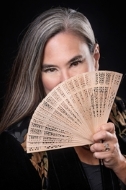
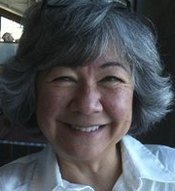
Diana Y. Paul was born in Akron, Ohio and is a graduate of Northwestern
University with a degree in both psychology and philosophy and of the
University of Wisconsin-Madison with a Ph.D in Buddhist Studies. THINGS UNSAID
is her debut novel and published by She Writes Press. It is available on Amazon
and Barnes & Noble as well as at your favorite indie bookstore including
BookWorks in Pacific Grove, River House Books in Carmel, Bookshop Santa Cruz,
and Folio Books in San Francisco. Her short stories have appeared in a number
of literary journals and she is currently working on a second novel, A Perfect
Match. Currently, she lives in Carmel, CA with her husband and loves to create
mixed media art, focusing on printmaking in her studio. To learn more about her
and her work, visit her other website at www.unhealedwound.com or follow her on
Twitter: @DianaPaul10.
Website |
Twitter |
Blog
Jules, her sister Joanne, and her brother Andrew all grew up in the same
household—but their varying views of and reactions to their experiences growing
up have made them all very different people. Now, as adults with children of
their own, they are all faced with the question of what to do to help their
parents, who insist on maintaining the upscale lifestyle they’re accustomed to
despite their mounting debts. A deft exploration of the ever-shifting covenants
between parents and children, Things Unsaid is a ferocious tale of family love,
dysfunction, and sense of duty over forty years.
No comments posted.







 © 2003-2026