Lois Wilson, Betty Field, Carey Mulligan, Mia Farrow, and Mira Sorvino—what do these actors have in common?
They have all played Daisy Buchanan on the silver screen, the heroine of F. Scott Fitzgerald’s The Great Gatsby.
Mulligan starred in Baz Luhrmann’s colorful 2013 adaptation, Sorvino in a 2000 iteration that aired on BBC and A&E, and Farrow in the 1974 film with a script by Francis Ford Coppola. Lois Wilson played Daisy in the 1926 movie, and Betty Field in the 1949 version opposite Alan Ladd as Jay Gatsby.
The most recent film iterations of Gatsby are the ones we all likely remember best, but does Daisy’s character stay with us? I remember loving Mia Farrow’s light and breezy, slightly melancholy interpretation of the heroine, but didn’t get much but “beautiful woman in love” from Mulligan’s. I was stunned, in fact, to discover she also played Edith Petty in The Dig, the story of the 1939 archaeological excavation of Sutton Hoo, a deeper and more complex characterization.
Maybe that’s because the character of Daisy is something of a light and breezy, unrealized woman. Who is she really? She is charming and funny, ready with an insightful quip. But she often felt like a prop to me, like that green light at the end of her pier that Jay Gatsby gazes at with such longing.
A fan of The Great Gatsby since young adulthood, I was excited when the book entered the public domain. I’d previously penned a retelling of Jane Eyre (titled Sloane Hall), another favorite of mine, and now I asked myself the same question I posed when I wrote that refashioning: How could I help readers experience The Great Gatsby anew, as if they’d never read it before?
Immediately, I thought of how little we know of Daisy in the novel, how thin her character is (and yet, ironically, she is the object of the title character’s desire, which drives the plot). How would Daisy tell the story of that summer?
As soon as I started writing, her voice spoke to me, and she told a slightly different tale than the one in Fitzgerald’s classic. Her version included the feminine perspective on events and provided insight into why she played the beautiful fool.
It felt at times as if she were dictating the story to me. And it also felt at times as if I was telling more than just her story, but Everywoman’s story.
Women today don’t face all the challenges a woman in the 1920s did, of course. We can set up our own bank accounts and get credit without a man’s sponsorship, for example. The MeToo movement has drawn attention to sexual harassment and assault issues that weren’t even considered back then. And women can choose pretty much any career they want and don’t have to become stay-at-home moms if that’s not their desire.
However, some issues remain. In my novel, Daisy is accused of being “intimidating” and “aggressive” when she’s merely articulate and smart. She constantly thinks of ways to charm her boorish husband, Tom, to get what she wants, playing a part or being an object. And she finds herself doing the same thing with Jay Gatsby, a realization that makes her understand how complicit she’d become in suppressing her true self:
“All the things I’d wanted in life,” she says at one point, “I had gotten by playing that porcelain figurine. I’d bent in that same charming way toward men. I had lidded my eyes, bitten my tongue, looked shyly away, come up with clever lines, ceased being in any way intimidating…”
I’ve been asked if Daisy is a feminist novel, and I hesitate to say yes because it’s not a polemic in any way. I’m not preaching in its pages at all, and I don’t think books that are intent on teaching lessons are always a good read.
So Daisy is more a story of women’s challenges, even today, as told through the filter of a great classic, reimagined. I hope its readers are impressed with my Daisy Buchanan, her intelligence and not just her beauty, her articulateness and not just her glibness. I hope women cheer her on as she begins to understand how she must chart her own course, and I hope they find inspiration in her ultimate decisions.
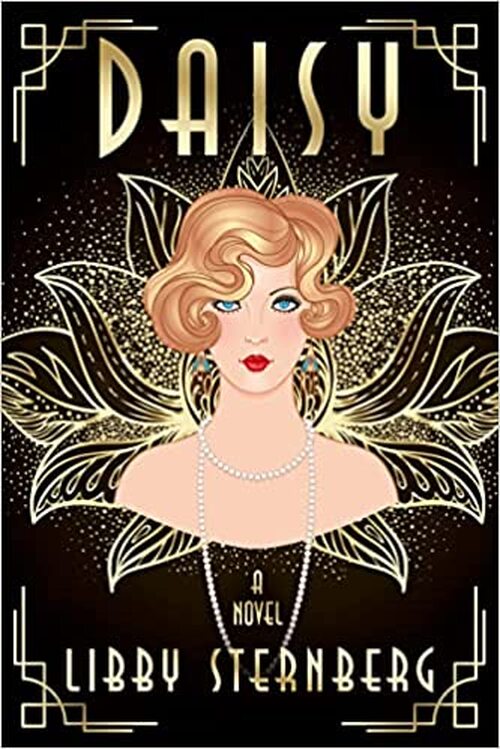
No empty-headed fool, Daisy Buchanan tells her side of the story of that tumultuous summer in the 1920s when she reunites with her first love, Jay Gatsby. Unlike her cousin Nick's recounting, her version tells readers what was in the letter that Jay sent to her on the eve of her wedding to Tom Buchanan that almost had her calling off the ceremony, and who was really driving the car that killed her husband's mistress. Although she wishes sometimes she could be a sprite (akin to the flickering green light at the end of her pier), Daisy comes to realize that charting her own destiny means making hard choices, for herself and her precious daughter.
Literature and Fiction Literary [Bancroft Press, On Sale: October 18, 2022, Hardcover / e-Book, ISBN: 9781610885874 / ]
Libby Sternberg is the author of women’s fiction, historical fiction, romance and more. Her novel Daisy (Bancroft Press, September 2022), a refashioning of The Great Gatsby, has been hailed by Publishers Weekly’s BookLife: “The author writes with a poised composure that reads like a continuation of Fitzgerald’s prose...A delightful portrayal of a female character claiming the story as her own, repossessing her own voice."
No comments posted.











 © 2003-2026