
October Reads Worth Falling ForDanger, desire, second chances, and unexpected romance—discover this month’s Fresh Fiction Featured Books.
| |
|
|
|
|
|
|
|
|
|
|
|
|

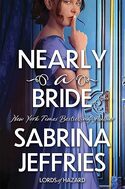
Lady Fiona, wed in haste, has never known marital peace.
When last she'd seen her cruel husband Will, he'd struck
her - and she has no memory of what she did next - only
that she woke later alone in her bedchamber. Will has gone
missing, and Fiona fears that in her rage and terror she
might somehow have killed him.
When her husband's cousin
Sir Richard comes to search for Will, Fiona is touched by
his warm nature. A knight and warrior, Richard is drawn to
Fiona's brave manner, quickly seeing in her an equal
measure of inner courage. Confessing that she fears having
killed Will, Fiona accepts Richard's offer to help her.
Pursuing together the mystery of Will's disappearance,
they fall in love. Meanwhile the English are reinforcing
their garrison in the Scottish Borderlands, putting Fiona,
Richard, and Scotland in peril....
Excerpt Annandale, Scotland, 5 June 1377
His first slap made her left ear ring.
“Now see what ye’ve made me do!” he shouted over the
rush and roar of the river below. A half moon lit the grassy
track and revealed white foam on the water.
Holding a hand to her stinging cheek, seventeen-year-old
Fiona Jardine scowled at the tall, powerful-looking man who
had struck her and said stubbornly, “Clouting me won’t
change the truth, Will Jardine. It was your fault,
not mine!”
He loomed over her, terrifying in his fury. “By God,” he
snapped, putting the face she had once thought so handsome
close to hers, “ye’ll no talk to me like that!”
“You’re ape-drunk,” she said. In the crisp night air, she
could smell the whisky on him, so powerful that it made her
dizzy just to inhale its fumes.
When he drew back his hand to slap her again, she tried to
get away, to protect herself. But his left hand shot out
then, and with bruising strength, he caught her by an arm
and whipped her back to face him.
“Let me go!” she shrieked. But he did not let go, and he was
one of the strongest men she knew.
“Aye, I’ll let ye go. After I’ve taught ye a lesson.”
Struggling frantically and screaming with fear as she tried
to break free, she managed to duck the next slap, only to
suffer a backhanded blow instead that made her right ear
throb with pain.
Before she could catch her breath, he hit her again, a hard
smack of his calloused palm right across her mouth. Had he
not held her upright, she would have fallen. As it was, she
tasted blood and feared that he had loosened a tooth.
He laughed. “Ye should ken fine by now, lass, that what I
say, I mean.”
His next blow flew at her belly, but by twisting hard, she
took it instead on her side just above her waist. Gasping at
a pain so sharp that it took her breath away, she continued
to fight him anyway, out of pure terror. But the pain was
overwhelming, her strength fast waning, and his next blow
sent her reeling to the ground.
Her head struck something hard. Blearily, she saw him step
toward her.
Then, looming above her, he drew back his foot.
Through the stunning ache in her head, distantly, she heard
him say, “Mayhap, now, ye’ll remember to keep your
place, madam wife.”
After that, she knew nothing more.
Chapter 1
Spedlins Tower, Annandale, 20 June 1377
The leather-clad, booted traveler approaching the open
kitchen doorway on the pebbled path running behind Spedlins
Tower paused at hearing a soft feminine voice inside:
“‘I expect I should be spinning, too, aye,’ the maiden said
sadly. ‘But it would be t’ nae purpose. I could never finish
so great a task in time.’”
The traveler took a step closer as the voice went on,
creaking now with age, “‘Och, but I could spin it all for
ye, aye,’ the old woman said.”
“Gey good o’ the auld crone!” cried several childish voices,
as if they had many times heard the story and exclaimed
always at the same place.
The traveler smiled, recognizing the tale from his own
childhood. He moved nearer, trying to muffle the sounds that
his boots made on the pebbles of the path.
He saw the speaker then, seated on the stone floor of the
scullery with her back to him. Six fascinated children of
various ages sat in a semicircle before her.
Beyond, in the dim, vaulted kitchen, the traveler discerned
bustling movement and heard sounds indicative of
preparations for the midday meal.
The storyteller went on in a soft, clear voice—doubtless her
own, “So the maiden ran to fetch her lint and laid it in her
new friend’s hand. Then she asked the old woman for her name
and where she should call that evening for the spun yarn.”
One child, a dark lad of perhaps eight or nine, looked right
at the traveler.
The man put a finger to his lips.
Although the boy obediently kept silent, he continued to stare.
The storyteller continued, “But the maiden received no
reply, for the old woman had vanished from where she stood.
The lassie looked long for her until at last she became so
tired that she lay down to rest.”
Three of the children eyed him now as a fourth, the smallest
lass—blue-eyed with curly auburn hair—piped up, “Aye, and
when she awoke, it was gey dark!”
“So it was, Tippy,” the storyteller agreed. “The evening
star was shining down, and as the maiden watched the moon
rise, a rough voice startled her from—”
“Who is he?” the same small lassie demanded, pointing
at the traveler.
The storyteller, turning, started and winced as she saw him.
She began awkwardly to get to her feet, saying, “Good sakes,
wherever did you spring from?”
He noted first that she had black hair and light blue eyes,
and was stunningly beautiful, with delicate features, rosy
cheeks, and plump, creamy breasts, their softness rising
above the low neckline of her loose, blue kirtle. As she
straightened, he saw with a surge of unexpected
disappointment that she was heavy with child.
“Forgive me for interrupting you, mistress,” he said. “They
told me at the stable that I should come this way as it was
quicker, and none would mind. But if you will bid someone
take me to Old Jardine, I shall leave you to finish your tale.”
“This is a good place to stop for a time,” she said, raising
a hand to the short veil she wore over her long, shiny,
thick plaits, as if to be sure the veil was properly in
place. “I can easily finish the story later.”
To a chorus of indignant protests, she replied firmly, “Nay,
then, you must all go now to Cook and ask how you can help
him. Davy, you and Kate take care to see that the wee ones
know what they must do.”
“Aye, we will,” the largest of the three lassies said. The
dark-haired, dark-eyed boy who had first noted the stranger
nodded his agreement, still eyeing him.
As the children scrambled to obey her, the young woman
turned her lovely eyes to the stranger again, adding,
“Surely, someone must have told you that Jardine of
Applegarth lies on his deathbed and refuses to see anyone.”
“He will see me,” the traveler said confidently, noting that
the dark rims of her irises made them look transparent, as
if one might see right through to her thoughts.
“Mercy, why should he see you? Have you no respect
for a dying man?”
“I doubt that the old fustilugs is really dying. But he will
see me nevertheless, because he sent for me. Sithee, I am
his heir.”
Instead of the hasty apology he had every right to expect
from a servant who had spoken so pertly to him, she
stiffened, saying, “You must have taken that notion
from a tale of the same sort that I’ve just been telling the
bairns.”
His temper stirring, he said, “Mind your tongue, lass, lest—”
“Why should I? Do you dislike being told you are wrong?” she
asked. “For so you are if you claim to be heir to Old
Jardine’s estates.”
Doubt stirred. No servant of the old man’s would dare speak
so boldly.
Despite their kinship, he barely knew Jardine. But if even
half of what he had heard about the contentious old
scoundrel was true, Jardine’s minions would tread lightly
and with great care—especially when speaking to another
nobleman.
“Who are you, lass?” he asked.
She gently touched her belly. “I am his heir’s mother, or
mayhap his heir’s wife. Whichever it may be,” she added,
squaring her shoulders and giving him look for look, “I can
tell you without hesitation that you are not
his heir.”
Stunned, he realized that Old Jardine’s lie came as no
surprise to him. He had suspected some deception but only in
that he doubted the old man was really dying. Ruthlessly
stifling the unexpected anger that leaped in response to her
near disdain, he said, “I expect, then, that you must be
Will Jardine’s wife.”
“Aye, of course, I am—or his widow,” she added. “But who are
you?”
“Kirkhill,” he said.
She frowned. “Should I know you? Is that all anyone ever
calls you?”
“People call me several different things. Some call me
Seyton of Kirkhill. But most folks hereabouts know me as
Kirkhill. My family has lived in upper Annandale for two
centuries. However, as I am Will’s cousin, you and I are
clearly kin by marriage, so you may call me Richard if you
like, or Dickon.”
“I will call you Kirkhill,” she said firmly but almost as if
her thoughts had briefly flitted elsewhere. “I warrant it
must be Lord Kirkhill, though,” she added.
“More to the purpose, my mother has the misfortune to be
that old scoundrel’s sister,” he said.
“Good sakes, I did not know that Old Jardine had a
sister!”
“I think she’d liefer not be one,” he said with a wry smile.
“But he did send word to me that he was dying and bade me
hie myself to Spedlins Tower.”
“Then I expect that I should go and tell him you are here
and see if he will receive you,” she said. “I will get
someone to take you to a more comfortable—”
“Nay, my lady—Lady William, I should say—”
“‘My lady’ is sufficient,” she said. “No one calls me Lady
William.”
“’Tis the usual way, so forgive me if I have irked you,” he
said. “In any event, I did not come here to kick my heels
whilst my crusty uncle takes his time to decide that he does
indeed want to see me. You will take me to him. First,
though, I want to hear about what happened to Will.”
“So do we all,” she replied.
“God’s troth, do you not know? Jardine’s messenger
told me that my uncle was on his deathbed and that I was to
be his heir, so I assumed Will must be dead. But as you have
that said you are either the heir’s wife or its mother…” He
paused.
“Aye,” she said, touching her belly again. “I do not know
which it is. See you, Will was here; then he was not. He has
been gone for over a fortnight.”
“Then I hope you will forgive my asking if you and he were
legally married. I am sure that no one informed my mother of
such a grand occasion, because she would certainly have told
me.”
“Aye, sure, we were legally married,” she said with a flash
in her eyes and deep flush to her cheeks. “If my good-father
did not tell his sister of our union, it was through no
fault of mine.”
“It would not have been your fault in any event,” he agreed.
Looking away, she added, “He has plainly called you here to
no benefit of your own, sir. Doubtless, you would be wise to
turn round and go home.”
He waited until she met his gaze again, this time with
wariness in her eyes.
“Do I look like the sort of man who would do that?” he asked.
Our Past Week of Fresh Picks
|














 © 2003-2026