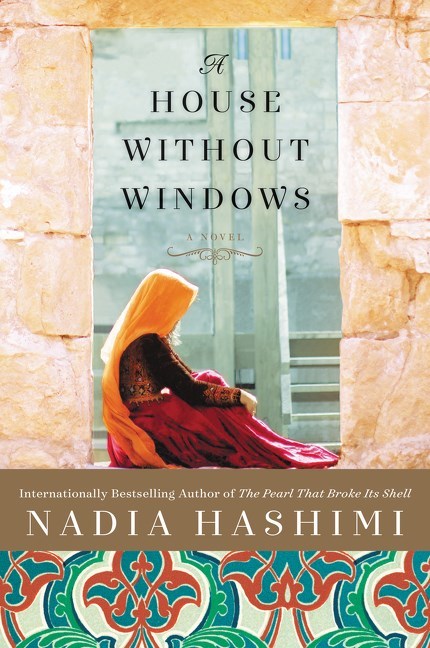
It was a crime that normally would have resulted in her death, even before an arrest was made. Zeba is found in her backyard next to her husband's dead body. She's covered in blood but doesn't say a word about how the hatchet ended up in Kamal's body. Yusuf is an idealistic attorney, returning back to Afghanistan to assist with legal cases. Zeba's case is assigned to Yusuf, but will he be able to help his silent client?
I have a love/hate relationship with A HOUSE WITHOUT WINDOWS. I absolutely love Zeba's story, even more so as the full picture of that horrific day emerges. Zeba isn't an easy character to like initially, as her perspective is so different from my own, and yet I began to see the depth of her strength and courage as the story progresses. Her confinement at Chil Mahtab highlights the plight of women in Afghanistan as we see the wide range of "crimes" that can lead to a woman's incarceration.
However, Nadia Hashimi takes us on a meandering journey throughout the lives of each and every one of the characters, giving us perhaps a bit more background on other characters that detracts from the storyline. We didn't need the full history of Zeba's mother, Gulnaz, in order to enjoy the story nor did we need the sidetracking to Yusuf's attempt at a personal romance. I found myself skimming these sections in order to return to the far more powerful stories of the women incarcerated at Chil Mahtab.
A HOUSE WITHOUT WINDOWS is a stunning cultural exploration of the role of women in Afghanistan. Seeing the plight of the various women incarcerated at Chil Mahtab is a shocking portrait of the injustices handed down to women for crimes against the morality of the ruling powers. A HOUSE WITHOUT WINDOWS is well worth reading, despite the slower parts, as the overall storyline and message are very relevant to today's headlines.
No excerpt available.









 © 2003-2026