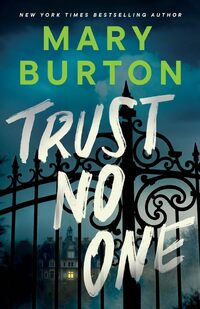
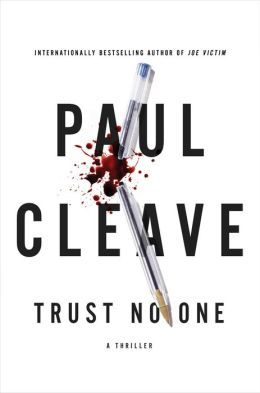
In Christchurch, New Zealand, crime novelist Jerry Grey, writing as Henry Cutter, has found out he has early-onset Alzheimer's at the age of 49. Coming to terms with his disease has Jerry, as well as his wife and adult daughter, making many adjustments to their lifestyle. Not knowing how much time he has, whenever Jerry is cognizant, he writes personal feelings about his situation in a "Madness Journal" for the Future Jerry to refer to when times get bad.
In his dementia, the worlds Jerry created in his novels start to seem real, as if he's lived them. And the sense he's actually killed someone is too real to ignore. Has he been writing what he's experienced? When Jerry starts claiming he's actually committed the brutal murders he's written about in his books, no one believes him because of his illness. Could he really be killing these people, or is something else more sinister at work behind the scenes?
Paul Cleave's TRUST NO ONE is a dynamic psychological thriller from the opening paragraph to its shocking conclusion. With spellbinding narrative and expert plot progression, Cleave keeps readers wondering what is true and what is fabrication as Jerry struggles to deal with his dementia and the world around him. Character development is exemplary, as each person plays an important role in this exceptional thriller. I became so immersed in TRUST NO ONE, I could not put it down. Highly recommended reading!
No excerpt available.






 © 2003-2026