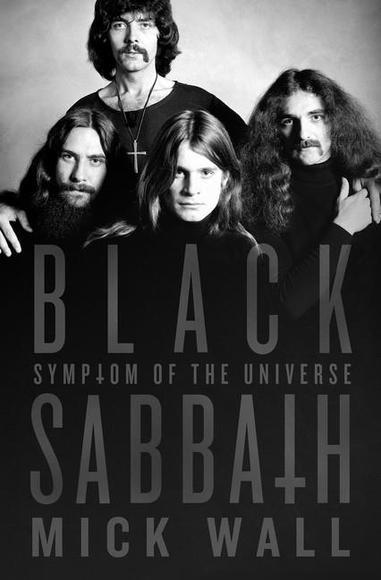
Vilified by the press, revered by their fans, Black Sabbath remains one of the most influential bands in modern music. I had been a fan of the band for ages, but it occurred to me that I knew very little of the history of the band, and its members, aside from Ozzy Osbourne's well-documented television antics and Tony Iommi's legendary refusal to talk to the press. The author, Mick Wall is a former journalist who formed his own PR firm where he handled press campaigns for Black Sabbath for several years and remained on friendly terms with band members for decades, which is reflected in the quotes; we can almost hear the musicians' voices.
BLACK SABBATH: SYMPTOM OF THE UNIVERSE is an extremely well-written account of the rise and fall of the band, as well as the numerous line-up changes. The tone is at the same time literary and conversational, and I am impressed at how well the author translates the sound, the mood, the rhythm, of Black Sabbath's music into words. Mr. Wall captures the essence of the music scene over the decades, and most importantly of the band.
BLACK SABBATH: SYMPTOM OF THE UNIVERSE is divided following the turning points of the band's career: the first part being the Ozzy years, the second part when the dizzying line-up changes began when Ozzy left for a solo career, and Ronnie James Dio joined the band and gave Black Sabbath a much needed boost. I found Randy Rhoads' story, the extraordinary guitarist in Ozzy's band, particularly fascinating. BLACK SABBATH: SYMPTOM OF THE UNIVERSE is also very informative as regards Sharon Osbourne's involvement with the band as well as with Ozzy, both professionally and personally; she is not the oft maligned interloper she has sometimes been made to be.
Biographies can often be dry reads, but it is decidedly not the case with BLACK SABBATH: SYMPTOM OF THE UNIVERSE: with rock bands, we expect the ubiquitous sex and groupies, the author does not dwell on peccadilloes but the mind-boggling amount of drugs did have an influence on the band's failures. BLACK SABBATH: SYMPTOM OF THE UNIVERSE is a riveting read: unvarnished, and unembellished; Mr. Wall praises the band when warranted, but does he make excuses for the various epic disasters. Neither does he shine the spotlight on one or two band members: BLACK SABBATH: SYMPTOM OF THE UNIVERSE is truly a look at a band and all its members. As Mr. Wall himself points out he is a fan, but neither is he blind to the musicians' shortcomings and does not shy away from the truth, which is not always pretty, but is the mark of an honest biography. Also included are a useful and comprehensive index, a bibliography, and several photographs, not the ones we usually see, of the musicians through the years.
BLACK SABBATH: SYMPTOM OF THE UNIVERSE is one of the best biographies I have ever read, regardless of the topic. Fans will rejoice, as light is shed on some events, which had been the fodder of entertainment gossip for years. A most fascinating and riveting book!
No excerpt available.













 © 2003-2026