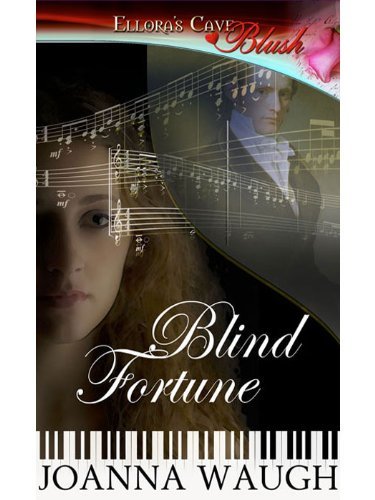
Any readers of Regency historical novels will enjoy this book. Joanna Waugh is obviously a loyal fan of Jane Austen. In fact Fortuna, the female protagonist, enjoys books by "that person who wrote Pride and Prejudice" immensely. Her cousin Leticia enjoys them too and reads them to her whenever a new one arrives at the book lenders. And why does her cousin read them to her? Why doesn't she read them herself? Because Fortuna is blind and has been since birth. Hence the very clever title: Blind Fortune.
Fortuna is a very opinionated young lady. She admires the writings of Mary Wollstonecraft on the independence of women. She has strong views on what marriage should and should not be. She has vowed never to marry. She is already somewhat helpless because of her blindness, and she doesn't trust any man enough to put her life and happiness in his hands.
Lord Granville is the very picture of a snobbish elitist member of the haute ton. He has decided that Fortuna's young cousin will make a biddable wife. He plans on getting an heir and then going on about his business. He also has a deep dark secret. He has a soft heart and likes to help people who need it.
Their first meeting, with misunderstandings abounding, would do Jane Austen herself credit. The chemistry and repartee between them is enchanting. Fortuna, or Forti, as we come to know her, discovers something about herself. Because of her blindness, she's very dependent on her other senses—something she's know her entire life. But what she didn't know was that this lack of sight would also make her sensitive to touch and therefore an incredibly sensual woman Lord Granville discovers this too.
We all know where this is going; BLIND FORTUNE is a Regency after all, but the getting there is fraught with pitfalls, hindrances, and delights. I look forward to reading more by Ms. Waugh.
No excerpt available.










 © 2003-2026