|
On Top Shelf
|




Exclusive Marketing Opportunities for Authors
Curious about how Fresh Access helps authors gain more visibility and connect with active readers?
Discover premium promotional opportunities, enhanced exposure, and author-focused services designed to help your books stand out.
|

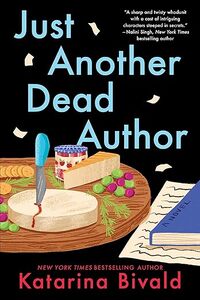
Poisoned Pen Press Read Kindle PreviewThe pen is mightier than the sword—but both are deadly in the wrong hands
When mystery author Berit Gardner agrees to attend a writer's conference in the idyllic French countryside, she dreams of basking in the sun and nurturing budding talent. But her vacation takes a dark turn when the keynote speaker—a notorious literary titan known for his biting critiques—drops dead at the end of her lecture. As whispers of foul play swirl, Berit quickly realizes she's stepped into a tangled web of jealousy, betrayal, and long-held grudges. Enter the French commissaire, who is less than thrilled to have a curious author meddling in her investigation. But as the suspects pile up—each with their own motive for wanting the egotistical writer dead—she reluctantly recognizes Berit's sharp instincts could crack the case wide open. With a colorful cast of authors, agents, and aspiring writers all hiding secrets, the stakes rise higher with every clue uncovered. To make matters worse, a tenacious young journalist vows to outsmart Berit and solve the mystery first, placing herself in the killer's sights. Now, Berit must navigate a maze of deceit and danger while trying to keep the ambitious reporter safe. With time running out and the killer lurking in the shadows, can Berit unravel the truth before her own story ends in tragedy? Excerpt Moment of death As soon as I saw him, I thought: He must die. No, I didn’t. I thought: I still want him to like me. But no one expects literal truth in a book, do they? You’re looking for a higher truth. A poetic truth. And his destiny was sealed that same moment I laid my eyes on him on the opening night of “the writing retreat that will change your life.” He was bigger than I remembered him, as if even his body had reached mythical proportions in my head. Or as if he’d eaten too much and moved his arse too little. There you go. You preferred the first version, didn’t you? The poetic truth. The truth—an unnecessary repetition, but it’s a difficult word to avoid during a confession; I’ll have to edit it later—is that I’ve thought about that evening a hundred times and I’ve still not been able to determine the exact moment when I decided to kill him. I have examined every second. Every word he uttered. Every word I uttered. I’ve asked myself: Did I already know this? Was the decision already made there and then? Could he have saved himself? And, yes, he could have. At least I think so. But he didn’t want to save himself. He wanted to barge in as usual, stamp on people’s feelings, their dreams, their fragile egos (yes, he hurt mine, and, yes, it made the murder more pleasurable, but that wasn’t why he died, not by a long shot). The truth—my truth, you can read into whatever you want—is that I don’t even know whether I hated or admired him. Maybe both. Real feelings are complicated in that way. It’s almost only in books that hate can be pure and free and untarnished by irritating positive feelings. Perhaps I even loved him? Maybe. Once upon a time. If I had to choose a moment that decided everything, it was when I saw his smiling face. He looked so happy and unburdened. That was enough. I knew then that I had to do something. That night I walked aimlessly across the dark fields. I followed my dreams until the end. My hands swept through the tall grass, the meadow flowers that almost looked like cow parsley, so banal, so exciting, so terrifying. I was high on inspiration. I smoked a sneaky cigarette and got high on nicotine as well. It felt like when I was writing. The moment that you suddenly have the best idea. The world changed in less than a second. Something that didn’t exist before, existed now. An idea. A thought. A decision that was suddenly cemented in my head. He must die. 1 “C’est Berit Gardner, un très…célèbre?…auteur Suédois? Et she wants un café, s’il vous plaît.” “Of course, mademoiselle,” the waiter at the Hôtel d’Aubusson replied. His English was perfect. His face expressionless. It was the beginning of a scorching day in July, the kind that drove Parisians away, leaving the city for the tourists. The man was dressed in black chinos, black shirt, black socks, black shoes, and yet he looked completely unbothered. Like a vampire, Berit thought. Or a true Parisian. Maybe they were one and the same. “Et un croissant,” Sally continued laboriously. “Naturally, mademoiselle.” Again, the impeccable English. The expressionless face. “Merciiii boocoooo.” The waiter struggled to suppress a small twitch in his right eye. “You’re welcome, mademoiselle.” Sally looked disappointedly at Berit, as if another illusion of life had just been crushed. “I didn’t think French waiters spoke English,” she said. “At expensive hotels in Paris, they probably do,” Berit said dryly. The coffee arrived, refreshingly strong in a small cup, together with a plate of croissants that shattered into small buttery flakes as soon as you touched them. The waiter fled the scene before Sally had the chance to thank him again in French. Berit lifted the coffee cup, closed her eyes, and breathed in the lovely aroma. Everything was still and quiet around them. The courtyard of the Hôtel d’Aubusson was like a secret, silent oasis in the middle of Saint-Germain. Green plants and white umbrellas offered welcome shade. A German couple was reading Der Spiegel at the neighboring table, but apart from them, they were alone. Loud swear words and angry voices suddenly disturbed the calm. Berit stretched her neck to be able to look out into the somber and dimly lit lobby, where the receptionist, the concierge, the waiter, and the doorman all tried talking to a man who was gesticulating and swearing loudly. “Monsieur! Monsieur!” the concierge said. “You can’t park your vehicle…there! Can’t you see you’re blocking off half of the street?” He pointed angrily with both hands and added, even more upset: “And our entire doorway!” Drivers were honking their horns furiously. The man offered numerous creative locations where he could park his car if they didn’t let him in immediately, all in explosive, smattering French. He then broke through the defense barrier, walked over to Berit and Sally’s table and said, “Ah, Berit Gardner! Such a pleasure.” “What’s going on?” Sally whispered and desperately tried to google the words she’d just heard: putain, crétin, couillon, raclure de bidet, nique ta mère… Berit quickly put her hand over the phone. “I imagine our ride has just turned up,” she said. At least she hoped so. She stretched her head up to see if anyone else was standing behind this man, but apart from the upset hotel staff, the lobby was completely empty. The man bowed carelessly. “Antoine,” he said. “Antoine Tessier, at your service.” While he was talking, he casually picked up Berit and Sally’s suitcases and headed toward the entrance. “Our bags!” Sally exclaimed and ran after him, as if she thought he was trying to steal them. Berit stood up, finished the last of her coffee, left a fifty-euro note on the table with an apologetic nod to the waiter, and followed them out. An old, run-down, and filthy white bus took up most of the narrow street. Most of the windows were down; the sweaty faces poking out suggested there was no air-conditioning. Standing in front of it was Emma Scott. Berit smiled when she saw her old friend, but there was something about her appearance that bothered her. A new tiredness in her face, or some kind of helplessness in her shrunken shoulders that hadn’t been there the last time she saw her. Emma came toward Berit with her arms stretched out. “I don’t know what I would have done if you hadn’t saved me,” she said. Her body felt fragile when Berit hugged her. She remembered the sinewy strength that had always been there and the thousands of boxes of books this woman had carried during her life, and she got worried. They hadn’t seen each other in over five years, and those years did not seem to have been kind to Emma Scott. “It’s John Wright who is the savior,” Berit said. Emma pulled away. “Yes,” she said guardedly. “We are very grateful. Obviously. He’s already at the château. He arrived yesterday.” We, Berit thought and looked at Antoine. He was loading their suitcases into the hold of the bus, taking his time. A line of cars had formed behind them on the narrow rue Dauphine. “And you must be Sally,” Emma said. “Your mum has told me so much about you. An impressive woman, Olivia. Really very…impressive,” she finished lamely when she couldn’t seem to think of another adjective describing the formidable literary agent that was Sally’s mum, and now also her boss. Emma looked at Berit again. “I am so grateful that you’re here. I didn’t know what to do.” “I would have come to the bookshop too if only you’d asked me,” Berit said. “I had no idea how bad things were. If there was anything I could have done…” Emma lowered her gaze. “Yes,” she said. “In fact I tried… Olivia said you were very busy.” She smiled uncomfortably. “And I’m sure she was right. But you’re here now.” Antoine grabbed Berit’s elbow gently but firmly, helped her up onto the bus, bowed toward Sally, and said: “Mademoiselle” with a strict kind of politeness that made her hurry up on to the bus. He helped Emma with considerably more patience and jumped in behind the wheel. After making sure Emma, who was standing in the aisle, was holding on to the handle firmly, he skidded away, accompanied by the horns and cursing that’s such a typical part of Parisian traffic. Berit looked around in the bus. They were an odd little group, spread out across the seats. Everyone stared at Berit and Sally when they unsteadily made their way toward two empty seats in the back. “More people will join us at the retreat,” Emma assured them. She was still standing in the aisle despite Antoine’s erratic driving. “A lot of them are flying straight to Lyon.” “I bet you would have done the same if you had known there was no air-conditioning on the bus,” a guy in his midtwenties said from the seat directly behind Berit and Sally. He stretched out his hand between the back of their seats. “Alexander Spencer,” he said. “But call me Alex.” Alex radiated a youthful optimism and seemed almost manically social. “I’m not a writer,” he said chirpily, which explained a lot of the optimism. “Jules here is, though. My boyfriend.” The boyfriend next to him was slim and svelte, dressed in black jeans and a black polo shirt. He looked as if he tried to mimic the French waiter from the hotel but had regretfully already started sweating in the stifling heat on the bus. His long, thin, black hair was stuck to his forehead. The hand that was extended to Berit was clammy, his handshake weak and lifeless. “Julian Aubrey,” he said without making eye contact. He leaned back as if he wanted to distance himself from any small talk. “I hope you’ll all get to know each other a little during the ride,” Emma said. “If not, there’ll be plenty of opportunity during the retreat. Cyclist!” she suddenly yelled over her shoulder. The bus swerved. Berit offered her a hand to steady her and received a feeble smile as a thank you. Berit looked over at Antoine behind the wheel. Romantic partner or colleague? Regardless, she was pleased he was here. She had noticed the fleeting but protective glance he’d directed at Emma when they left the hotel. It felt reassuring that his explosive rowdiness was on Emma’s side. She had a feeling Emma needed it. In the seat across the aisle sat a woman around the same age as Alex and Julian. She had hair the color of honey, perfectly blow-dried with shimmering long blond waves falling over her shoulders. Her clothes—gray trousers, white short-sleeved shirt, stilettos—revealed a slim and fit body. On her lap was the welcome pack Emma had given them, a notebook, several pencils, and her mobile. A manicured hand held everything in place. She looked like a mix between a journalist and an influencer, and she was staring straight at Berit. “You’re Berit Gardner, aren’t you?” she said. Berit admitted as much. “I’m Nicole. Nicole Archer. I’ve read your earlier work. But not your latest ones.” “They’re even better!” Sally said. “Sally Marsch,” Berit said. “My agent.” Nicole studied Sally carefully, as if weighing her status and importance. Then she looked down at her welcome pack, ticked her off the participant list, and turned toward Berit. “But I thought it was brave of you to try out a new genre at your age,” she said. “Older people seldom dare to try new things. Most stagnate in their thirties, and you’ve got to be a lot older than that.” Berit admitted this as well. In front of Berit was a woman in her seventies. She turned around and said quietly: “She told me she was pleased I was here, as it’s important for older people to have a hobby. Like knitting.” She smiled. “I’m Mildred Wilkinson. I have read your latest books.” Mildred’s hair was thin and gray, and she exuded an air of patient suffering. On the hot, stuffy bus, after what must already have been a long journey, she looked the most tired but also the most stoically accepting. Berit got the feeling that she didn’t expect life to be very comfortable. “I’m a journalist,” Nicole said. “And one day I will write a book that will change the world. The only thing it takes is being in the right place at the right time.” “You write nonfiction?” Sally asked with interest. “Let’s just say…based on a true story.” Nicole smiled radiantly. “One mustn’t let the truth get in the way of a good story. And believe me, I will succeed. I’m willing to walk over dead bodies to achieve it.” Her words jarred scarily with her perfectly made-up, smiling face. “That’s why I’m here,” she continued. “To walk over dead bodies?” Alex asked, but he didn’t sound very shocked. Nicole glared impatiently at him. “To become successful, obviously. By extending my network. That’s how you succeed in this world. You have to know the right people.” She looked greedily at Berit. Berit instinctively leaned back farther into her seat. “I’m in IT,” Alex said over Berit’s backrest. “Customer support. I always tell Jules that if he ever wanted to write a comedy, I’ve got plenty of material for him.” Julian didn’t seem to want to write comedies. “Why are you here then, if you’re not a writer?” Nicole challenged. “Moral support.” Alex winked at Berit. “I’m here to defend him from all the other scary writers.” At the front of their little group was a woman in her fifties who looked as cool as Julian Aubrey was trying to be. She was wearing a black leather skirt, a black-and-white shirt with a graphic pattern, and bright red lipstick. Her dark hair was long and artistically ruffled, but in a way that must have cost hundreds of pounds to achieve in an exclusive salon. Her face was stiff, but whether it was from Botox or sadness, Berit couldn’t tell. Nicole’s gaze constantly wandered across to her. It appeared she hadn’t yet dared asking her name, but it was obvious she wanted to. “Rebecka Linscott,” the woman finally said. She turned around in her seat so she could look at Berit. The presentation was aimed at her and not the rest of the participants. She completely ignored Mildred, who was sitting between them. Nicole looked through the paper in her lap. “You’re not on the list,” she said disapprovingly. “I joined late on in the process. Another publisher had to cancel.” “So you’re a substitute?” Alex said. She looked annoyed. “I run Linscott Publishing. I’m sure you’ve heard of it.” “No,” Alex said cheerfully. She looked even more annoyed. “I published John Wright’s first books. I discovered him.” “I have heard of him,” Alex said. “Everyone’s heard of him,” Nicole said impatiently. “John asked me to come here as a personal favor.” “I heard he moved to Penguin Random House,” Nicole said. “I heard he got millions,” Alex said. “It’s true,” Sally whispered to Berit. “Mum represents him.” Julian forgot to play cool and said in an excited voice: “I can’t believe we’re going to stay in a French château together with John Wright.” He said it as if the name was a concept, not a person, and in his childish admiration he finally seemed slightly interesting. Nicole leafed through the welcome packet to find the list of lecturers on the writing retreat and found John Wright immediately. Berit glanced over. His blurb started with saying that he “was a writer that needed no introduction,” and proceeded with an introduction that was twice as long as everybody else’s. He was a global phenomenon, had been nominated for the Man Booker prize five times, and topped the New York Times bestseller list multiple times. His photo filled a whole page. He stared angrily at all of them as if the photograph was a personal insult. His mouth had a condescending smirk that made Berit want to wipe it off his face. Emma looked down at the brochure in Nicole’s lap. Despite it being just a photograph, it provoked a worried frown on Emma’s forehead. Berit examined her carefully. Her blond, fluffy hair was unkempt. Her clothes were already creased after a long and exhausting day. Her lipstick had come off, apart from the bits stuck to her teeth. But there was something else as well. Something subtle yet elusive was different about Emma. Not a weakness—Berit didn’t want to say that about one of the strongest women she’d ever known—but perhaps a new sense of danger. As if life had dealt Emma a few blows since they’d last seen each other, and she was now prepared for new ones. When Berit’s debut came out, Emma Scott had been a name to reckon with in the literary world. She had owned an iconic bookshop in London and had helped establish more than one famous writer. If Emma really loved a book, there was nothing she wouldn’t do for it. She’d talk about it everywhere, recommend it to all her customers, review it wherever she could, and personally be the difference between success and anonymity. And Emma loved Berit’s first book. No writer, Berit thought, forgets the first person who loved their book or showed it kindness. But as Berit’s star had risen, Emma’s had fallen. Berit couldn’t shake the uncomfortable and completely illogical feeling that the two were connected, like a seesaw: one rose, one sank. The bookshop was forced to close last year. Berit hadn’t found out until it was too late. Emma had done more for literature and reading than anyone else Berit knew, and she hoped that the writing retreat was a sign that Emma hadn’t given up. Berit would do everything she could to make sure it was a success. She opened up her own welcome packet and got out the thick, gleaming brochure. Large golden letters on the front said: Welcome to Château des Livres And to the writing retreat that will change your life! 2 The bus hurtled along the road. Sally was soon uncomfortably warm. Even with the windows open, it was stuffy and sweaty on the bus. It smelled of exhaust fumes and warm tarmac. Her mobile phone pinged. She opened the text message. Do you have eyes on the object? It wasn’t hard to work out who the “object” her mum referred to was. The only person her mum thought of these days was John Wright. Sally started replying: No mu… Deleted. No boss, she wrote instead. Then she deleted that as well. Negative, boss. The reply came after only a few seconds, in a series of demanding texts, one after the other until everyone on the bus was staring at her. Keep your eyes and ears open, the first one said. Don’t lose sight of him for even a second, the next one said. Whatever you do: don’t talk to him, said the last. Sally replied that she was still on the bus, turned her phone to silent, and put it in her handbag. She glanced at Berit. For the umpteenth time she asked herself why they were there. Not here on the warm, stifling bus, even though Sally did wonder about that too. They could easily have gotten a first-class ticket to Lyon instead of getting the train to Paris and having to travel by bus the rest of the way. But the big question was why Berit had accepted an invitation to present a series of lectures at a writing retreat in France in the first place. She had never expressed any interest in teaching before. She had been determined not to leave her cottage in Cornwall, until one day she’d called Sally and said they were going to France. Her mum hadn’t objected as strongly as Sally thought she would, but that was readily explained when it turned out that Olivia’s newest acquisition, the pride of her stables (her word for the writers at her agency), John Wright, would also be there. He was the keynote speaker and would give the opening lecture on the first day, and then leave. Even though he would only be there for twenty-four hours, it was enough to make Olivia nervous. Sally’s phone vibrated in her bag. And make sure Berit doesn’t argue with him!
They stopped for lunch at a service station outside Dijon, where everybody was given a bottle of water and a dry baguette, which they ate at a couple of rickety picnic tables next to the car park. In the afternoon they were finally driving through the ramshackle suburbs of Lyon. For a while they followed the signs toward Vienne, until they turned off again and were surrounded by vineyards. Berit looked around. Julian had fallen asleep with his head on Alex’s shoulder. In his sleep he looked innocent and serious, and so very young. His face was pale against the dark clothes. Nicole was writing in a beautiful notebook with a dark leather cover. When she looked up, she hungrily observed everyone and everything around her. So eager for new experiences to document, Berit wondered if Nicole had any time for living. Finally, they turned off. They followed a long, narrow dirt track, shaded by enormous cypresses, leading to a dark and depressing building. Berit saw the look of disappointment on Sally’s face when they got off the bus. She must have imagined a beautiful renaissance castle with cupolas, pilasters, bows, and recesses. This place was just a large, square building with a battered facade and closed window shutters. A narrow, split staircase led up to a substantial door. It was closed. The stairs were covered in leaves and debris, as if no one had walked up them in years, and on the gravel drive, weeds were growing freely. The château was completely in the shade. The whole building had an air of lost possibilities and abandoned dreams. Antoine herded them around to the other side of the building. When they turned the corner, the sun, literally and figuratively speaking, caught up with them. Large vineyards stretched out in front of them, a broad and uninterrupted horizon that made Berit want to run along one of the rows of vines and continue forever. The afternoon sun wrapped the world in a soft, orange-colored light that made the château shimmer magically. Berit’s heart beat faster. She could feel the energy flowing from this place. She wondered if Emma had intentionally chosen it because of the creative energy here, or if it was just a happy coincidence that had led her to this place. Regardless, Berit felt optimistic about the retreat for the first time since she had accepted the invitation. From this angle, the building wasn’t austere and impersonal, but chaotic and surprising. Instead of being uninhabited and deserted, the château seemed to have lived a long and interesting life. It must have been extended over generations, until nothing really made sense, but everything was charmingly informal. Two wings on each side of the building created a large courtyard, and between them were the picturesque ruins of an old barn, a wild kitchen garden, and a pool shaded by tall poplars and watched over by several statues. Wisteria in full bloom framed a paved patio, and on the second floor right in front of them was a large terrace with sofas and umbrellas. John Wright was standing on the terrace. Berit recognized him immediately. She looked up at the same time everyone else did. He was in the middle of a heated conversation with another man. Their voices were angry and upset. The other man was dressed in a creased light-blue linen shirt and he talked with a worrying intensity with John Wright, who was older, heavier, and angrier. John’s face was frozen in irritation. He looked as if the other man was an annoying fly that he wanted to swat away. “It’s John Wright!” Sally said excitedly. There was something old-fashioned and literary about his corpulence and formal dark suit. He looked down at the group, and suddenly his frozen face changed to bright red in angry surprise. “What the hell is she doing here?” he said.
Start Reading JUST ANOTHER DEAD AUTHOR Now
Our Past Week of Fresh Picks
|
















|
| |||
|
||||
 © 2003-2026