Earlier biographies of the man who became Lewis Carroll, author of many books including Alice's Adventures in Wonderland and Through the Looking-Glass, tend to emphasize the friendships he had with young girls and cast a sleazy shadow over his life, perhaps in search of sensationalism and thus a greater readership. Those authors saw Carroll's life through the filter of their own time period without making the slightest attempt to reconcile their beliefs with what is known about the era and culture that birthed him or even acknowledging any facts or ephemera that might have challenged their thesis. The books seem to be all about the authors' sensibilities and were more flights of fancy than a simple discovery of Carroll's life.
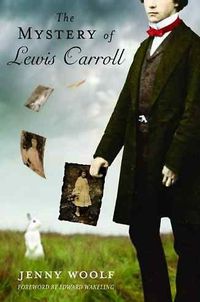
Jenny Woolf has taken the innovative and sensible approach of examining the documents and facts of the Reverend Charles Lutwidge Dodgeson's (a.k.a. Lewis Carroll's) life through the lens of what we know of Victorian English culture and mores. The result is illuminating. In the process of her research she discovered new documentation that is beyond reproach and that provides a glimpse into what was truly important to Reverend Dodgeson. THE MYSTERY OF LEWIS CARROLL examines his family life, the very real restrictions his position at Christ Church put around his world, as well as the interest he had in photography, then a very new medium of artistry. His lesser-known works are also discussed, the existing diaries examined, and some hypotheses are constructed regarding why some of his papers were destroyed by his siblings after his death.
Woolf has laid out a clear-cut and eminently readable portrait of a man who was never clearly understood; not by his contemporaries, and certainly not by those of us who only know him through his beloved children's books. Refreshing, engrossing and extremely well-documented, any lover of the Alice in Wonderland stories will delight in this book and being able to learn more about the man who created them. The subtitle says it all: "Discovering the Whimsical, Thoughtful, and Sometimes Lonely Man Who Created Alice in Wonderland."
No excerpt available.







 © 2003-2026