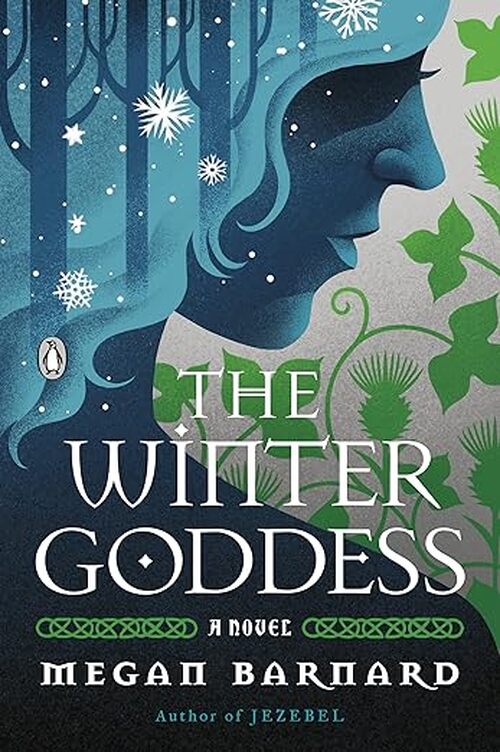
Celtic mythology tells of a pantheon of gods and goddesses, including Cailleach, goddess of winter, daughter of Danu, who controlled the seasons and fertility. THE WINTER GODDESS probably echoes a brief return to icier conditions as Bronze Age or Iron Age people try to survive.
The woman’s view is foremost in this tale of living, scattered loves, and dying. Young Cailleach makes a friend of a mortal girl, but that girl is married off and dies in childbirth. In distress and rage, the young winter goddess inflicts long periods of snow on the landscape. Why should girls be obliged to wed and have babies, which are almost sure to kill them sooner or later? Cailleach is eventually stopped by Danu, who enjoys being worshipped and wants to teach her daughter a lesson.
Danu, in this magical realism shown as distant and judgmental, sends Cailleach to live and die without powers among the mortals. She has to fit in and trade, or she’ll die of hunger and cold. Cailleach actually finds several ways to die, cold being just one. Danu, who must go down as an emotional abuser, which I guess could be said about a lot of gods around the world, doesn’t care and keeps sending her daughter back.
I found the constant woman’s point of view quite telling. We see the making of honey and candles, tending vegetables, rearing children, sleeping with villagers of either gender. We don’t see any of the irregular conflict that people of this time feared incessantly. Ditches, banks and palisades were constructed, stones piled up for slingshot use by guards, and whole communities lived on lake islands. Not seen in this seashore village, which was too early for Vikings but might have been caught napping by other seaborne raiders. Nobody makes weapons, invents a better hand axe, even though there are wolves. We have bronze knives, yet glass jars. How? Who made the glass? We don’t even know who made the knife.
Though we start with a young girl, I would not see this as a YA fantasy. Nor is it really a nature or Celtic fantasy, though some readers will think that way. At heart, THE WINTER GODDESS by Megan Barnard is a mother and daughter tale. Danu keeps on being unsatisfied with Cailleach, no matter what effort she has to show for her latest life among the mortals. All Danu had to do was accept that the younger goddess knew she had made mistakes and would try harder. In order to win, Cailleach will have to stop being herself. And that means, Danu will win. But in the end, it also means Danu will lose something. About time, we say. About time.
A goddess is cursed to endlessly live and die as a mortal until she understands the value of human life, in this inventive, moving reimagining of Irish mythology.
Cailleach, goddess of winter, was not born to be a blight on humanity, but she became one. She would say with scorn that it was their own fault: mortals were selfish, thoughtless, and destructive, bringing harm to each other and the earth without cause or qualms.
One day, Cailleach goes too far. Thousands die, lost to her brutal winter. In punishment, her mother Danu, queen of the gods, strips the goddess of her powers and sends Cailleach to earth, to live and die as the mortals she so despises, until she understands what it is to be one of them. Though determined to live in solitude, Cailleach finds that she cannot help but reach for the people she once held in such disdain. She loves and mourns in equal measure, and in opening herself to humanity, hears tales not meant for immortal ears—including a long-buried secret that will redefine what it means to be a god.
From the author of the “stunning . . . riveting” historical reenvisioning Jezebel (Library Journal), a vividly imagined and arresting story of a goddess punished—and a goddess reborn, as she discovers the importance of a life ephemeral…and what it means to truly be alive.










 © 2003-2026