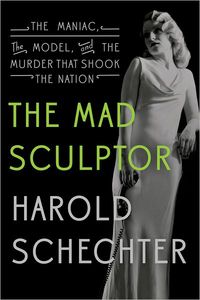
I very much enjoyed THE MAD SCULPTOR: THE MANIAC, THE MODEL, AND THE MURDER THAT SHOOK THE NATION. It's a book that would appeal to people interested in true crime, history, or just looking for a good story. The crimes looked at in this book take place in New York City around the 1930's.
The "Cast of Characters" in the beginning of the book is very helpful in keeping names straight. One of the things that Harold Schechter does in this book, as well as in other true crime books he's written, is give some historical context to the crimes described. I find it interesting reading about the physical landscape and social climate of the point in history in which these crimes take place. I also enjoyed reading about the various public figures of the day like the lawyer Samuel S. Leibowitz and psychiatrist Fredric Wertham.
After reading this book, I plan on checking out one of the books on Leibowitz listed in the author's bibliography. For readers, like myself, interested in the history of forensic science the book discusses Alexander Gettler and how he was able to help solve a case using scientific methods at the time. I found it intriguing how he was able to link forensic evidence to the suspect in an age before DNA testing, and without computers and other modern inventions. In this book, the author discusses three other crimes which were committed in the same general area as the crime featured by the author. They are interesting cases and I enjoyed the author's dry wit when describing all the particulars.
It's obvious how much research went into this book, and specifically the Robert Irwin case. The book goes into detail describing Irwin's parents, their background, his early life and events leading up to his crime. It all makes for a wonderful case study. The detail and the direct quotes made me feel as if I was right there at that place and time. I was fascinated by the look into the criminal justice system of the time and what was involved with trying to successfully maintain an insanity defense. This book also spotlights the yellow journalism that was rampant at the time. This is one of the only authors for which I will read the notes at the back of the book. The notes are definitely worth reading, both for a little extra detail as well as the bibliography. I thoroughly enjoyed this book and look forward to the next true crime book by Harold Schechter.
No excerpt available.









 © 2003-2026