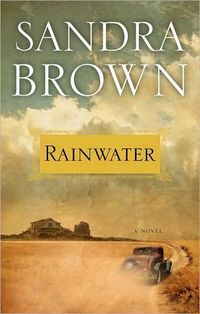
Many times a favorite author such as Sandra Brown switches her style or genre of writing, and we as readers are filled with disappointment that a favored author is making a change that we may or may not embrace. With the release of RAINWATER Sandra Brown switched time periods, but I felt that her basic writing style remained much the same that I personally have come to enjoy over the years.
RAINWATER is set in 1934 when the United States of America was suffering through a depression, and racial lines were still strongly believed in. Ella Barron seems to be making it through fairly comfortably with the income she receives from the running of a boarding house. She has a maid who comes daily to help tend her residents, and at times to help care for Solly, Ella's son, who we come to find out is what today we might consider austic.
When the town doctor asks Ella to rent a room to David Rainwater he leaves out the fact that Mr. Rainwater has issues of his own until after the rental agreement is set. At first Ella is a little distressed about the possibility of caring for Mr. Rainwater as she calls him, but as the story develops so does their friendship, and their strong desire to help others who are less fortunate than themselves.
In the writing of RAINWATER Ms. Brown could easily have trivialized the strains of the times, and the tensions of the people barely scraping by. It's a talent to her writing skill that instead she was able to turn Rainwater into something of a history lesson, that translates well into our more modern times, and perhaps leaves readers like me learning something that was either skipped or not absorbed while in school.
It feels awkward to say you enjoyed a book that was as intense as this one tended to be at times, but enjoy I did. Through Ms. Brown's words I truly felt as though I could have been Ella Barron boarding house owner trying to fight the feelings I had for a man I knew I should never want, while struggling to protect the rights of the handicapped son I loved like no other.
I only hope that when you read RAINWATER you get from the story even part of what I did be it the history lessons learned, or the moral lessons of how to treat your fellow human being.
No excerpt available.













 © 2003-2026