
Purchase
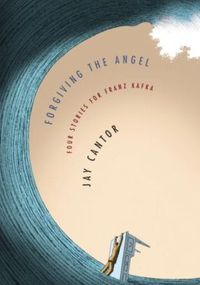
FORGIVING THE ANGEL
By: Jay Cantor
Four Stories for Franz Kafka
Knopf
January 2014
On Sale: January 14, 2014
225 pages
ISBN: 0385350341
EAN: 9780385350341
Kindle: B00E2RYTWC
Hardcover / e-Book
Add to Wish List
Non-Fiction
From one of our most thought-provoking and admired writers, a brilliant, beautiful, and sometimes heartbreaking group of stories based on a circle of real people who are held together by love of their friend Franz Kafka.
The sequence opens with Max Brod, Kafka’s friend and literary executor, telling us about Kafka and Dora Diamant, their love growing stronger even as Kafka is dying of tuberculosis. Kafka talks with Brod about forgiving the Angel of Death, but Brod wonders if Franz is really talking about Brod’s forgiving Kafka for the predicament he’s put him in, having instructed Max to prove his love for Franz by burning the work Brod most admires: Franz’s unpublished stories.
Next there is a brief interlude—perhaps a lost Kafka story, or is it a story about a lost Kafka story which is perhaps itself masquerading as one of the things that in anger Brod neither burned nor published?
The story that follows tells of Dora’s marriage to the militant German Communist Lusk Lask and his attempt to break the hold of the angelic Kafka on his wife’s imagination by giving her a daughter. We watch this family in its move to the Soviet Union to escape Hitler, and as Dora and her daughter flee the Soviet Union to escape Stalin, leaving Lusk behind in the Gulag. Later, when Lusk tries to connect with his daughter again, the Angel Kafka seems once again to stand in his way, a force in his daughter’s life that seemingly destroys as it sustains.
In the last story we meet Milena Jasenska, another of Kafka’s lovers, and Eva, the woman who, after surviving Stalin’s camps, meets Milena in a Nazi concentration camp and is reborn in this hell through her love for her, though perhaps trapped there in memory because of that love as well.
By the end, these moving love stories with Kafka as their presiding ghost have told the calamitous story of Europe in the Century of the Camps. Imbued with a gravitas and dark irony that recall Kafka’s own work, these stories nonetheless also bear the singular imaginary stamp and the keen psychological and emotional insight that have marked all of Jay Cantor’s fiction.
 Media BuzzWeekend Edition Saturday - January 18, 2014
| 






 © 2003-2026