
Purchase
David Petraeus and the Plot to Change the American Way of War
Simon & Schuster
January 2013
On Sale: January 2, 2013
418 pages
ISBN: 1451642636
EAN: 9781451642636
Kindle: B008J4RONU
Hardcover / e-Book
Add to Wish List
Non-Fiction
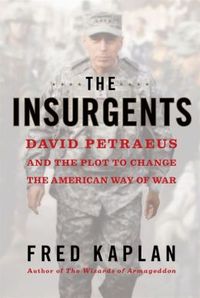
The Insurgents is the inside story of the small group of soldier-scholars, led by General David Petraeus, who plotted to revolutionize one of the largest, oldest, and most hidebound institutions—the United States military. Their aim was to build a new Army that could fight the new kind of war in the post–Cold War age: not massive wars on vast battlefields, but “small wars” in cities and villages, against insurgents and terrorists. These would be wars not only of fighting but of “nation building,” often not of necessity but of choice. Based on secret documents, private emails, and interviews with more than one hundred key characters, including Petraeus, the tale unfolds against the backdrop of the wars against insurgents in Iraq and Afghanistan. But the main insurgency is the one mounted at home by ambitious, self-consciously intellectual officers—Petraeus, John Nagl, H. R. McMaster, and others—many of them classmates or colleagues in West Point’s Social Science Department who rose through the ranks, seized with an idea of how to fight these wars better. Amid the crisis, they forged a community (some of them called it a cabal or mafia) and adapted their enemies’ techniques to overhaul the culture and institutions of their own Army. Fred Kaplan describes how these men and women maneuvered the idea through the bureaucracy and made it official policy. This is a story of power, politics, ideas, and personalities—and how they converged to reshape the twenty-first-century American military. But it is also a cautionary tale about how creative doctrine can harden into dogma, how smart strategists—today’s “best and brightest”—can win the battles at home but not the wars abroad. Petraeus and his fellow insurgents made the US military more adaptive to the conflicts of the modern era, but they also created the tools—and made it more tempting—for political leaders to wade into wars that they would be wise to avoid.
 Media BuzzFresh Air - NPR - January 29, 2013
Morning Edition - January 24, 2013
| 











 © 2003-2026