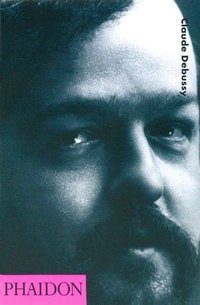
Born near Paris in 1862, Claude Debussy was one of the most influential composers of his age, affecting profoundly the works of later generations of composers, both in his native France and elsewhere. He was trained at the Paris Conservatoire, and decided there on a career as a composer rather than as a pianist, his original intention. His highly characteristic musical language, thoroughly French in inspiration, extended the contemporary limits of harmony and form, with a remarkably delicate command of nuance, whether in composition for the piano or in the handling of a relatively large orchestra. Considered by many to be the most important composer of piano music since Chopin, Debussy also produced a single opera, "Pelleas et Melisande", which brought an entirely new tone to the genre. This, however, was his only completed opera and instead his work predominantly comprises orchestral pieces, piano sets and songs. The orchestral works include "The Three Nocturnes" (1899), "The Three Images" (1912) and "The Ballet Jeux" (1913). Debussy's piano music begins with works that, Verlaine fashion, look back at earlier musical styles with a modern cynicism (Suite bergamasque, 1890; Pour le piano, 1901). But then, as in the orchestral pieces, Debussy began to associate his music with visual impressions of the East, Spain, landscapes etc, in a sequence of sets of short pieces. His last volume of "Etudes" (1915) interprets similar varieties of style and texture purely as pianistic exercises and includes pieces that develop irregular form to an extreme, as well as others influenced by the young Stravinsky (a presence too in the suite En blanc et noir for two pianos, 1915). A planned set of six chamber sonatas was sadly cut short by the composer's death from cancer in 1918. Perhaps the most influential composer of his generation (and certainly one who provoked much contemporary controversy), Debussy's influence continues to be felt in the twenty-first century.














 © 2003-2026