
Purchase
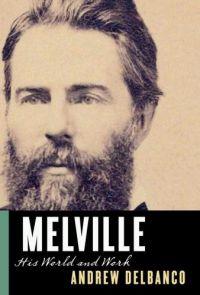
MELVILLE: HIS WORLD AND WORK
By: Andrew Delbanco
Biography of Melville - His World and Work
Knopf
September 2005
448 pages
ISBN: 0375403140
Hardcover
Add to Wish List
Non-Fiction Biography
With Moby-Dick Herman Melville set the standard for the Great American Novel, and with “Bartleby, the Scrivener,” Benito Cereno, and Billy Budd he completed perhaps the greatest oeuvre of any of our writers. Now Andrew Delbanco, hailed by Time as “America’s best social critic,” uses unparalleled historical and critical perspective to give us both a commanding biography and a riveting portrait of the young nation. The grandson of Revolutionary War heroes, Melville was born into a family that in the fledgling republic had lost both money and status. Half New Yorker, half New Englander, and toughened at sea as a young man, he returned home to chronicle the deepest crises of his era, from the increasingly shrill debates over slavery through the bloodbath of the Civil War to the intellectual and spiritual revolution wrought by Darwin. Meanwhile, the New York of his youth, where letters were delivered by horseback messengers, became in his lifetime a city recognizably our own, where the Brooklyn Bridge carried traffic and electric lights lit the streets. Delbanco charts Melville’s growth from the bawdy storytelling of Typee—the “labial melody” of his “indulgent captivity” among the Polynesians—through the spiritual preoccupations building up to Moby-Dick and such later works as Pierre, or the Ambiguities and The Confidence-Man, His Masquerade. And he creates a vivid narrative of a life that left little evidence in its wake: Melville’s peculiar marriage, the tragic loss of two sons, his powerful friendship with Nathaniel Hawthorne and scores of literary cronies, bouts of feverish writing, relentless financial pressure both in the Berkshires and in New York, declining critical and popular esteem, and ultimately a customs job bedeviled by corruption. Delbanco uncovers autobiographical traces throughout Melville’s work, even as he illuminates the stunning achievements of a career that, despite being consigned to obscurity long before its author’s death, ultimately shaped our literature. Finally we understand why the recognition of Melville’s genius—led by D. H. Lawrence and E. M. Forster, and posthumous by some forty years—still feels triumphant; why he, more than any other American writer, has captured the imaginative, social, and political concerns of successive generations; and why Ahab and the White Whale, after more than a century and a half, have become durably resounding symbols not only here but around the world.
 Media BuzzAll Things Considered - December 12, 2005
| 










 © 2003-2026