
Purchase
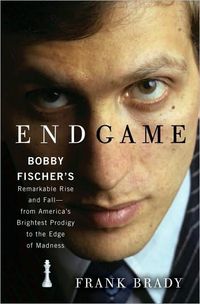
Bobby Fischer's Remarkable Rise and Fall - from America's Brightest Prodigy to the Edge of Madness
Crown
February 2011
On Sale: February 1, 2011
416 pages
ISBN: 0307463907
EAN: 9780307463906
Hardcover
Add to Wish List
Non-Fiction
Endgame is acclaimed biographer Frank Brady’s decades-in-the-making tracing of the meteoric ascent—and confounding descent—of enigmatic genius Bobby Fischer. Only Brady, who met Fischer when the prodigy was only 10 and shared with him some of his most dramatic triumphs, could have written this book, which has much to say about the nature of American celebrity and the distorting effects of fame. Drawing from Fischer family archives, recently released FBI files, and Bobby’s own emails, this account is unique in that it limns Fischer’s entire life—an odyssey that took the Brooklyn-raised chess champion from an impoverished childhood to the covers of Time, Life and Newsweek to recognition as “the most famous man in the world” to notorious recluse. At first all one noticed was how gifted Fischer was. Possessing a 181 I.Q. and remarkable powers of concentration, Bobby memorized hundreds of chess books in several languages, and he was only 13 when he became the youngest chess master in U.S. history. But his strange behavior started early. In 1972, at the historic Cold War showdown in Reykjavik, Iceland, where he faced Soviet champion Boris Spassky, Fischer made headlines with hundreds of petty demands that nearly ended the competition. It was merely a prelude to what was to come. Arriving back in the United States to a hero’s welcome, Bobby was mobbed wherever he went—a figure as exotic and improbable as any American pop culture had yet produced. No player of a mere “board game” had ever ascended to such heights. Commercial sponsorship offers poured in, ultimately topping $10 million—but Bobby demurred. Instead, he began tithing his limited money to an apocalyptic religion and devouring anti-Semitic literature. After years of poverty and a stint living on Los Angeles’ Skid Row, Bobby remerged in 1992 to play Spassky in a multi-million dollar rematch—but the experience only deepened a paranoia that had formed years earlier when he came to believe that the Soviets wanted him dead for taking away “their” title. When the dust settled, Bobby was a wanted man—transformed into an international fugitive because of his decision to play in Montenegro despite U.S. sanctions. Fearing for his life, traveling with bodyguards, and wearing a long leather coat to ward off knife attacks, Bobby lived the life of a celebrity fugitive – one drawn increasingly to the bizarre. Mafiosi, Nazis, odd attempts to breed an heir who could perpetuate his chess-genius DNA—all are woven into his late-life tapestry. And yet, as Brady shows, the most notable irony of Bobby Fischer’s strange descent – which had reached full plummet by 2005 when he turned down yet another multi-million dollar payday—is that despite his incomprehensible behavior, there were many who remained fiercely loyal to him. Why that was so is at least partly the subject of this book—one that at last answers the question: “Who was Bobby Fischer?”
 Media BuzzAll Things Considered - January 30, 2011
| 









 © 2003-2026