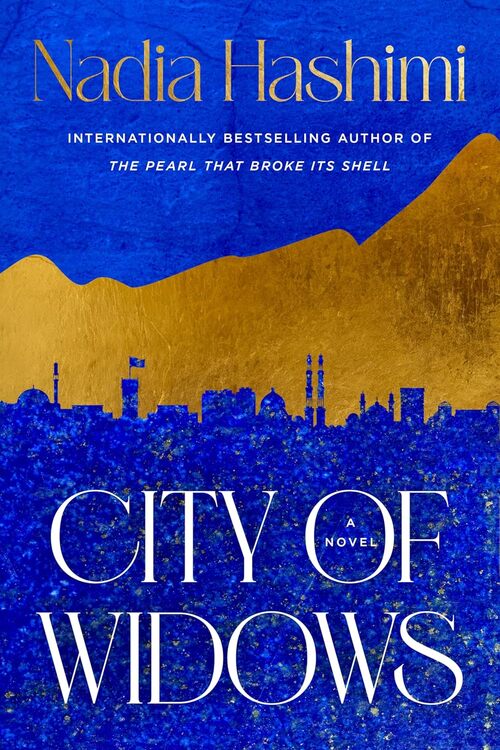
CITY OF WIDOWS by Nadia Hashimi is one of the popular
voices for Afghan women in Fiction. In CITY OF WIDOWS, we
follow the lives of women who worked for the American
Forces, which in itself is a rare phenomenon in Afghan
Society. In a male-dominated society where, for hundreds of
decades Tribal rule prevails no matter who is in power,
there are women who fight a war for their survival in every
era. After the American Forces withdrew from Afghanistan and
the Taliban are slowly taking over and gradually making
their way in every part of the country, we meet a bunch of
women who are vying to leave the country with their
remaining family members. One such woman we follow has
worked with the American Forces after surviving her own
horrifying marriage. Now that the rules have changed yet
again, she fears the past will be back for her, but more
importantly, for her daughter, whom she has hidden so far.
So it's not only a fight for survival but also for her
daughter's identity.
We follow Marjan and her daughter Hawa, for whom Marjan
is fighting to take away from her place of birth, and her
father, who has a very different idea about the place of
women in society. From the time the forces withdraw, we see
Marjan live a life filled with struggles, covert movements,
and sheer willpower by being brave while always looking over
her shoulder in fear of the past catching up to her. It is a
story of resilience and determination: a mother fights for a
child she did not even want in the first place. Once the
said child is born, Marjan ensures she is safe, even if it
means keeping her away from her for a time. It reflects a
time in the war-torn country where women did everything in
their power to ensure their children felt safe.
The story focuses on the strength women have when faced
with adverse circumstances and how far they go to survive.
It is a lesson in strength and bravery. We also see how a
woman risks even her life when she is a mother to ensure the
child's safety. There are times in the story when the reader
holds their breath as the characters try to safeguard
themselves from unseen enemies and a past that is forever
threatening to find and destroy them.
CITY OF WIDOWS is a story of women finding and fighting
for a place under the sky even when it means leaving their
homes behind and starting afresh in an unknown place and
country.
From bestselling novelist Nadia Hashimi—a gripping, occasionally terrifying, yet ultimately hopeful novel focusing on the women of Afghanistan in the years since the Taliban regained power.
In February 2020 the US began to withdraw troops from Afghanistan after nearly twenty years of occupation. A whole generation of Afghan women had been born during that time—women who had grown up in relative peace, gone to school, entered the professions, even served in the army and Parliament. The women of Afghanistan watched as the Taliban filled the streets again. They knew everything was about to change.
In the bustling, cosmopolitan city of Kabul, women are TV newscasters, shop owners, doctors, teachers, lawyers, even soldiers. They include Marjan, who fought with the Afghan army, and will risk everything to keep her daughter Hawa safe. In her earlier days Marjan was called Rahima and had lived the life of a bacha posh—a girl raised as a boy until she came of age. Forced into an early marriage, Rahima took the name Marjan when she fled her warlord husband. She’s created a whole new life for herself, one she will not give up easily.
So has Soraya, who defiantly wore red lipstick as she led the army’s all-female combat force over the objections of her upper-class family. Soraya’s now a wanted woman whose brother may choose not to shelter her from the Taliban. What will become of her? Or Mina, a journalist and broadcaster whose beautiful face is known to everyone in Kabul—including the new regime?
Fight or flight? Or find a third way? One thing is for certain: none of these women will meekly accept her fate.
An epic saga of fear, resistance, change, and reinvention, City of Widows gives voices to the unforgettable Afghan women at a crossroads of history.











 © 2003-2026