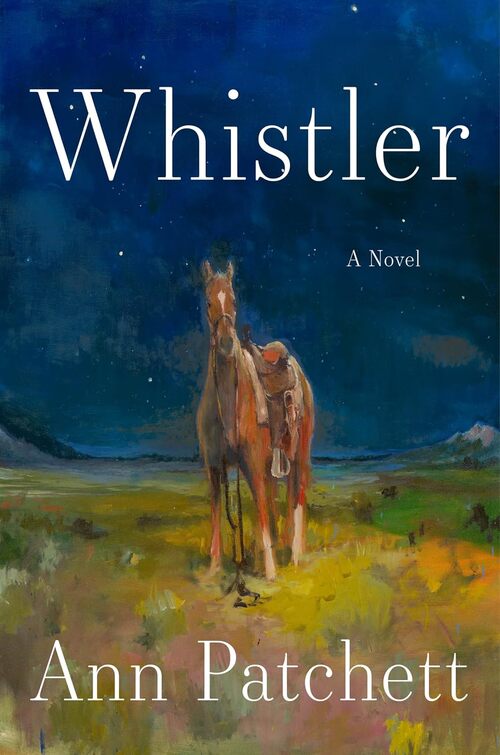
Anyone who reads and enjoys Literary Fiction enjoys Ann
Patchett's books. I have always wanted to read more of
her books, after reading only one other book by her. I find
her stories and writing to be a play on personal dynamics
and intimacy between two people, which is not always
necessarily romantic. They cover a wide range of emotions
and types of intimacy between 2 people, be it between
spouses, siblings, friends, or any other relationship. In
Whistler, we meet Daphne, a 53-year-old woman whom she
encounters at the museum after 40+ years apart. The other
central person in this story is the stepfather, Eddie.
Daphne was 9 when Eddie became her stepfather, and he is
now in his 70s when he comes across her at the museum.
Finding her face familiar, he follows Daphne and her husband
across the museum, and when questioned by Daphne's husband,
Jonathan, Daphne realizes it's Eddie, her
stepfather. They lost touch after Daphne's mother
abruptly divorced Eddie and left without saying goodbye to
the girls.
Before this abrupt and unexplained departure from their
lives, Eddie and Daphne were in an accident that brings them
to the emergency room of the same hospital where Daphne's
younger sister, Leda, is getting her appendicitis surgery.
While in the hospital, Daphne gets to spend some time with
Eddie and exchange notes with him; once discharged, however,
life at home is very different. The girls are recovering;
they know Eddie is injured too but nowhere to be found at
home. With time, as the girls' injuries heal and their young
minds move on because of their mother's influence, Eddie,
though missed, is put to the back of their minds. Out of
sight, out of mind when it comes to their beloved
stepfather. Fast forward nearly 43 years: the girls are now
adults and have their own families when Eddie is suddenly
back and wholly present in their lives. This reappearance is
especially significant for Daphne, who was much closer to
Eddie than her younger sister was. Also, the time they
shared before Eddie disappears from their lives is
impactful. That accident, in which Daphne heroically rescued
them both, is a moment she never forgets or discusses until
Eddie reappears. The relationship, first, between Eddie and
Daphne is rekindled with them catching up on all the lost
time and gradually extends to her younger sister, her
family, Daphne's husband, and ultimately their mother
towards the end.
It is a story of reminiscing, unraveling decades-old
secrets and unsaid things. It is not a simple catch-up but
rather going through old memories and making new ones every
time they get together. The story weaves intimacy into each
conversation, making the reader feel they are witnessing the
core of life and relationships. Life is portrayed with all
its complexities and simplicities, which feel neither heavy
nor burdensome but rather gentle and naturally expressed.
There are moments when the topic of conversation feels heavy
or controversial, but the manner in which the characters
speak among themselves reflects the power of open
communication and the level of comfort shared by people
separated by decades in age and the formality of their
relationships. Yet there is an ease and comfort between them
that creates warmth that makes life and conversations feel
naturally joyful and rewarding.
This power of open communication, a comforting and rare
luxury, is what I enjoyed most in this story of found family
and generous gestures of friendship among its characters.
The acclaimed, prize‑winning #1 New York Times bestselling writer returns with a moving, luminous novel that reminds us of the sweetness and impermanence of life and the power of connection to defy time.
When Daphne Fuller and her husband Jonathan visit the Metropolitan Museum of Art, they notice an older, white‑haired gentleman following them. The man turns out to be Eddie Triplett, her former stepfather, who had been married to her mother for a little more than year when Daphne was nine. Now fifty‑three, Daphne hasn’t seen Eddie for many years, not since the fateful event that changed the direction of both their lives. Meeting again, time falls away; while their relationship was brief, it had a profound impact on them both, and now that they are reunited, they have no intention of ever being separated again.
Whistler is a story about two adults looking back over the choices they made, and the choices that were made for them. It’s a story about bravery, memory, the often small yet consequential moments that define our lives, and the endless stream of loss that in time comes for us all. Beautiful in its simplicity, it is ultimately about how love endures, and how the feeling of being known by one other person, even for a short period of time, can change everything.











 © 2003-2026