This book is a work of fiction that lets readers imagine
what the life of the real-life Chinese Lady might have been.
This book is set in four different eras for her and what
they might have been like for her. It begins with a
concubine’s daughter and takes the reader on a journey
through the trials that she endures.
I found this an interesting read. I have always wondered
about the real Chinese Lady and how she came to the United
States and if her performances were freely given. This story
gives readers a heartbreaking story of what could have been
her life. Each section of the book is another chapter in her
life, and each time she is reinvented for the pleasure of
others. She must learn to be what others want and what they
show her to be in the world. Throughout the book, we see a
lot of the painful and ignorant ideas held by the people of
that time, some of which still exist today. She is treated
as nothing more than an oddity to be displayed, stared at,
and ridiculed. The journey in this book shows both the pain
and the strength of what the woman known as the Chinese Lady
may have gone through.
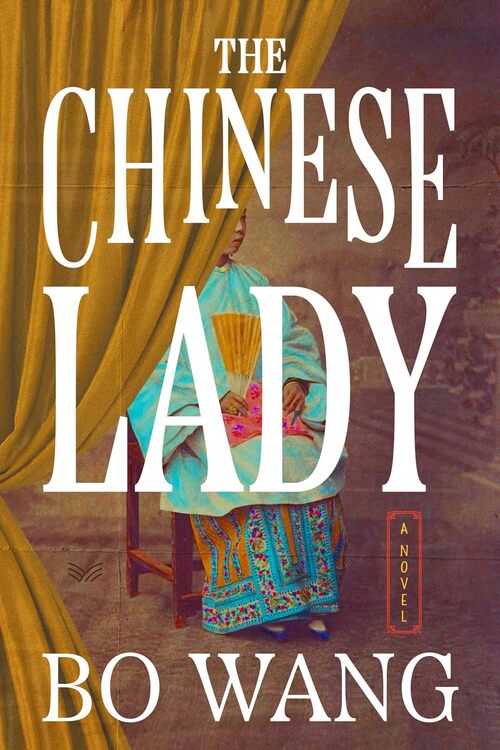
As rich in detail and emotion as Amy Tan's The Joy Luck Club and Lisa See's Lady Tan’s Circle of Women, but with an exciting structure that reinvents the genre, Bo Wang’s gorgeous and immersive debut historical novel immortalizes the life of the first Chinese woman to be brought to the United States in the 1800s.
Little Sparrow, Julia, Afong Moy, Madame Moy, The Chinese Lady, were her many names . . . but her true name has been lost to time.
In 1834 Afong Moy was brought to New York by two merchants as a live exhibit. Rising to fame as the first Chinese female in the United States, she became an oddity among curios as Americans marveled at the opportunity to observe her astonishing little feet, broken and bound to resemble lotuses.
As the story moves from 1820s Canton to P.T. Barnum’s American Museum, to Gold Rush San Francisco, three women introduce us to her many names. Her mother calls her Little Sparrow and sells her to a captain who sails her to New York. The captain’s wife names her Julia and “graciously” treats her as her own. And when she is shunted off to P.T Barnum, her fellow human exhibitions call her China. Eventually arriving in San Francisco's Chinatown, she will at long last claim her name and her own story.
Combining archival research and brilliantly imaginative storytelling, Bo Wang masterfully fills in history’s gaps to weave a powerful narrative of survival in the face of hardship, tragedy, and betrayal. Told through the eyes of those around her; mirroring her life as an object on display, until we finally see the world through her own eyes.








 © 2003-2026