Afghanistan during the early return of the Taliban is the
focus of this story. Marjan and her daughter Hawa have left
a rural village for Kabul, the capital, but now, so has
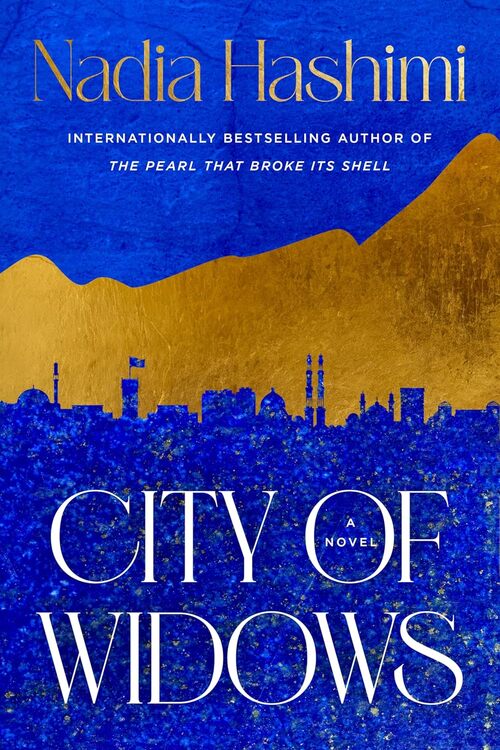
everyone else who can. CITY OF WIDOWS is a reference made by
a woman in the shelter where they live. Widows are not
supported so they go to the city to find work.
As the Taliban exact their version of law, civil
servants, teachers and doctors are being killed. This
promised not to be an easy read, and while it’s easy
to get into the characters and sympathise, it’s hard
to believe a nation could allow such descent into barbarity.
But then, they were already halfway there. Marjan’s
earlier life is told in the book, The Pearl That
Broke Its Shell, during which she is given the
name Rahima. Because her family had five daughters, she, the
eldest, was the bacha posh, a girl who was dressed and
treated as a boy so she could go to the shops, take
messages, and walk her little sisters to school. That life
ended when she was sold by her drug-addicted parents to a
warlord as one of his several wives. Her little sister did
not survive this life. Rahima ran away after a beating. She
didn’t know she was carrying a baby. Changing her name
and fearing vengeance, she tries to learn patience with
traditional crafts and encourages her daughter to study
music.
Soraya, who fought with the Afghan army, feels betrayed
by the abrupt departure of her American confederates at the
base. They won’t take her, as she didn’t work
for them. Khala Mina, Soraya’s aunt and a television
journalist, covers the 2021 US withdrawal with brave focus
on trying to salvage institutions and rights, especially for
women. As the women include Marjan in their plans, the
reader learns that a birth certificate must bear the name of
the father; the mother is generally not named. Young Hawa,
who had to accompany her mother to work, doesn’t have
a birth cert, so she can’t get a passport. Women and
girls are treated as property.
Women entrepreneurs kept families fed. A recent news
story tells me that in Afghanistan, they also took pedal-
rickshaws and taxis around town, not being allowed to drive,
and now they can’t go out and have no money anyway, so
the taxi men have no work. In the early part of this story,
women still take taxi rides, so the reader can see the
economy progressively collapse. With occasional quotes from
Rumi, CITY OF WIDOWS by Nadia Hashimi balances delicacy and
beauty with an awareness that we may have so much, we do not
appreciate what we have.
From bestselling novelist Nadia Hashimi—a gripping, occasionally terrifying, yet ultimately hopeful novel focusing on the women of Afghanistan in the years since the Taliban regained power.
In February 2020 the US began to withdraw troops from Afghanistan after nearly twenty years of occupation. A whole generation of Afghan women had been born during that time—women who had grown up in relative peace, gone to school, entered the professions, even served in the army and Parliament. The women of Afghanistan watched as the Taliban filled the streets again. They knew everything was about to change.
In the bustling, cosmopolitan city of Kabul, women are TV newscasters, shop owners, doctors, teachers, lawyers, even soldiers. They include Marjan, who fought with the Afghan army, and will risk everything to keep her daughter Hawa safe. In her earlier days Marjan was called Rahima and had lived the life of a bacha posh—a girl raised as a boy until she came of age. Forced into an early marriage, Rahima took the name Marjan when she fled her warlord husband. She’s created a whole new life for herself, one she will not give up easily.
So has Soraya, who defiantly wore red lipstick as she led the army’s all-female combat force over the objections of her upper-class family. Soraya’s now a wanted woman whose brother may choose not to shelter her from the Taliban. What will become of her? Or Mina, a journalist and broadcaster whose beautiful face is known to everyone in Kabul—including the new regime?
Fight or flight? Or find a third way? One thing is for certain: none of these women will meekly accept her fate.
An epic saga of fear, resistance, change, and reinvention, City of Widows gives voices to the unforgettable Afghan women at a crossroads of history.











 © 2003-2026