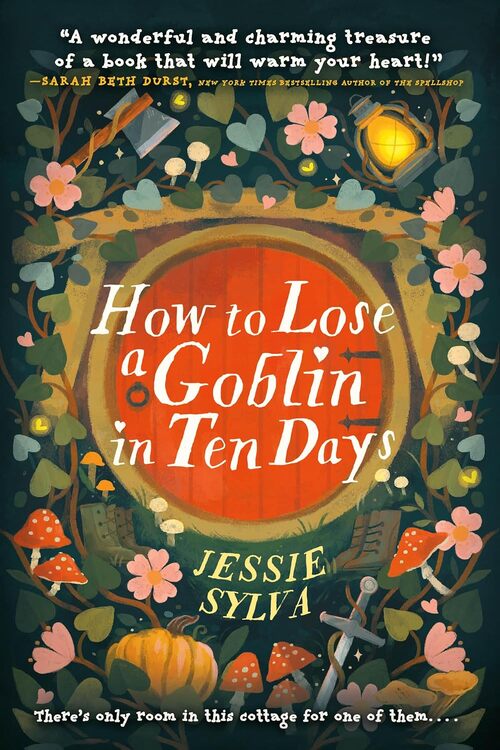
When a cheerful halfling, Pansy, decides she needs to
leave home and explore, it seems perfect to move into her
grandmother’s cottage. Just like all granny cottages
in fairytales, this one stands alone in a wood. Pansy has
title to it in the will. To her surprise and displeasure,
it’s already inhabited. HOW TO LOSE A GOBLIN IN TEN
DAYS seems to be ideal for younger YA readers –
I’m not sure if that’s where the writer was
aiming.
Foraging for fungi is second nature to halflings, but
having a truffle stolen by a pig that helps a goblin, Ren,
is a contentious start. They would find it hard to build a
friendship anyway, given their races are at odds. Goblins
dwell in caves and eat moss and ferns; they take pay from
dark sorcerers and steal the odd cow or sheep. Everyone
knows this. Ren is determined that they have been caretaking
the cottage since Pansy’s Granny died and
they’re not going anywhere. Can they manage to share?
Pansy hopes to drive out Ren, but it may not work that
way.
The author calls Ren by ‘they’ throughout,
which is fine if that’s what the character wants, but
it does lead to a lot of confusion for the reader between
they Ren and they meaning halflings and they meaning
goblins. The meeting and constant querying of racially-built
assumptions is well written. I note though, that in other
similar fantasies, a visit to the goblin market sparks the
action, whereas in this one, that’s the high point of
the action. Conflict is almost all close at hand and polite,
and much of it can be resolved by baking cookies.
HOW TO LOSE A GOBLIN IN TEN DAYS by Jessie Sylva contains
some fun lessons for middle grade folks, with an interesting
setting and plenty of food for thought. There’s a mix
of real and magical plants. But don’t eat the deadly
fungi. That’s a good lesson in itself.
No excerpt available.









 © 2003-2026