The Goddesses of the World series continues, landing us
midway through the twentieth century. So far, the UK-based
Japanese author Kazuko Nishimura has provided the stories of
extraordinary women in ancient Japan, Portuguese-colonised
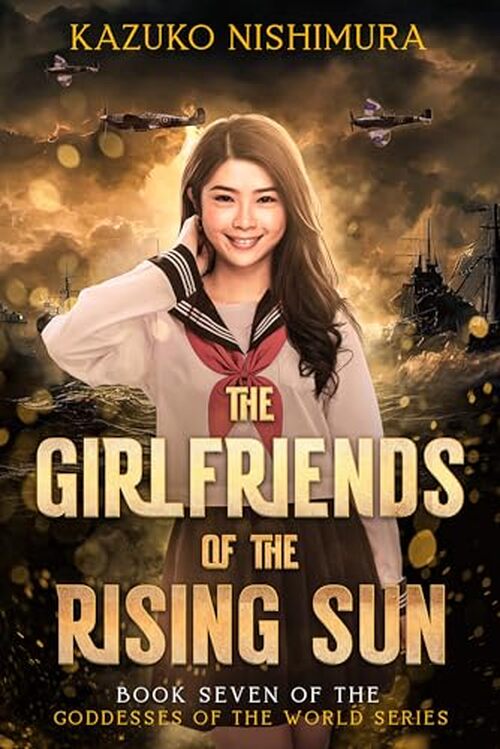
Brazil and other cultures. THE GIRLFRIENDS OF THE RISING SUN
is perhaps more controversial and saddening because it is
more recently set.
Yoshiko Kawashima was a Manchu royal, and as an educated
woman, she was employed as a Japanese intelligence asset.
Her training and aptitude made her eventually a master of
disguise. We see that at first, women were used to getting
information from wealthy or influential men in bars and
brothels. Yoshiko was obliged to lower her station in life,
and not all that well paid, either. She did not have many
options but obedience to her government.
The scenes move from Manchuria and Shanghai, where the
constant threat of war with Russia or China is uppermost, to
the reality of war with America. Yoshiko is able to observe
events at Pearl Harbor, the Japanese internment centres that
followed it, and, by dressing as a man, she sneaks into
briefing rooms.
The really heartbreaking part is the story of the young
women who were or became girlfriends of indoctrinated young
men who were convinced to be kamikaze pilots. The women were
ordered to keep up the morale of the pilots and reassure
them they were doing the right thing, as Japan did not have
enough conventional forces for war with the US.
I like best the parts where Yoshiko is able to be
herself, to hang out with other young women and chat, to
take a lover she actually wants to be with and respects.
Women were tools of war just as much as missiles. By making
this tool human and personalised, we understand how little
choice any of the young Japanese people had, and how
inconsiderate and proud their leaders were, giving orders
that would leave no options.
I learnt a lot, and I think it’s good to see how a
war was pursued from the other side. I see Japanese culture
and their constant fear of war with bigger continental
forces. Japan became, of course, a leader in technology and
smaller, reliable equipment, setting standards for the
world, but too late for poor Yoshiko. Kazuko Nishimura has
excelled at finding photographs of the day to bring the
story home to readers.
No summary available.
No excerpt available.













 © 2003-2026