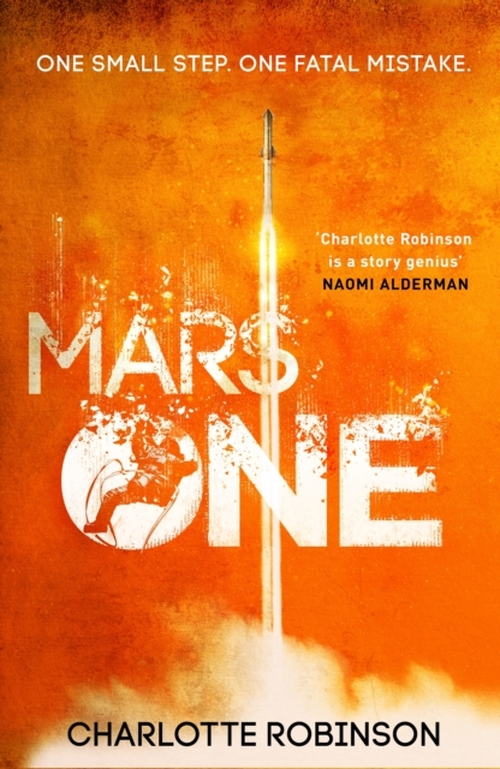
This near-future science fiction tale follows Alyssa
Wright, who expects to lead a crew on a mission to Mars.
Right away, her hopes are dashed, even as the MARS ONE crew
is in last week's quarantine. A suspicious accident means
Alyssa is replaced by a stranger, Ana, who looks great on
television. This may or may not be related to the fact that
a reality TV show production team owned by Lars Anders is
funding the rocket.
Much of the action occurs in Asia. The launch site is
Baikonur in remote Kazakhstan. Aside from that, a young
woman in Hong Kong, who has tried but given up on
environmental protests, is scared when her brother vanishes.
Kai, a coder, leaves nothing but a message asking his
sister, Jia, to take care of his cat, Orion. Security police
seem very interested in Kai, so Jia stuffs the cat in a pack
and makes a run for it. She doesn’t even like cats,
but she gets to know the handsome, smart ginger cat and
discovers why she needs to care for him. Before long, they
had hitched a ride on an environmental warrior ship, looking
for another coder.
Meanwhile, the Argo spaceship is preparing to launch, but
Alyssa suspects someone is sabotaging the mission in order
to increase the TV ratings. Our guide within the astronaut
group switches to Rubio, a semi-washed- up artist whose job
it is to help build a new colony on Mars. Rubio is not much
of a hero, but everyone getting on board a can sitting on
explosives and preparing to go out to the blackness of space
is a hero.
Not nearly enough consideration is given to the mechanics
of establishing a colony on Mars. See THE MARTIAN by Andy
Weir for more details on the work needed for a brief stay.
The idea is that more rockets will follow, and then the
colonists might choose to leave the red planet or remain.
Nobody else might follow if the Argo can’t make it in
one piece.
The first novel by a former TV production professional,
Charlotte Robinson, is heavy on the aspects of how to
broadcast live amid time lags, how people would react to
constant surveillance, and the lack of privacy. The MARS ONE
author also examines what private enterprise might fund and
why, in perhaps direct opposition to state actors. Some of
the episodes in a tension-filled narrative are beyond
belief, but in Kazakhstan, we see the dried-up Aral Sea,
which brings home the message of the environmentalists that
Earth is our home and we need to treat it better. As,
indeed, the characters should treat the cat better. The tale
verges on technothriller and should be enjoyed by space fans
everywhere.
No excerpt available.












 © 2003-2026