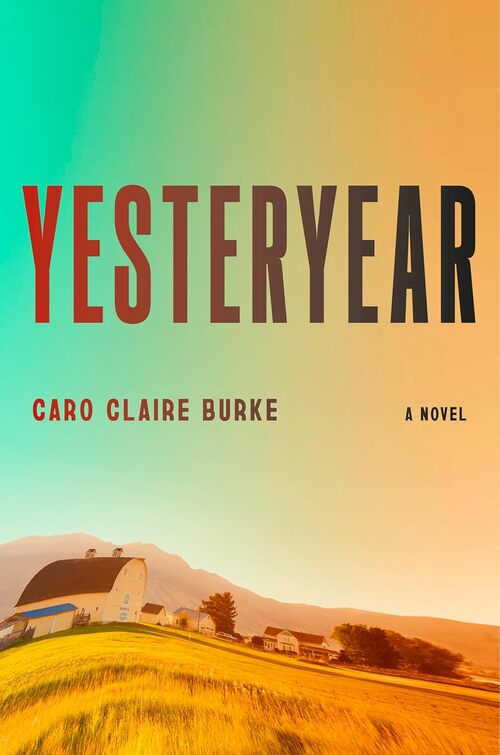
YESTERYEAR is a novel that acts like a chameleon.
Readers will think it is about a social influencer who
creates a social media perfect world on an Idaho farm where
all is wholesome and fresh.
Instead, the novel dives into a myriad of issues:
pressure, religious conviction, expectations, and the desire
to be valid and relevant.
The novel made me question many things. Natalie is
detached and cool. She had goals and obtained them through
conventional and unconventional means. I found her character
to be quite unlikable, as well as Caleb’s.
Many of Natalie’s comments are snarky,
biting, and amusing. She sees the world through one
particular lens and creates a world where she controls the
narrative. Natalie is enigmatic because I don’t
think she ever really knew what she wanted. Once she had it,
she didn’t seem satisfied with it.
The time travel element threw me because I believed
it was one thing, but then it transforms into something
totally different, and the sense of a different era is very
real. I had the most sympathy for Natalie’s
children, who didn’t ask to be part of the show but
who are ruthlessly thrown into it. They are pawns in
Natalie's carefully curated world. The novel is tragic
in many ways because a woman seemingly has it all, but what
does that really mean? There are many ironies in the story,
such as Natalie living on her phone but keeping her children
deliberately sheltered and obtuse, and not allowing them an
avenue into the outside world.
Tradwife or fadwife? YESTERYEAR will leave
readers to wonder what the truth actually is in the story
and what is a conjuring of a determined but desperate
woman.
A traditional American woman, a beautiful wife and mother who sells her pioneer lifestyle of raw milk and farm-fresh eggs to her millions of social media followers, suddenly awakens cold, filthy, and terrified in the brutal reality of 1855—where she must unravel whether this living nightmare is an elaborate hoax, a twisted reality show, or something far more sinister in this sensational debut novel.
My name was Natalie Heller Mills, and I was perfect at being alive.
Natalie lives a traditional lifestyle. Her charming farmhouse is rustic, her husband a handsome cowboy, her six children each more delightful than the last. So what if there are nannies and producers behind the scenes, her kitchen hiding industrial-grade fridges and ovens, her husband the heir to a political dynasty? What Natalie’s followers—all 8 million of them—don’t know won’t hurt them. And The Angry Women? The privileged, Ivy League, coastal elite haters who call her an antifeminist iconoclast? They’re sick with jealousy. Because Natalie isn’t simply living the good life, she’s living the ideal—and just so happens to be building an empire from it.
Until one morning she wakes up in a life that isn’t hers. Her home, her husband, her children—they’re all familiar, but something’s off. Her kitchen is warmed by a sputtering fire rather than electricity, her children are dirty and strange, and her soft-handed husband is suddenly a competent farmer. Just yesterday Natalie was curating photos of homemade jam for her Instagram, and now she’s expected to haul firewood and handwash clothes until her fingers bleed. Has she become the unwitting star of a ruthless reality show? Could it really be time travel? Is she being tested by God? By Satan? When Natalie suffers a brutal injury in the woods, she realizes two things: This is not her beautiful life, and she must escape by any means possible.
A gripping, electrifying novel that is as darkly funny as it is frightening, Yesteryear is a gimlet-eyed look at tradition, fame, faith, and the grand performance of womanhood.








 © 2003-2026