Sergeant Jim Field has the honour of supervising a small
Irish town about to witness the visit of one of its most
famous descendants. THE VISIT is an ode to 1963 Ireland,
changing but in a remote way, which hardly impacts the lives
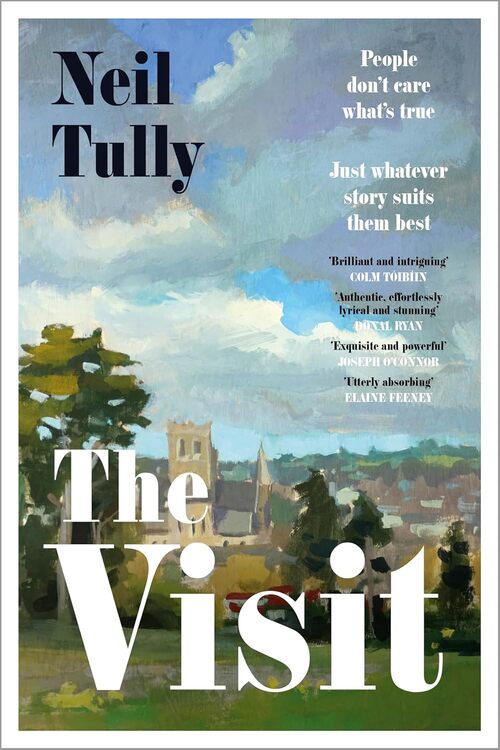
of those in County Wexford, as shown in the lovely cover.
Young ne’er-do-well Patrick Hatten is the only
remaining member of his family, apart from a brother who,
older and braver, escaped to England. Eking out an existence
on rabbits and garden vegetables, Patrick hopes for a job as
a fishing guide. His young life will be thrown into turmoil
in two ways. First, the richer neighbour starts sending
covetous looks at the family's patch of land, and second,
Patrick’s brother threatens to sell the farmhouse.
There are echoes of the famous story ‘The
Field.’
June 1963 saw John Kennedy travel to Ireland and visit
the birthplace of the Kennedy clan near New Ross. This was
also the harbour town from which the emigrants sailed to
America. Wexford on the east coast largely didn’t get
hit by the potato famine, but the lack of industrial jobs
saw many people leave in hope of a better life. The folks in
Wexford, depicted for us by Jim Field and his lovely wife
Siobháin, marvel at rockets, a female cosmonaut, and
television, black and white with nothing much to watch. Life
was simpler back then, but not in a good way. While there
isn’t much said about the role of the Church, women
were still second-class citizens and health issues were a
mystery. An elderly man could still die of privation and not
be missed. Some readers, like me, may not enjoy seeing
Ireland depicted thus. No doubt life was like that and
progress trickled down slowly from cities.
Patrick is an anti-hero, a bit unstable, uneducated, and
unwelcome with all the precautions being taken ahead of the
big day. Some readers may draw comparisons that, no doubt
intended, can feel in poor taste. But we know the visit went
well, so we can be tourists ourselves in that Kennedy
homestead today. Jim Field is well-intentioned throughout,
but not exactly heroic, and has newly discovered a health
problem which could, of course, crop up at just the wrong
moment. Tensions mount, but the telling is quite slow, at
the 1960s pace when few owned cars.
THE VISIT, which is Neil Tully’s first novel,
gently harks back to a day when Ireland felt much bigger
than it collectively was. I would have liked to see more of
Kennedy, but the focus on New Ross and its changes reminds
us how far we have travelled.
No excerpt available.




 © 2003-2026