Jane Brown is a decluttering queen, but only if you have big
money. That’s maybe the least appealing part of the story for
me. She will only sort out your MESS if you are a millionaire.
I get that a Los Angeles-based professional organiser will
have plenty of wealthy clients, but we can see from TV shows
about hoarding, that families club together to get help for an
ordinary person stuck with rooms full of dolls and clothes
never taken out of wrappers.
Jane, oddly, is heading a bit that way herself. She has a
storage bin of items she decided not to gift to her live-in
boyfriend, Teddy. The mean part of this is that she steals
items from her clients, who are wealthy, as observed, and
won’t miss a purse, a tie, a wallet, or a toy. She helps to
declutter drawers full of lipsticks sent to influencers, and
mementoes of earlier days now in tatters. Jane sees a
different person and mansion each day, hardly making a dent,
with a different co-worker from their agency most days, and
she thinks about her life.
I think Jane is heavily compensating for a lack of perfection
in her personal life. For one, her family was shaken when her
brother turned out to have special needs, so she may have to
show her stressed parents that she is nearly perfect. Or
perhaps, while she enjoys tidying someone’s files and clothes,
she wants to think that, however messy her life is, it’s not
this bad.
Some aspects of Jane make her a not-so-nice person. I already
said she steals from her clients, when they would probably let
her take anything they don’t want, if she asked. The agency
disapproves, so she can’t ask. I can tell this was written by
a man because Jane’s first thought about her female clients
is what their bodies look like. Jane is okay with a boyfriend
who does nothing all day but play computer games, smoke drugs
and get tattoos. None of this makes me like her.
Michael Chessler may be hoping to help women readers get their
lives together. Or maybe just to entertain them with sarcastic
jibes at modern influencers while looking more thoughtfully at
past actresses. He doesn’t really give many tips, though; for
instance, it’s good to take a photo of a memorable item like a
dress and then donate the item. The author just goes with
keeping what brings you joy and not what sparks bad memories.
MESS is not that easy to follow, with many names and
locations, but the principle of discarding what you don’t need
(and buying less) holds true. Even if what you don’t need is a
relationship.
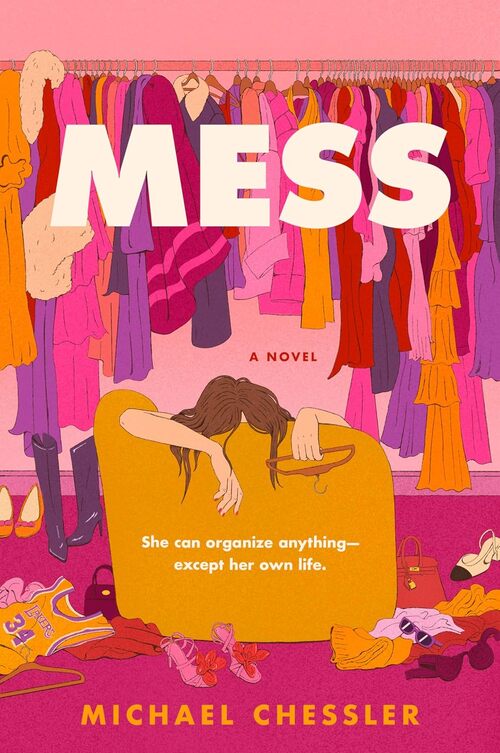
To the world, Jane Brown, a Los-Angeles based professional organizer, is a model of composure and reticence. But inside, she’s fiercely judgmental and critical of herself and others. A lover of order and tidiness, she struggles to accept the world’s exasperating messiness of both her own clients—a superficial sphere of influencers and rich creatives—and her live-in boyfriend, who is becoming as aggravating as he is comforting.
When she arrives at the home of a new client, a has-been Hollywood actress—a woman opposite to her in every way—Jane finds herself unexpectedly moved. Realizing how desperately she wants to lower her defenses and open her heart, Jane decides to declutter the mess of her own mindset. Organizing her own feelings turns out to be the most daunting job she’s ever tackled, but one that promises big rewards if she succeeds, including freedom—and even love.
Set against the dazzlingly rich, beautiful, and shallow world of Hollywood money and mansions, Mess is an honest, heartfelt, and often hilarious response to the disorder of our lives today.
No excerpt available.









 © 2003-2026