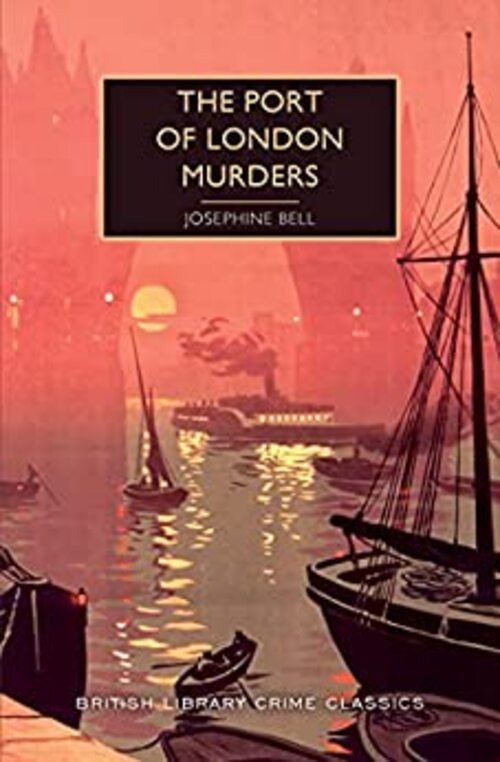
Detective Sergeant Chandler investigates mucky deeds on the Thames docklands in this reprinted 1938 thriller. THE PORT OF LONDON MURDERS explores the working-class district.
This Depression-era story shows the grime and avarice present when money is scarce and medical care is not free. Doctor Ellis has a practice in the slums, and he supplements his income with unusual drugs. In this milder era, heroin was almost unknown and the police were at first puzzled to find an elderly lady dead with needle marks on her arms. She wasn’t diabetic, so… The former dressmaker, Mary Holland, turns out to have died of a combination of heroin and disinfectant. There are no drug suppliers known, so the police want to stamp out the trade before it gets more common.
Meanwhile, goods transported by barge to the Port of London include boxes of rubber sheets, some of which conceal pink chiffon night-dresses, getting smuggled in to avoid duty. Yes, it seems strange to us. Ladies such as Mrs. Bowerman and Mrs. Dunwoody have worn flannel all their lives, and mourn the impending loss of their homes as they await the demolition of Fripp Street. It really was a different era, as we see by the fact of an active Smallpox Hospital.
Some of the conversations are a little hard to follow, as the locals converse, but the River Police and land police repeat anything the reader needs to know. The villains are easy to spot, but some smart tricks are pulled. With fog, clammy air and rolling tides, the river is brought to life as much as the characters. Josephine Bell was the daughter of a medical family and married a doctor, providing her with a rich vein of material for crime stories. THE PORT OF LONDON MURDERS seems to be a typical story from this prolific and socially aware author.
A suicide, a derelict barge, and floating pink chiffon nightdresses...
When the San Angelo drifts into port in the Pool of London, telephones begin to ring across the capital and an intricate series of events is set in motion. Beset by dreadful storms in the Bay of Biscay, the ship, along with the "mixed cargo" it carries, is late.
Unaware of the machinations of avaricious importers, wayward captains, and unscrupulous traders, docklands residents Harry Reed and June Harvey are thrust together by a riverside accident, before being swept into the current of a dark plot developing on the harborside.
First published in 1938, this early novel from one of the great Golden Age mystery writers skillfully delivers a compelling tale of murder set against a gritty portrayal of life alongside the Thames.










 © 2003-2026