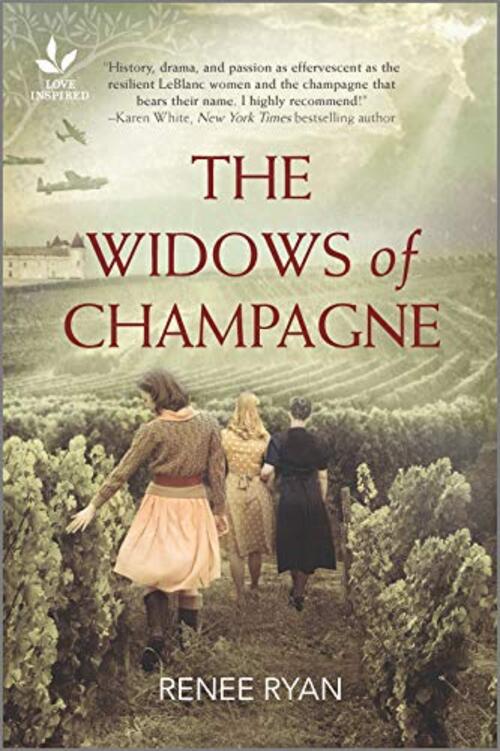
Gabrielle Leblanc Dupree is our principal guide to the French art of champagne making. She lives at Chateau Fouché-Leblanc with her mother-in-law, Josephine, and other generations of the same family. These women work in the vineyards, which cover two hundred hectares, and winery. But war is on the horizon.
Josephine, in her late seventies, is starting to retreat into memory loss, but still knows the correct way to throw a formal party and which fine vintage wines to serve. Her daughter-in-law hasn’t told Josephine that the best vintages are now hidden in a walled-up cellar ahead of probable occupation. Nobody wants to be a doom-monger or sound disloyal. But as surely as one season follows another, covetous eyes are fixed on the treasures of the Champagne region. Josephine’s granddaughter Paulette is just a schoolgirl running around the vineyard, where there are now no men, just family members like Marta and Helene. Until the worst occurs.
The Champagne region was in the Nazi-occupied northern part of France, as was Paris. The Third Reich soldiers marched through towns burning and looting, shown to us through Gabrielle’s eyes. They also imprisoned and killed Jewish people, so one of the characters has more reason than others to be fearful. This story – while a novel – may disturb, scare, and distress. This was the background of the war which was being fought on frontlines; this captive-rich land fed and supplied the troops. We see along with Josephine that German wine merchants used to dealing with the wineries were commissioned as officers and appointed to oversee the plunder. The winemakers’ home is the first requisition.
To save the dismal events from being too wearying, author Renee Ryan has cooked up the kind of scheme people under occupation probably came up with themselves; the ladies pretend that they don’t get along, don’t respect older generations, and Josephine is quite senile. They hope the occupiers will thus dismiss and ignore them, concerned only with comfort and fine dining. And, sad to say, with intimidating these attractive women.
The Leblanc widows don’t have men in battle to worry over personally, which is another nice touch, as our minds are focused on the women themselves. Helene, Paulette’s mother, is an artist in the quiet season, but all her concern has to be for keeping the child safe. These women have learned the hard way that they can only rely on their own strength, and their unity as a family through marriage. And filling the daily lives of these brave people are harvests good and bad, bicycles and wine presses. Don’t mention the parachutist. Don’t give away the Resistance. Renee Ryan has built a solid historical novel with every emotion given its turn, in THE WIDOWS OF CHAMPAGNE.
No excerpt available.









 © 2003-2026