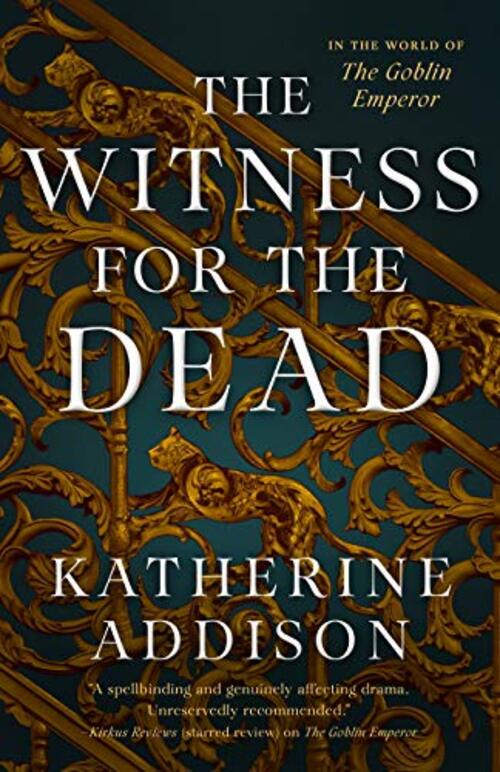
Thara Celehar is a cross between a cleric and a police officer. He’s gifted with the ability to speak to those recently departed, making his calling a Witness for the Dead. Previously we met Thara as a minor character in the epic of the half-goblin emperor Maia. Thara’s continued story contains many pitfalls and terrors for THE WITNESS FOR THE DEAD.
Amalo is a provincial town, where politically charged officers of the court are posted out of the way. Here amid elves and goblins, and half-goblins (we never see the term half-elven) a murder mystery unfolds. More than one issue is brought to Thara’s door, for he is the only Witness here; and as the state is paying him, he’s cheaper than other clerics. Nobody here is wealthy, but as always, a division of classes is plain. The first case involves a lady who was found floating in the canal. She turns out to have been an opera singer, which brings us to the opera house and its ensemble. Nobody much liked this lady, but of course nobody will admit to killing her. This one comes across as a completely normal police case.
Another detective story, concerning a family dispute over a will, is partially resolved by Thara’s speaking with the deceased patriarch. This makes legal disputes sound so simple. But the repercussions get our hero, who is more at home in a drawing room than a barracks, sent to, first a ghoul-infested village, then a haunted hilltop. Clearly, if your job description is THE WITNESS FOR THE DEAD, the cases might not keep you alive. But Thara doesn’t get well paid for this work, which to me is a puzzling and less believable aspect. He gets respect, gets to use the ‘we’ which ‘The Goblin Emperor’ adopted, but generally someone else has to pay for his opera seat, teahouses and meals. He wears secondhand clothes, even though he’s coming from the capital to a backwater.
I would describe this adventure as a dark fantasy, slightly steampunk only in that an airship factory features. Katherine Addison has not, to my mind, topped her first outing in the series, but in that book, we saw the constant cultural shock of elves taking orders from a new Emperor who was a half-goblin. This second tale follows a person who gets along with nobody remarking on his race; they just call him Prelate and agree to his requests. A new reader could miss nuances of race, except that now and then he mentions someone’s ears drooping or perking, or else an old goblin religious cult. Maybe this is a good feature, as different races have taken on many officialdom and merchant posts. But I did think more needed to be made of the unique features of goblins or elves (as opposed to emperors) to make the book about a civil servant stronger. Without, its detection cases stuffed with long complicated names and fussy manners. Thara also doesn’t seem to grow much in the episode. I’m pleased to return to this fantasy world, and I’ll be interested to see what Katherine Addison will provide next. THE WITNESS FOR THE DEAD is a good read, about those who are brave enough to face potentially unpleasant truths.
No excerpt available.








 © 2003-2026