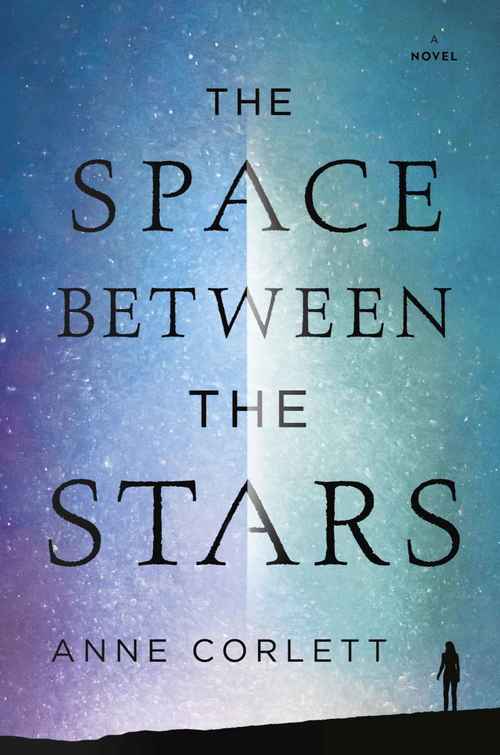
A disorganised dystopia, rather than one of those strictly enforced crowded dystopias, can be found in THE SPACE BETWEEN THE STARS. Humanity, in a common science fiction prediction, has become too populous and has been spread, in some cases forcibly, onto new planets far from Earth. Jamie Allenby is one of these people, emigrating with her veterinary certificate in hand, hoping to aid new settlements. But disaster strikes and as we meet Jamie we learn that a deadly plague has spread invisibly, wiping out all but a minute proportion of humanity.
Jamie, understandably, takes some time to believe she has survived the illness, then heads to the space dock. The well-described tale takes a turn to women's fiction, with our protagonist obsessed with where she wants to go and with whom she wants or doesn't want to make a new life, rather than helping humanity to recover.
I think a few points which Jamie learns the hard way were so obvious that only someone this self-obsessed wouldn't have been consciously aware of them. Young women would be needed to repopulate planets; qualified scientists, engineers, and doctors would be in demand for teaching skills. Survivors would need to be brought together by some organisers for a chance to find new partners and share skills. Jamie thinks if she wants to get on a spaceship and go back to Earth, just to check if her family made it, well a ship must be available with fuel, pilots, and supplies. Not that she's important or anything, but since she's got one of those upper echelon marks on her finger, well perhaps that's just how she grew up.
One very good comment made by a space pilot on Jamie's attitudes is that there is a fine line between having space and having nothing. The tale takes us to a few different planets and, finally, to an almost empty Earth. Though for some it's not empty enough. We feel the underlying suspense thread, tugged by some of Jamie's misfit fellow travellers whose reasons to go to Earth seem no more understandable.
I must mention that unlike other plagues, victims become piles of dust. So we are spared any description of bodies or zombies. This device relieves the characters of a lot of work and further disease, and makes the plot move faster. To compensate, we get moody reflections and backstory in italics, which are hard on my eyes. Anne Corlett is from the United Kingdom and THE SPACE BETWEEN THE STARS is her debut novel.
No excerpt available.







 © 2003-2026