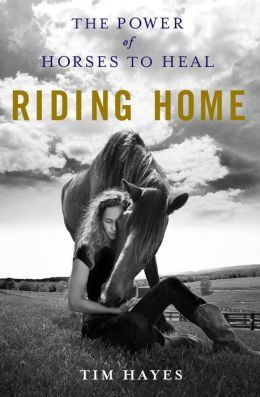
Modern day uses for horses include policing, sport, exhibitions ... and rehabilitating the injured and the incarcerated. Tim Hayes has been working with horses both on ranches and in sports centres for twenty years, and in RIDING HOME he shares some recent experiences of how horses are helping troubled people.
Our first visit is to a correctional facility, where men with records of violence have to volunteer and pass behavioural tests before being allowed to work training mustangs. Due to the perceived overpopulation of wild horses and competition for grazing, the Bureau of Land Management takes some mustangs off the range to be adopted. But fully grown wild horses are not rideable. So the prisoners get the chance to gentle them and start them on a riding horse career. This programme uses natural methods and shows the prisoners that the powerful horses are in fact acting out of fear - just as they did on the streets, if they're honest. Offenders who work through this programme have half the usual rate of recidivism. I did think that the inmates were self-selecting, but the main point is that it works for both horses and inmates.
Tim Hayes then explains the way that the horse is adapted to spot predators, and its survival mechanisms. Humans look like a predator species to the wise horse. Their herd communication is mainly done by body language, especially among mustangs rather than domestic horses, and they establish a pecking order and groom one another.
Back to working with people, Tim observed a session where people in need of therapy were asked to interact with calm horses although they had never done this. Discovering something about themselves - like being unwilling to ask for help - and voicing it was helpful to these patients. Autistic children are also helped by watching horses' body language. In another session, a difficult youth is helped to express his anger at his divorced parents by interacting with horses. Tim states that he has a longstanding interest in human psychology which makes him interested in finding out how exactly so many people are helped by equine partners. Horses For Heroes was the saviour of a young woman who had been a Marine soldier and saw too many combat horrors. Her PTSD ruined her life for years and therapy didn't seem to help. While the original function of this equine therapy was envisaged to be for soldiers unable to walk or missing limbs, the organisers realised that it was aiding not just the physical side but the emotional side of these heroes.
While dogs are also helpful in therapy, dogs are predators, and Tim Hayes believes that the difference with horses is partly because they are prey. People react differently to them and receive different responses. He comes across as an honest person, self-aware, with a deep-seated interest in both horses and humans. I like that RIDING HOME contains a lengthy list of organisations which are cited in the book or provide similar aid, therapy or other resources to those who may require them. This informative and helpful read will be of benefit to many readers and of simple interest to many more.
No excerpt available.









 © 2003-2026