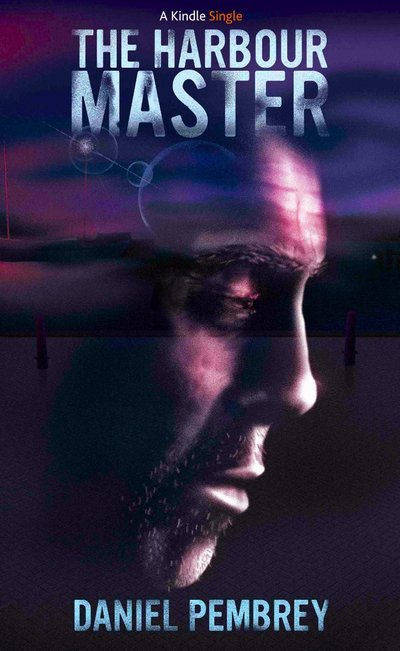
Henk van der Pohl is a Dutch policeman, living on a boat in Amsterdam Harbour with his wife Pernilla. He's not far off retirement and a dead body in the harbour looks as though it might be his last major case. That's a mistake, but he doesn't realise until he's tangled in a web of international money, conspiracy and diplomacy.
THE HARBOURMASTER has been released in three parts and I'd previously read, and been wowed by, the second part. Now I had the chance to catch up with the whole story from the start in this collected edition; this is the best way to go. Descriptions are sparse so by taking the first part first I had a much better handle on who Henk, Pernilla and their student daughter Nadia really are. Each part takes an individual case but leads on to the next. In Part One we see the focus on the red light district in Amsterdam. The women here are, Henk sees, mainly from Eastern Europe countries like Hungary, controlled by pimps and while working legally, afraid of their controllers.
Part Two broadens the scope to Brussels, the seat of the European Parliament, where a representative tells Henk that nobody is rewarded for coming up with ways to shave a million euro off a budget. Dodgy deals are done, buying power of more than one variety. Diplomats from many continents flit through the airports and out again; diamonds from around the world are traded through nearby Rotterdam.
Part Three looks at the kidnapping of an influential figure, which has special meaning for Henk. For a start, the abduction echoes a case he worked on years ago. Secondly, this man had promised to help stop Henk's police station being shut down. As the stakes and dangers escalate, Henk is barred from the heart of the case, so he travels more broadly to find possible witnesses. The personal touch is to the fore as Henk frets that his wife is exposed to danger or frowns inwardly at his daughter's Russian boyfriend.
Few British writers are exploring the continent in crime stories so Daniel Pembrey, has a clear field which he is doing well to cover. His earlier The Candidate is a good introduction to his writing and THE HARBOUR MASTER is just as convincing and gripping to the last page.
Maverick cop Henk van der Pol is thinking about
retirement
when he finds a woman’s body in Amsterdam Harbour. His
detective instincts take over, even though it’s not his
case. But Henk’s bigger challenge is deciding who his
friends are – not to mention a vicious street pimp who is
threatening Henk’s own family. As his search for the
killer
of the woman in Amsterdam Harbour takes him into a
corrupt
world of politics and power, Henk finds himself facing
some
murky moral choices.
The Harbour Master delivers for Amsterdam what fans of
Scandinavian crime fiction have come to love: a
fascinating
light shone on the dark side of a famously liberal
society,
combining vivid characterisation with ice-cold suspense.
EXCERPT
THE DISCOVERY
There’s a spot down by the harbour, with bicycle seats
mounted on bollards like fishing perches, where you can’t
help but feel alert and vigilant. Even, or especially, at
six in the morning. But maybe I’m biased. My forebears
were fishermen and port workers, longshoremen and
mariners.
In the March morning light, the water looked glassy; the
flat mist was cool and clammy around my eyes. It called
to mind generations of ancestors setting out at dawn and
sailing off into the North Sea, unsure of what destiny
lay before them.
We Dutch remain at heart a seafaring people: a small but
proud collective who once traded with the farthest
reaches of the globe – as attested by the pale, stone
maritime museum across the harbour, and the eighteenth-
century vessel moored there, her masts blurring into the
fog. These monuments to the “golden age” appeared faint
and ghostly, like some dim recess of my memory.
I let my finished cigarette drop to the ground; it
fizzled out in a puddle as I exhaled the last puff of
smoke. I thought about how it might be a fine time to
quit, approaching early retirement as I was.
There was no one around except a lone dog walker and a
vagrant talking to himself, louder than easy
contemplation allowed. It’s hard to find silence in this
city: the movement of vehicles on the ring road, the
rumble and creak of trains entering and leaving Centraal
station, a faint foghorn out in the sea channel. After
thirty years as a cop on this beat, I can confirm that
peace only comes from within.
I eyed my watch: still plenty of time before I was due to
meet my wife. We tried to meet for breakfast on a regular
basis now that Nadia had left for university and the nest
had become empty again. Perhaps it was good for me – a
routine for retirement? Though I was planning on telling
Pernilla about the trip I’d discussed with Johann, my old
army friend and fellow BMW motorbike owner.
My gaze remained on the dog walker, who had taken an
alert stance similar to my own, his hands buried in the
pockets of his charcoal-grey raincoat. So much of police
work comes down to making quick and accurate character
assessments. Maybe I needed to get a dog, I thought – a
retired police one, perhaps, so we could be co-retirees
together – when suddenly the man’s hands flew up out of
his pockets and waved above his head. “Hey,” he yelled.
His dog’s bark was like a gunshot across the harbour.
“Hey!”
I was off my perch and running towards them. Before I’d
even got there, I caught sight of a fleshy greyness
breaking the water surface. My sinking stomach and the
buzzing in my ears confirmed what my brain already knew:
it was a body, with a floating corona of hair.
I reached for my phone.
“I’ve got it, Henk,” Bergvelt said, resting his hand on
my shoulder. The hand was more controlling than
consoling. Sebastian Bergvelt was barely more than half
my age. His sandy hair was short on the back and sides
but floppy on top; he wore a designer raincoat, and shiny
black shoes wholly unsuited to the harbourside. He was
one of Jan Six’s boys – on the up, politically.
But this wasn’t the time to dwell on the ascent of Jan
Six (“Six-Shooter”, as he was known) to the top of the
Amsterdam police force, or Bergvelt’s rise through the
ranks at the IJ Tunnel 3 station where he and I worked.
The reality was simple: Bergvelt had tactical command of
the situation now.
I’d arranged for a hoist to lift the corpse out of the
water. Its engine was revving to power the hydraulics,
sending a cloud of smoke between Bergvelt and me. The
body was raised, cradled in a black mesh harness, water
dripping off it. It was like a funeral in reverse – a
marine exhumation, you might say. The man with the dog
had stayed, his head now bowed respectfully. The dog, a
cocker spaniel, whimpered softly. Bergvelt asked them to
move along, explaining that this was a police matter.
I had my phone out, in order to film the removal of the
body. The woman’s thighs and arms had swollen to
Frankenstein-like proportions, her dark trousers and top
so stretched that they’d ripped at the seams. Her fingers
were like little sausages; I couldn’t help but look away.
As I did so, I caught sight of a crowd gathering on Prins
Hendrikkade. Mopeds buzzed to a halt, idling; cyclists
stopped abruptly, pointing. Words were being shouted; I
didn’t catch what. Something prompted me to point the
phone in their direction.
“Can I borrow that?” Bergvelt gestured at my mobile,
surprising me. “There’s something wrong with mine.” He
was looking at the onlookers, too. “Where’s Larsson? This
is turning into a circus.”
Kurt Larsson was the medical examiner, a Swede known for
his indestructible joviality on the job.
Bergvelt was fumbling with my phone.
“Here,” I said, reaching for it. “Larsson’s in my address
book …”
But Bergvelt had already found the number.
The hoist lowered the corpse gently onto the dull paving
stones, the harness remaining beneath her bloated form.
Her skin had taken on a pearlescent-grey tone in the
light that was breaking through the mist. She appeared to
be young. Once out of the water, her hair was fairer.
Her eyes were closed. Hypothermia would have put her to
sleep within minutes of entering the water – unless she
had been already unconscious, or dead, upon entry. There
was a third scenario: the shock of entering the freezing
water had caused cardiac arrest. The visible parts of her
flesh – face, hands, ankles, feet, and the mid-section of
her thigh where the seam of her capri pants had split –
appeared unmarked.
No shoes and no coat, on what had been a cold night. The
shoes could have come off in the water. Theoretically the
coat too, if she’d struggled and it had impeded her
movement. The harbour wall was high and slick here: hard
to get out without help.
I looked at her swollen feet. I couldn’t see any
abrasions on the toes from where she might have tried to
scramble out, though I was too far away to be sure;
Bergvelt clearly didn’t want me closer. There was a
swirling black mark on her ankle, perhaps a stray strand
of seaweed or some other flotsam.
Had she fallen off a pleasure boat? No, it wasn’t the
season for those. A student who’d tumbled in, drunk? I
thought of my daughter Nadia at the University of
Amsterdam nearby. Had the girl been walking this way
alone? Anyone accompanying her would surely have helped
her out …
“Hoi oi!” a sunny voice greeted us. I turned to find
Larsson, carrying an Adidas holdall and wearing knee pads
over his jeans. Sometimes I wondered whether he cried
into his vodka at the end of each day, to compensate for
his happiness at work.
Bergvelt greeted him curtly, then took a phone call. On
his own phone. Funny, it seemed to be working fine now.
What had been the point of using mine? Some kind of power
play? A mind game?
Larsson had his SLR camera out and began photographing
the scene: the water, the harbour wall and the body.
Next he pulled on a pair of thin rubber gloves, knelt
down, and examined the woman more carefully. I wanted to
remove the flotsam from her ankle, perhaps out of
respect, I don’t know. I stopped myself long before
Larsson needed to warn me about tampering with evidence;
the smell had begun to waft along the dock … a salty,
putrid odour, like rotting seaweed. Larsson, however,
appeared perfectly at ease.
He reached for a pair of scissors and began, very
carefully, to cut open the woman’s trouser pockets,
looking for identification. A short, single shake of the
head in Bergvelt’s direction indicated that there wasn’t
any.
There was no time or justification for erecting a medical
tent here at the scene, so Larsson unwrapped a black
vinyl body bag from his holdall. The hoist operator, a
wiry man dressed in stained blue overalls, stooped down
to help him position the bag under and around the body,
but Bergvelt intervened, pausing his phone conversation
to do the helping himself.
Once Bergvelt resumed his call, I quietly asked Larsson:
“What’s your best guess at the time of death?”
He looked at her closed eyes and straggly blonde hair.
“Thirty-some hours gone,” he said.
That put it at about midnight of the day before.
There were still a few onlookers on Prins Hendrikkade:
two cyclists, a moped rider. The harbour wall led only
out to the hulking, copper-clad Science Centre, built
over the mouth of the IJ Tunnel to North Amsterdam. Of
course, the science museum would have been closed at that
hour.
Or would it have been?
I didn’t want to get my phone back out to film or
photograph the body again; Bergvelt was still talking on
his phone, but he was keeping an eye on us.
“What tests will you run?” I asked Larsson.
“The usual: tox, dental.” He smiled toothily.
Toxicology tests might throw up something. Dental checks
assumed records existed to match the woman’s teeth. If
she was from out of town, this could become a resource-
consuming task: coordination with other police forces,
Interpol even. It would become political, in other words.
“If this is foul play, what are the chances that it goes
straight into the unsolved file?”
“Under the new regime?” Larsson glanced in Bergvelt’s
direction. “High, I’d say. Someone may step forward,
saying they’re missing a family member. Otherwise …”
I prompted him to continue.
“There are a lot of things competing for police resources
just now,” he finished.
I looked at the mystery girl one last time as Larsson
zipped up the body bag.
Bergvelt was back, his call finished. “Shouldn’t you be
somewhere else, van der Pol?” he asked me.
“I should,” I replied.
I was late for my wife.













 © 2003-2026