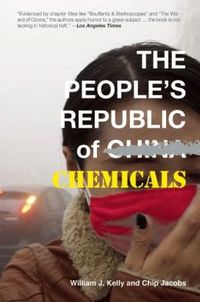
As I'm currently reading a detective book set in modern China, this factual look at the developing nation seems like a good backdrop. THE PEOPLE'S REPUBLIC OF CHEMICALS is written by a team which last took a look at the issue of smog, something well known to inhabitants of Beijing. William Kelly and Chip Jacobs were previously writing about Los Angeles - was there a connection?
Kelly and Jacobs found that China gobbles up more coal each year than the rest of the world put together. Becoming wealthier, its people are driving more cars than before, while industries ignore the lax environmental regulations. The factories of China thrive not just on home market, but on low-priced export goods. The poisonous air which drops acid rainfall onto a third of China daily, moves in high- altitudes and along with dust, drifts over the Pacific to fall on American coastal cities. So the US may have exported the manufacturing jobs, but it imports both the goods and increasingly, the pollution. Water and food are also polluted; China's biggest cause of death today is cancers, with manufacturing villages in the provinces devastated by related illnesses. China is the globe's largest producer of carbon dioxide, a greenhouse gas that fuels climate change.
The authors observe that China's population is harshly punished for breaking the status quo, but desperate workers with dying families have been rebelling in large numbers. The newly capitalist factory owners and local officials are profiting just as such people did in other countries during the 19th and 20th centuries. Linfen, a coalfield town sitting in a basin among mountains, joined 16 Chinese cities on the World Bank's "twenty most polluted towns in the world" list; its citizens over 30 came down with various forms of cancers while people over 55 died at ten times China's national average rate and the birth defect rate is the planet's highest. For how long can the profits and repressions be justified ask Kelly and Jacobs.
In THE PEOPLE'S REPUBLIC OF CHEMICALS Burbank is shown as engaged in cleanups from its own lost manufacturing days. Even while Western nations are shown signing the Kyoto Protocol on the environment, with Chinese officials coming to LA to learn about dealing with smog, China is pushing harder to become the biggest industrialised nation on Earth.
The facts of this book were generally part of my awareness already, but the hard new figures, the personal investigations of ruined lives and the callous destruction of both humanity and nature hit a reader hard. My personal suggestion is that we should not buy consumer goods without understanding the chain of production, sales and recycling; we should contact manufacturers through their social media pages, letters and newspapers and ask them to investigate pollution and unsafe work practices in any factory suspected of these practices. Ultimately the consumer is the one fuelling demand, and providing the profits.
With a respectful look at China's history, from coal-fired manufacturing during Europe's Dark Ages, moving through Mao's collective movement and ensuing famines to today's development, the scope of the book is large. THE PEOPLE'S REPUBLIC OF CHEMICALS by William Kelly and Chip Jacobs is well written and very readable, and I recommend it to anyone learning about world trade and geopolitics. I'll be interested to read their award-winning "Smogtown".
No excerpt available.







 © 2003-2026