June 8th, 2026
Home | Log in!
Welcome to FreshFiction

Are you a reader
or an author?

Help us personalize your experience. Choose your role below.
You can always change this later using the switcher button.

or

You can switch anytime using the floating button.

Limited Time Fresh Fiction Access

Exclusive Marketing Opportunities for Authors

Curious about how Fresh Access helps authors gain more visibility and connect with active readers?

Discover premium promotional opportunities, enhanced exposure, and author-focused services designed to help your books stand out.

Read More →
On Top Shelf
★ Fresh Access for Authors 📚 New Books This Week 📰 Latest News 🎪 Reader Games πŸ–οΈ Summer Kick Off Giveaways

Love, Danger, Homecomings & Heart β€” Your June Reading Escape Starts Here

Slideshow image


Since your web browser does not support JavaScript, here is a non-JavaScript version of the image slideshow:

slideshow image
One disastrous night. One devastating man. One diabolical proposition.


slideshow image
He’s stubborn. She’s tougher. His kid? Already picked the bride.


slideshow image
A small-town second chance wrapped in danger, desire, and Sharon Sala heart.


slideshow image
She came home to save the ranch… and found the cowboy she never forgot.


slideshow image
From reality TV heartbreak to real-life reinvention.


slideshow image
A missing twin. A deadly cartel. One K-9 team caught in the crossfire.


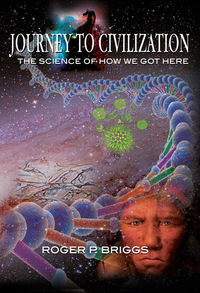
JOURNEY TO CIVILIZATION: THE SCIENCE OF HOW WE GOT HERE

Journey To Civilization: The Science of How We Got Here, December 2013
by Roger P Briggs

Other Press
282 pages
ISBN: 0988438208
EAN: 978-098843820
Hardcover
Add to Wish List

Purchase

"From the earliest particles to modern day, science retraces our steps"

Fresh Fiction Review

JOURNEY TO CIVILIZATION: THE SCIENCE OF HOW WE GOT HERE
Roger P Briggs

Reviewed by Clare O'Beara
Posted March 23, 2014

Non-Fiction

This colourful, well presented book brings together science from the moment that the universe began, to today. While it is necessarily a complex topic, readers are urged to skip over terms they don't immediately understand in order to get the broad picture, and come back to them as they want to learn more details. Photos, diagrams and graphs help to illustrate the data.

JOURNEY TO CIVILIZATION explains that people have always wondered about the world. Three traditional creation myths are presented. Science which has given us so many benefits has constantly sought a better understanding of the universe, and we can now consider scientific knowledge as a worldwide language.

From the first moment after the Big Bang as matter exploded the universe was a very busy place. The first chapter deals with astrophysics while gases condensed into solid matter and stars and galaxies formed. As our Solar System turned from a plate-shaped cloud into a sun and planets, space debris bombarded it, bringing water as ice comets to the newly solid Earth.

Bacteria were the first forms of life, containing DNA which is inside all living cells today. The exact mechanism of the first DNA production is not yet known, but amino acids which were previously unknown on Earth, have been found in meteorites and these precursors to RNA and DNA may be more common than we yet know. The oldest fossils are 3.5 million years old. More complex life arose from beneficial changes - as we produce better crops by selecting better seeds. First plants, then animals colonised land, giving rise to the variety of life. Geological events caused mass extinctions, including the end of the dinosaurs following a meteor strike which allowed mammals to flourish.

Adaptable and successful, the early human race spread out across the lands as paleoanthropology shows. Tool making, meat eating and rapid brain growth were clearly inter- related. New species of hominids developed, and recent DNA analysis has shown that people in Europe and Asia share one to four percent of their DNA with Neanderthal man. Surviving ice ages and volcanic eruptions, humans first hunted and gathered, then passed on culture, learnt to farm, and to build and work metals. City states brought writing and great achievement, also slavery, war and rulers. Today's human life is rapidly wiping out other species, in an ongoing disaster story.

While JOURNEY TO CIVILIZATION bears similarities to 'The Blind Watchmaker' it makes use of more modern discoveries. "Good theories in science make predictions that can be tested," says author Roger P Briggs and he gives us several examples, from natural selection of moths to the evolution of complex bacteria. Theories as to whether the human-caused greenhouse effect will cause severe problems are coming to be tested; we have to overcome the challenge of sharing an increasingly overcrowded Earth with other species. Teenagers with an interest in the topic could read this book though it is probably too technical for children. I recommend Roger Briggs's work to ecology students and anyone with an existing grasp of the material who wishes to update their knowledge.

Learn more about JOURNEY TO CIVILIZATION: THE SCIENCE OF HOW WE GOT HERE

SUMMARY

In a surprising turn of events, science has recently made
profound new discoveries about our deep history, making it
possible for the first time to construct a new kind of
creation story. Since about 1990, spectacular advances in
paleoanthropology, molecular genetics, and astrophysics have
answered some of the most fundamental questions about our
origins. A new field of study has now emerged that takes
the search for our origins all the way back to the birth of
the universe nearly 14 billion years ago, and weaves a
fairly continuous account of an unfolding universe that gave
rise to life on our planet and eventually humanity.

Journey to Civilization: The Science of How We Got Here
reveals this new story that is based on the evidence and
skepticism of science. It explores and explains the science
itself, from the physics of stars and the formation of rocky
planets, to the evolution of life and the epic journey of
humans out of Africa to cover the Earth. Journey to
Civilization is written for the non-scientist in clear,
straight-forward language, and is richly illustrated with
diagrams, charts, and beautiful color graphics and
photographs.

There has never before been one creation story that was
shared by all the people of the world. Today, however,
nearly all of humanity shares the methods and products of
science. Science has become a universal language across all
cultures; and thus the new creation story produced by
science is the story of all the people of the world. It is
the common ground upon which we all stand.

Journey to Civilization will change your understanding of
science, and it will change your view of humanity and our
place in the universe.

EXCERPT

No excerpt available.

BOOK SERIES


© 2003-2026 off-the-edge.net  all rights reserved Privacy Policy